
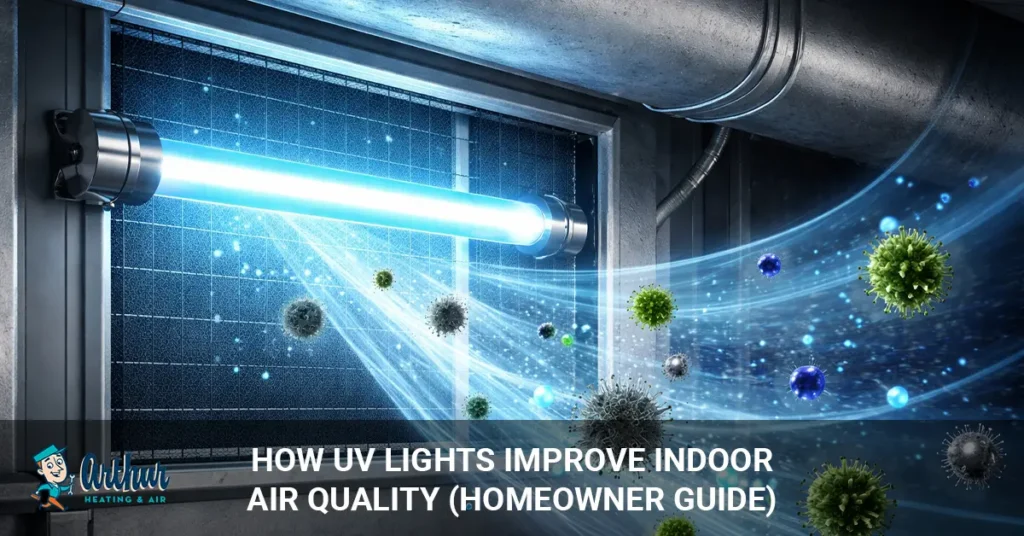
If your home smells musty or your allergies keep acting up, your HVAC system could be part of the issue. Dust and moisture inside the system create the perfect place for mold and bacteria to grow.
UV lights improve indoor air quality by reducing these harmful microorganisms inside your HVAC system. They help keep the air cleaner as it moves through your home.
In this guide, you’ll learn how UV lights work, what they remove, and whether they are a good choice for your home.
What Are UV Lights in HVAC Systems?
UV lights are devices installed inside your HVAC system that use ultraviolet light to kill microorganisms. They help keep your system clean and improve indoor air quality.
These lights are usually placed near the evaporator coil or inside the ductwork, where moisture and dust tend to build up. This is where mold and bacteria are most likely to grow.
There are two main types. Coil sterilization lights focus on preventing mold from forming on the coils, while air sterilization lights target airborne contaminants as air moves through the system.
How Do UV Lights Improve Indoor Air Quality?
UV lights improve indoor air quality by killing or neutralizing bacteria, mold, and other microorganisms inside your HVAC system. This helps stop these pollutants before they spread through your home.
They use UV-C light, which damages the DNA of microorganisms so they can’t grow or reproduce. Once exposed, these harmful particles become inactive.
Since your HVAC system runs regularly, UV lights work continuously in the background. This ongoing process helps keep your air cleaner and reduces buildup inside your system over time.
What Do UV Lights Kill or Remove?
UV lights kill or neutralize harmful microorganisms inside your HVAC system. This helps stop them from spreading through your home.
They target bacteria, certain viruses, mold, and mildew that grow in damp areas like coils and ducts. UV lights also help break down biofilm buildup on coils, which can affect system performance and air quality.
By controlling these pollutants at the source, UV lights help keep them from circulating in your indoor air.
Benefits of UV Lights for Your Home
UV lights improve your indoor air by reducing bacteria, mold, and other microorganisms inside your HVAC system. This helps create a cleaner and more comfortable home.
They can lower allergy symptoms by reducing common triggers like mold and airborne microbes. With fewer pollutants circulating, the air feels fresher and easier to breathe.
UV lights also help prevent mold from growing on damp components like the evaporator coil. This keeps your system cleaner, improves efficiency, and can help extend its lifespan.
In addition, they reduce musty odors caused by mold and bacteria, making your home smell cleaner overall.
UV Lights vs Air Purifiers: What’s the Difference?
UV lights and air purifiers both improve indoor air quality, but they work in different ways and serve different purposes.
UV lights kill microorganisms like bacteria and mold inside your HVAC system. They work in the background as air moves through the system, helping keep your entire home cleaner.
Air purifiers, especially those with HEPA filters, capture particles like dust, pollen, and pet dander. They are usually used in specific rooms like bedrooms or living areas. If you’re unsure about their effectiveness, it helps to understand do air purifiers really work before deciding between them and UV systems.
In simple terms, UV lights control microorganisms across your whole home, while air purifiers focus on removing particles in targeted spaces. For the best results, many homeowners use both together.
How Much Do UV Lights Cost?
UV light systems usually cost between $200 and $800, including installation. The exact price depends on the type of system and your HVAC setup.
Basic units are more affordable, while advanced systems with stronger coverage or added features cost more. Installation costs can also vary based on where the light is placed in your system.
There are also small ongoing costs. You’ll need to replace the UV bulb every 1 to 2 years to keep it working effectively. Overall, maintenance is simple and not expensive.
Where Should UV Lights Be Installed?
UV lights should be installed inside your HVAC system where they can target moisture and airflow directly. Proper placement makes them much more effective.
The most common spot is near the evaporator coil, where moisture builds up and mold is most likely to grow. Installing the light here helps prevent buildup and keeps the system cleaner. In some cases, UV lights are also placed inside the ductwork to treat air as it moves through your home.
Professional installation is important to make sure the light is positioned correctly and works safely. This ensures better performance and long-term results.
Are UV Lights Safe for Homes?
UV lights are safe when they are installed properly inside your HVAC system. They are enclosed units, so there is no direct exposure to people.
Most modern UV systems are designed to operate without producing harmful levels of ozone. This makes them safe for everyday home use when you choose a quality product.
To ensure safety and proper performance, it’s important to use a certified system and have it installed by a professional.
Do You Need UV Lights in Your HVAC System?
You may need UV lights if your home has moisture, mold, or ongoing air quality issues. They are especially useful when your HVAC system has areas where bacteria and mold can grow.
If you deal with allergies, musty odors, or high humidity, UV lights can help improve your air by reducing these problems at the source. They work best as an added layer of protection alongside regular filters.
If your indoor air is already clean and your system is well-maintained, UV lights may not be necessary. In many homes, they are an upgrade rather than a basic requirement.
Common Mistakes to Avoid
Avoiding a few common mistakes can help your UV light system work properly and last longer. Small issues can reduce performance and limit results.
Choosing a low-quality UV system is a common mistake. It may not clean the air effectively or last as long as expected. Incorrect placement is another issue, since the light needs to target the right areas, like the coil or airflow path, to work properly.
Not replacing the bulb on time can also reduce performance. Over time, the light becomes less effective even if it still turns on.
It’s also important not to expect UV lights to replace air filters. They work best as part of a complete system, alongside proper filtration and regular maintenance. Following a proper AC maintenance checklist helps keep your system running efficiently and supports better air quality.
Final Thoughts
UV lights are a simple way to improve indoor air quality by reducing bacteria, mold, and other microorganisms inside your HVAC system. They help keep your air cleaner as it moves through your home.
If you want fewer odors, less buildup in your system, and better overall air quality, UV lights can be a smart upgrade. They work best when used along with proper filtration and regular maintenance.