
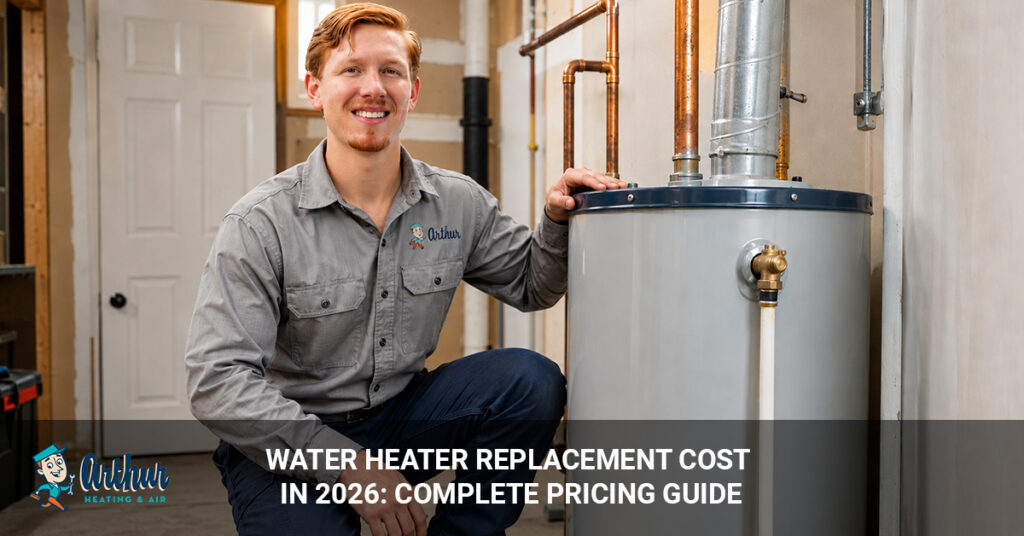
The average water heater replacement cost in 2026 ranges from $800 to $5,500 or more, depending on the type of water heater, installation requirements, labor costs, and any upgrades needed to meet local building codes.
If your water heater is leaking, not producing enough hot water, or over 10 years old, replacement is often the most cost-effective solution. While a standard tank water heater is usually the least expensive option, tankless and hybrid models cost more upfront but can help reduce energy bills over time.
Several factors affect the total replacement cost, including the size of the unit, fuel type, brand, labor rates, permit fees, and whether plumbing, electrical, or venting modifications are required.
In this guide, you’ll learn exactly how much it costs to replace a water heater, what influences pricing, how tank and tankless systems compare, and how to choose the right water heater for your home and budget.
How Much Does a Water Heater Replacement Cost in 2026?
The average water heater replacement cost in 2026 ranges from $800 to $5,500 or more, with most homeowners spending between $1,200 and $3,000 for a professionally installed unit.
The exact cost depends on the type of water heater you choose, the size of the unit, labor rates in your area, and whether any plumbing, electrical, or venting upgrades are needed. Replacing an older water heater with a similar model is usually the most affordable option. Switching to a tankless or hybrid system often costs more because these units may require additional installation work.
| Water Heater Type | Average Installed Cost |
| Electric Tank Water Heater | $800 – $2,000 |
| Gas Tank Water Heater | $1,000 – $2,500 |
| Electric Tankless Water Heater | $1,500 – $3,500 |
| Gas Tankless Water Heater | $2,500 – $5,500 |
| Hybrid Heat Pump Water Heater | $2,000 – $6,000 |
For many homeowners, a standard tank water heater provides the lowest upfront cost. Tankless and hybrid water heaters require a larger investment but can offer better energy efficiency and lower operating costs over time.
As a general guide:
- Budget replacement: $800–$1,500
- Average replacement: $1,200–$3,000
- Premium replacement: $3,000–$6,000+
- Emergency replacement: 10%–30% higher than standard pricing
Keep in mind that the final price can increase if your installation requires permit fees, code upgrades, new venting, electrical work, or plumbing modifications. Getting quotes from multiple licensed contractors is the best way to understand the actual cost for your home.
Water Heater Replacement Cost by Water Heater Type
The type of water heater you choose is one of the biggest factors that affects replacement cost. Traditional tank water heaters are usually the most affordable option, while tankless, hybrid, and solar systems require a higher upfront investment but may reduce energy costs over time.
Electric Water Heater Replacement Cost
The average electric water heater replacement cost ranges from $800 to $2,000, including the unit and professional installation.
Electric water heaters are typically the least expensive systems to replace because they do not require gas lines or venting. This makes installation simpler and helps keep labor costs lower. They are a popular choice for smaller households and homes that do not have natural gas service.
| Cost Type | Average Cost |
| Unit Cost | $400–$1,200 |
| Installation Cost | $400–$800 |
| Total Replacement Cost | $800–$2,000 |
Gas Water Heater Replacement Cost
The average gas water heater replacement cost ranges from $1,000 to $2,500.
Gas water heaters generally cost more to install than electric models because they require gas connections and proper venting. However, they heat water faster and often have lower operating costs in areas where natural gas prices are affordable.
| Cost Type | Average Cost |
| Unit Cost | $600–$1,500 |
| Installation Cost | $500–$1,000 |
| Total Replacement Cost | $1,000–$2,500 |
Tankless Water Heater Replacement Cost
The average tankless water heater replacement cost ranges from $1,500 to $5,500.
Tankless water heaters heat water only when you need it, eliminating the need for a storage tank. While they cost more upfront, many homeowners choose them for their energy efficiency, compact size, and longer lifespan. Installation costs can be higher if upgrades to gas lines, electrical systems, or venting are required.
| Cost Type | Average Cost |
| Unit Cost | $1,000–$3,500 |
| Installation Cost | $500–$2,000 |
| Total Replacement Cost | $1,500–$5,500 |
Hybrid Heat Pump Water Heater Cost
The average hybrid heat pump water heater replacement cost ranges from $2,000 to $6,000.
Hybrid water heaters use heat pump technology to transfer heat instead of generating it directly, making them one of the most energy-efficient options available. Although the initial cost is higher than a standard tank water heater, lower energy consumption can help reduce utility bills over the life of the system.
| Cost Type | Average Cost |
| Unit Cost | $1,500–$4,000 |
| Installation Cost | $500–$2,000 |
| Total Replacement Cost | $2,000–$6,000 |
Solar Water Heater Replacement Cost
The average solar water heater replacement cost ranges from $5,000 to $13,000 or more.
Solar water heaters use energy from the sun to heat water, which can significantly reduce monthly energy costs. However, they require specialized equipment and installation, making them the most expensive option on this list. In some areas, homeowners may qualify for rebates, tax credits, or other incentives that help offset the initial cost.
| Cost Type | Average Cost |
| Unit Cost | $3,000–$8,000 |
| Installation Cost | $2,000–$5,000 |
| Total Replacement Cost | $5,000–$13,000+ |
For most homeowners, an electric or gas tank water heater offers the lowest upfront cost. If long-term energy savings are a priority, a tankless or hybrid water heater may provide better value despite the higher installation cost.
Water Heater Replacement Cost by Tank Size
The cost to replace a water heater increases as the tank size gets larger. Bigger tanks store more hot water, making them a better fit for larger households, but they also cost more to purchase and install.
| Tank Size | Average Installed Cost |
| 30 Gallon | $800 – $1,500 |
| 40 Gallon | $900 – $2,000 |
| 50 Gallon | $1,000 – $2,500 |
| 75 Gallon | $1,500 – $3,500 |
| 80 Gallon | $1,800 – $4,500 |
A 30-gallon water heater is typically the most affordable option and works well for smaller households with lower hot water demand. As tank capacity increases, both equipment and installation costs generally rise.
Choosing the right tank size is important because it affects both comfort and operating costs. A tank that’s too small may leave your household without enough hot water during busy times, while an oversized tank can increase energy consumption and monthly utility bills.
For most homes, the following guidelines work well:
- 1–2 people: 30–40 gallon water heater
- 3–4 people: 40–50 gallon water heater
- 5 or more people: 75–80 gallon water heater
However, household size is only part of the equation. Daily hot water usage, the number of bathrooms, large soaking tubs, and appliances such as dishwashers and washing machines can also affect the size you need.
If you’re unsure which size is right for your home, a licensed plumber can evaluate your hot water demand and recommend a water heater that provides enough capacity without increasing your energy costs unnecessarily.
Labor Cost to Replace a Water Heater
The labor cost to replace a water heater typically ranges from $300 to $3,000 or more, depending on the complexity of the installation and any additional work required.
For a straightforward replacement where the new unit is the same type and installed in the same location, labor costs are usually on the lower end. However, costs can increase if the project requires plumbing modifications, electrical upgrades, venting changes, or code compliance updates.
Most licensed plumbers charge between $75 and $200 per hour, although rates vary by location and contractor experience.
| Installation Type | Typical Labor Cost |
| Simple Replacement | $300–$800 |
| Moderate Installation | $800–$1,500 |
| Complex Installation | $1,500–$3,000+ |
A simple replacement often involves removing the old unit and installing a new water heater with minimal modifications. More complex projects, such as converting from a tank to a tankless system, usually require additional labor and specialized work.
In addition to labor charges, homeowners may also need to budget for permit fees. Many cities and counties require permits to ensure the installation meets local plumbing and safety codes. Permit costs typically range from $50 to $500, depending on your location and inspection requirements.
Removing and disposing of the old water heater may also add to the total cost. While some contractors include this service in their quote, others charge separately. Disposal fees generally range from $50 to $200.
If your water heater fails unexpectedly, emergency service can significantly increase the overall price. Emergency replacements often cost 10% to 30% more than a scheduled installation. Check our breakdown of emergency HVAC repair costs to understand what to expect. Because contractors may need to provide same-day, weekend, holiday, or after-hours service.
Homeowners should also be aware of additional charges for work performed outside regular business hours. Weekend and after-hours installation fees typically range from $100 to $500 or more, depending on the contractor and the urgency of the repair.
To keep labor costs as low as possible, it’s often best to replace an aging water heater before it fails completely. Planning ahead gives you time to compare quotes, schedule installation during normal business hours, and avoid expensive emergency service fees.
Factors That Affect Water Heater Replacement Cost
Several factors can affect the total cost of replacing a water heater, including the type of unit, fuel source, tank size, labor requirements, and any upgrades needed during installation.
One of the biggest cost factors is the type of water heater you choose. Traditional tank water heaters usually have the lowest upfront cost, while tankless, hybrid, and solar systems require a larger initial investment. However, higher-efficiency models can help reduce energy bills over time, which may offset some of the added cost.
The fuel source also plays a major role in installation and operating expenses. Read our comparison of gas vs. electric heating pros and cons to understand the difference. Electric water heaters are typically less expensive to install because they don’t require gas lines or venting. Gas water heaters often cost more upfront due to venting and gas connection requirements, but they usually heat water faster. Propane water heaters have installation requirements similar to natural gas systems and are commonly used in rural areas where natural gas is unavailable.
Tank size is another important consideration. Larger tanks cost more to purchase and install because they require additional materials and greater capacity. For example, replacing an 80-gallon water heater can cost significantly more than replacing a 40-gallon model.
The brand you choose can also affect pricing. Premium brands often come with longer warranties, better energy efficiency, advanced features, and a longer expected lifespan. While budget-friendly models may cost less initially, they may not offer the same level of performance or warranty protection.
Your location can influence replacement costs as well. Labor rates, permit fees, and local building regulations vary by region. Homeowners in large cities often pay more for installation than those in smaller towns or rural areas.
Permit requirements can add to the total cost. Some municipalities require inspections and code compliance updates before a replacement can be approved. These requirements may increase both labor and material expenses.
Plumbing modifications are another common cost factor. If existing pipes need to be updated, shut-off valves need replacement, corrosion is discovered, or the water heater is being moved to a new location, installation costs can increase significantly.
Electrical upgrades may also be necessary, especially when installing a tankless or hybrid water heater. Adding dedicated circuits, upgrading breakers, or replacing an electrical panel can add anywhere from $200 to $2,000 or more to the project.
Venting upgrades can further increase costs for gas and tankless water heaters. Modern building codes may require new vent pipes, direct vent systems, or condensation drains to ensure safe operation. Depending on the complexity of the work, venting improvements can add several hundred dollars to the installation cost.
Finally, the location of the water heater within your home can affect labor expenses. Units installed in attics, crawl spaces, tight utility closets, or finished basements are often more difficult to access. Limited workspace may require additional labor, specialized equipment, or extra safety precautions, which can increase the overall cost of replacement.
Understanding these factors can help you estimate your budget more accurately and avoid surprises when comparing water heater replacement quotes.
Water Heater Replacement Cost by Brand
The brand you choose can affect both the upfront cost of your water heater replacement and the long-term value you receive. Premium brands often cost more initially, but they may offer better warranties, higher energy efficiency, advanced features, and longer service life.
| Brand | Typical Installed Cost | Warranty Range |
| A.O. Smith | $1,000 – $3,500 | 6–12 Years |
| Rheem | $900 – $3,500 | 6–12 Years |
| Bradford White | $1,200 – $4,000 | 6–10 Years |
| Navien (Tankless) | $2,500 – $5,500 | 10–15 Years |
| Rinnai (Tankless) | $2,500 – $6,000 | 10–15 Years |
A.O. Smith water heaters typically cost between $1,000 and $3,500 installed. As one of the most recognized brands in the industry, A.O. Smith offers a wide selection of electric, gas, tankless, and hybrid models. Many homeowners choose this brand because of its strong reputation, reliable performance, and comprehensive warranty options.
Rheem water heaters generally cost between $900 and $3,500 installed. Rheem is known for producing energy-efficient systems and offers a variety of models for different household needs. Some units also include smart technology features that allow homeowners to monitor performance and receive maintenance alerts.
Bradford White water heaters typically range from $1,200 to $4,000 installed. Unlike many other brands, Bradford White products are usually sold through licensed contractors rather than retail stores. The brand is widely respected for its durability, build quality, and professional-grade performance.
Navien tankless water heaters usually cost between $2,500 and $5,500 installed. Navien specializes in high-efficiency tankless systems designed to provide continuous hot water while reducing energy consumption. Although the upfront cost is higher, many homeowners appreciate the long-term energy savings and extended lifespan.
Rinnai tankless water heaters generally range from $2,500 to $6,000 installed. Rinnai is a leading tankless water heater manufacturer known for innovative technology, compact designs, and dependable performance. These systems are often chosen by homeowners looking for maximum efficiency and a long-lasting hot water solution.
While brand selection is important, it’s equally important to compare warranty coverage, energy efficiency ratings, installation requirements, and long-term operating costs. In many cases, spending slightly more on a quality brand can lead to fewer repairs, lower energy bills, and a longer service life.
Tank vs. Tankless Water Heater Cost
A traditional tank water heater costs less upfront, while a tankless water heater can provide greater energy savings and a longer lifespan over time.
Many homeowners compare these two options when replacing a water heater because the initial cost difference can be significant. While tank water heaters are generally more affordable to purchase and install, tankless systems often deliver better long-term value through improved efficiency and extended service life.
| Feature | Tank Water Heater | Tankless Water Heater |
| Initial Cost | Lower | Higher |
| Installation Cost | Lower | Higher |
| Lifespan | 8–12 Years | 15–20 Years |
| Energy Efficiency | Moderate | High |
| Maintenance | Minimal | Moderate |
| Hot Water Supply | Limited by Tank Size | On-Demand |
A traditional tank water heater typically costs between $800 and $2,500 for a complete replacement. Visit our detailed water heater installation cost guide for a deeper breakdown. Because these systems store hot water in a tank, installation is usually straightforward and less expensive. They are often the best choice for homeowners looking for the lowest upfront investment.
A tankless water heater generally costs between $1,500 and $5,500 or more to install. The higher price is often due to additional work such as gas line upgrades, electrical improvements, or venting modifications. However, tankless systems heat water only when needed, which helps reduce energy consumption and operating costs.
Another major advantage of a tankless water heater is its lifespan. Most tank systems last between 8 and 12 years, while many tankless models can last 15 to 20 years with proper maintenance. This longer service life can help offset the higher initial investment.
For homeowners focused on affordability, a traditional tank water heater is usually the better option. For those planning to stay in their home for many years and wanting better energy efficiency, lower utility bills, and an endless supply of hot water, a tankless water heater may be the smarter long-term investment.
The best choice ultimately depends on your budget, household size, hot water usage, and how long you plan to remain in your home.
Additional Costs Homeowners Should Expect
The cost of the water heater is only part of the total replacement expense. Many homeowners are surprised to learn that permits, code upgrades, and installation-related improvements can add hundreds or even thousands of dollars to the final bill.
One of the most common additional expenses is a permit. Many cities and counties require permits for water heater replacement to ensure the installation meets local building and safety codes. Permit fees typically range from $50 to $500, depending on your location and inspection requirements.
Some municipalities also require a thermal expansion tank when installing a new water heater. An expansion tank helps protect your plumbing system from pressure fluctuations that occur as water heats and expands. Installation usually costs between $100 and $500.
Older shut-off valves may need to be replaced during installation. While this is a relatively small expense, it can improve safety and make future maintenance easier. Replacing shut-off valves typically costs $50 to $300.
If you’re installing a gas water heater, venting upgrades may be necessary to comply with current building codes. New vent pipes, direct vent systems, or other modifications can add $200 to $1,500 or more to the project.
Electrical work is another potential cost. Tankless and hybrid water heaters often require additional electrical capacity, dedicated circuits, or even a panel upgrade. Depending on the scope of work, electrical upgrades can cost anywhere from $500 to $2,500 or more.
Gas line modifications can also increase installation costs. If you’re upgrading to a larger gas water heater or converting to a tankless system, existing gas lines may need to be resized or relocated. These upgrades typically cost between $250 and $1,500+.
Older homes may require additional code compliance updates before a new water heater can be installed. Common upgrades include drain pans, seismic straps, expansion tanks, and pressure relief valve improvements. While these upgrades help improve safety and meet current regulations, they can add several hundred dollars to the overall project cost.
Before replacing your water heater, ask your contractor whether permits, code upgrades, or utility modifications are included in the estimate. Understanding these potential costs upfront can help you avoid unexpected surprises and budget more accurately for the project.
Signs It’s Time to Replace Your Water Heater
If your water heater is over 10 years old, leaking, producing rusty water, or requiring frequent repairs, it may be time to replace it. Learn more about the signs your heater needs repair. Recognizing these warning signs early can help you avoid unexpected breakdowns, water damage, and costly emergency replacements.
One of the clearest signs is age. Most traditional tank water heaters last between 8 and 12 years. As the system gets older, efficiency declines and the risk of failure increases. If your unit is approaching the end of its lifespan, replacing it may be more cost-effective than continuing to invest in repairs.
Rust-colored water is another common warning sign. If hot water from your faucets appears brown, reddish, or discolored, corrosion may be developing inside the tank. Once the tank begins rusting internally, replacement is usually the only long-term solution.
Water pooling around the base of the tank should never be ignored. A leaking water heater often indicates that the tank has deteriorated and can no longer safely hold water. Even a small leak can lead to water damage, mold growth, and higher utility costs if left unaddressed.
Inconsistent hot water is also a sign that your system may be failing. If your water heater frequently runs out of hot water, struggles to maintain temperature, or takes longer than usual to recover, aging components or sediment buildup may be affecting performance.
Unusual noises such as rumbling, popping, or banging sounds can indicate excessive sediment accumulation inside the tank. Over time, sediment hardens at the bottom of the unit, forcing the system to work harder and increasing wear on internal components.
Higher energy bills may point to a declining water heater as well. Older systems often lose efficiency and require more energy to produce the same amount of hot water, leading to increased monthly utility costs.
Frequent repairs are another sign that replacement may be the better investment. While occasional repairs are normal, repeated service calls can quickly become expensive. Many plumbing professionals recommend replacing a water heater when repair costs approach 50% of the cost of a new unit.
If your water heater shows one or more of these warning signs, having it inspected by a qualified professional can help you determine whether repair or replacement is the most practical option.
Repair vs. Replace a Water Heater: Which Is Better?
In most cases, repairing a water heater makes sense if the unit is relatively new and the problem is minor. See our full guide on heater repair vs. replacement to help you decide. While replacement is usually the better choice for older systems with major issues or frequent breakdowns.
If your water heater is less than 8 years old and the problem involves a replaceable component, a repair can often restore performance at a much lower cost than a full replacement. Common repairs include replacing a heating element, thermostat, pressure relief valve, pilot light components, or minor electrical parts. These fixes are generally affordable and can extend the life of the system when the tank itself is still in good condition.
Repair is often the best option when:
- The water heater is less than 8 years old
- Repair costs are relatively low
- The unit is operating efficiently
- There are no signs of corrosion
- The tank is not leaking
- The issue involves a replaceable part
However, replacement becomes the smarter long-term investment when the water heater is nearing the end of its lifespan or experiencing major problems. Older units tend to lose efficiency, require more frequent repairs, and have a higher risk of sudden failure.
Replacement is often recommended when:
- The unit is more than 10 years old
- The tank is leaking
- Rust or corrosion is present
- Energy bills are increasing
- Repairs are becoming frequent
- Major components have failed
A helpful guideline many plumbers use is the 50 Percent Rule. If the cost of the repair exceeds 50% of the cost of a new water heater, replacement is usually the more cost-effective decision.
For example, if a repair costs $800 and a new water heater costs $1,500, investing in a replacement often provides better value. You’ll get a new warranty, improved energy efficiency, lower repair risk, and a longer remaining lifespan.
If you’re unsure whether to repair or replace your water heater, consider the unit’s age, condition, repair history, and overall efficiency. In many cases, spending more upfront on a replacement can save money and reduce headaches over the long run.
How Long Does Water Heater Replacement Take?
Most water heater replacements can be completed in 2 to 10 hours, depending on the type of system being installed and whether any upgrades or modifications are required.
A standard tank water heater replacement is usually the quickest option. If the new unit is the same size and type as the old one and no major plumbing or electrical changes are needed, installation typically takes 2 to 4 hours. This includes removing the old water heater, installing the new unit, testing the system, and cleaning up the work area.
Tankless water heater installations generally take longer and often require 4 to 10 hours to complete. These systems may need additional work, such as upgrading gas lines, modifying venting, adding dedicated electrical circuits, or adjusting water supply connections. The extra labor involved can significantly increase installation time.
Several factors can extend the replacement process regardless of the type of water heater being installed. Projects often take longer when permits are required, plumbing modifications are needed, electrical upgrades must be completed, or the water heater is located in a difficult-to-access area such as an attic, crawl space, or tight utility closet.
Unexpected issues can also delay installation. For example, contractors may discover outdated plumbing, code violations, corroded pipes, or inadequate venting that must be corrected before the new water heater can be safely installed.
While most homeowners can expect their new water heater to be installed within a single day, more complex projects may require additional time to complete all necessary upgrades and inspections.
How to Save Money on Water Heater Replacement
You can save money on water heater replacement by comparing quotes, choosing the right size unit, taking advantage of rebates, and replacing the system before it fails completely.
One of the easiest ways to reduce costs is to get estimates from at least three licensed contractors. Comparing quotes helps you understand local pricing, identify unnecessary upgrades, and find the best combination of value, warranty coverage, and professional service. The lowest quote isn’t always the best option, so be sure to compare what’s included in each estimate.
Many homeowners can also lower their costs through rebates and incentive programs. Energy-efficient water heaters, including hybrid and certain tankless models, may qualify for federal tax credits, utility company rebates, or state energy-efficiency incentives. Explore energy-efficient HVAC upgrades that may also qualify. These programs can significantly reduce the upfront cost of installation.
Replacing your water heater before it completely fails can also save money. Waiting until the unit stops working often leads to emergency service fees, after-hours labor charges, and potential water damage repairs. Planning ahead gives you time to compare options and schedule installation at a more convenient and affordable time.
Choosing the right size water heater is another important way to control costs. A larger unit typically costs more to purchase and operate. Selecting a system that matches your household’s actual hot water needs can help reduce both installation expenses and monthly energy bills.
Timing can also affect pricing. Some contractors offer more competitive rates during slower seasons when demand for plumbing and water heater services is lower. Scheduling a replacement during these periods may help reduce labor costs.
Finally, regular maintenance can help you get the most value from your investment. Simple tasks such as flushing the tank annually, inspecting the anode rod, testing the pressure relief valve, and scheduling periodic professional inspections can improve efficiency, reduce repair costs, and extend the lifespan of your water heater.
Taking these steps can help you lower replacement costs today while reducing operating and maintenance expenses in the years ahead.
Water Heater Replacement Process
A water heater replacement typically involves inspecting the existing system, selecting the right replacement unit, removing the old water heater, installing the new system, and performing safety checks to ensure everything operates properly.
The process begins with an inspection and assessment of your current setup. A licensed technician evaluates the existing water heater, reviews your household’s hot water needs, checks plumbing connections, and determines whether any electrical, gas, or venting upgrades are required. This step helps ensure the new system is properly sized and compatible with your home’s infrastructure.
Once the assessment is complete, the next step is choosing the right water heater. The contractor will help you select a unit based on factors such as fuel type, tank size, energy efficiency, available installation space, and budget. Choosing the correct system is important for both performance and long-term operating costs.
After the new water heater has been selected, the old unit is removed. The contractor disconnects the water, gas, or electrical connections, drains the tank, removes the existing equipment, and disposes of it according to local regulations. Proper removal helps prevent safety issues and ensures compliance with disposal requirements.
The installation phase follows. The new water heater is connected to the home’s water supply lines, electrical system or gas line, and venting system if required. Any necessary upgrades, such as new shut-off valves, expansion tanks, or code-related improvements, are typically completed during this stage.
Before the project is finished, the installer performs a series of tests and safety checks. This includes verifying proper operation, checking for leaks, confirming accurate water temperature settings, and ensuring that venting and safety devices function correctly. These checks help ensure the system operates efficiently and safely.
In some areas, a final inspection may be required. Local building inspectors may review the installation to confirm that it meets current plumbing, mechanical, and safety codes. Once the inspection is approved, the replacement process is complete, and your new water heater is ready for regular use.
While most water heater replacements can be completed in a single day, understanding each step of the process helps homeowners know what to expect and ensures a smoother installation experience.
Frequently Asked Questions
How much should I expect to pay to replace a water heater?
Most homeowners spend between $1,200 and $3,000 to replace a water heater, including the unit and professional installation. The final cost depends on the type of water heater, tank size, labor rates, and whether upgrades to plumbing, electrical, or venting systems are required.
How much does a plumber charge to install a water heater?
Plumbers typically charge between $300 and $1,500 for water heater installation labor. Simple replacements are usually less expensive, while complex projects involving tankless systems, code upgrades, or utility modifications can cost significantly more.
Does homeowners insurance cover water heater replacement?
Homeowners insurance may cover water heater replacement if the damage results from a sudden and unexpected event covered by your policy. However, insurance generally does not pay for replacement due to normal wear and tear, age, corrosion, or lack of maintenance.
Is it worth replacing a 10-year-old water heater?
Yes, replacing a 10-year-old water heater is often a smart investment. Most traditional tank water heaters last between 8 and 12 years, and older systems are more likely to experience leaks, efficiency problems, and costly repairs.
How long does a water heater last?
The lifespan of a water heater depends on the type of system and how well it is maintained.
- Traditional tank water heater: 8–12 years
- Tankless water heater: 15–20 years
- Hybrid heat pump water heater: 10–15 years
Regular maintenance can help extend the life of any water heater.
Can I replace a water heater myself?
While it is possible to replace a water heater yourself, professional installation is usually recommended. Water heater installation often involves plumbing, gas, electrical, and venting connections that must meet local building codes and safety requirements.
What size water heater do I need?
The right water heater size depends on your household size and daily hot water usage.
- 1–2 people: 30–40 gallon tank
- 3–4 people: 40–50 gallon tank
- 5 or more people: 75–80 gallon tank
Homes with multiple bathrooms, large tubs, or high hot water demand may require a larger system.
Is a tankless water heater worth the extra cost?
For many homeowners, a tankless water heater is worth the higher upfront cost. Tankless systems are more energy-efficient, last longer than traditional tank models, and provide hot water on demand. However, the best choice depends on your budget, household needs, and how long you plan to stay in your home.
Final Thoughts
The average water heater replacement cost in 2026 ranges from $800 to $5,500 or more, with most homeowners spending between $1,200 and $3,000 for a professionally installed system. The final cost depends on factors such as the type of water heater, tank size, labor requirements, and any plumbing, electrical, or venting upgrades needed during installation.
While traditional tank water heaters offer the lowest upfront cost, tankless and hybrid models can provide greater energy efficiency, lower operating expenses, and a longer lifespan. The best choice depends on your budget, household size, hot water usage, and long-term goals.
When comparing replacement options, look beyond the purchase price. Consider installation costs, energy savings, maintenance requirements, warranty coverage, and expected lifespan to determine the true value of each system.
If your water heater is leaking, producing rusty water, struggling to provide consistent hot water, or approaching the end of its lifespan, replacing it before it fails completely can help you avoid emergency repair costs and potential water damage.
Getting quotes from multiple licensed contractors and choosing the right water heater for your home’s needs can help you make a confident decision and ensure reliable hot water for years to come.