
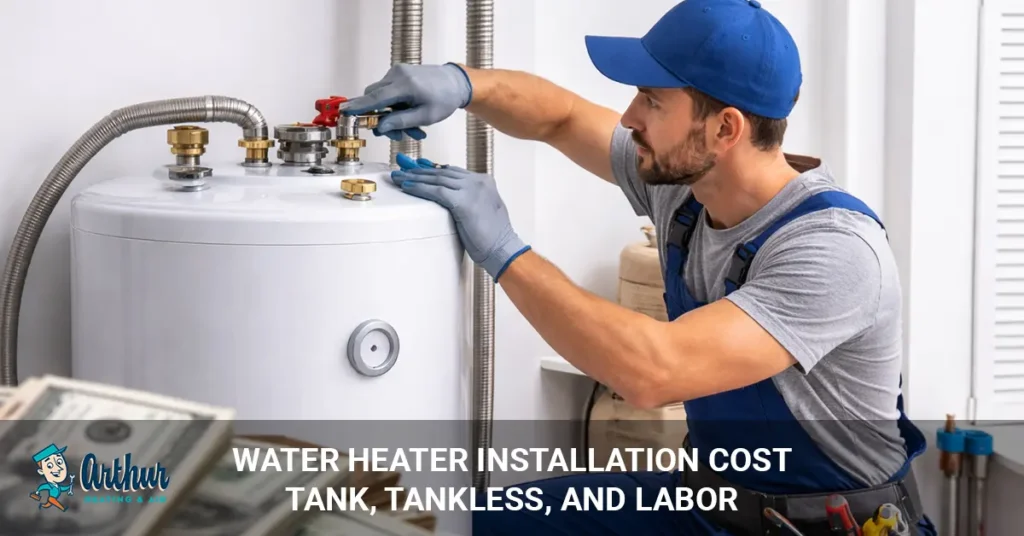
Water heater installation costs typically range from $900 to $5,500 or more in 2026, depending on the type of water heater, labor, and the complexity of the installation. Replacing a standard electric tank water heater is usually the most affordable option, while installing a gas tankless water heater or a heat pump water heater often costs significantly more because of additional plumbing, gas, electrical, or venting requirements.
The total price isn’t determined by the water heater alone. Labor rates, tank size, fuel type, permits, code upgrades, and the condition of your existing plumbing system can all affect the final installation cost. In some homes, replacing an existing unit takes only a few hours, while first-time installations or conversions from tank to tankless systems may require a full day of work.
In this guide, you’ll learn the average water heater installation costs by type, labor costs, replacement versus new installation pricing, the factors that affect installation costs, and practical ways to save money while choosing the right water heater for your home.
How Much Does Water Heater Installation Cost?
Water heater installation costs typically range from $900 to $5,500 or more, depending on the type of system you choose and the complexity of the installation. Standard tank water heaters are generally the least expensive to install, while tankless, heat pump, and solar water heaters usually cost more because they often require additional plumbing, electrical, gas, or venting work.
The table below shows average installed costs for the most common residential water heater types.
| Water Heater Type | Average Installed Cost |
| Electric Tank Water Heater | $900–$2,000 |
| Gas Tank Water Heater | $1,200–$2,500 |
| Electric Tankless Water Heater | $1,500–$3,500 |
| Gas Tankless Water Heater | $2,000–$5,500 |
| Heat Pump Water Heater | $2,000–$6,000 |
| Solar Water Heater | $3,500–$8,000+ |
These estimates typically include the water heater, standard installation labor, and basic plumbing connections. However, your total cost may increase if your project requires:
- New gas line installation
- Electrical panel upgrades
- Venting modifications
- Plumbing code updates
- Permit and inspection fees
- Removal and disposal of the old water heater
- Relocating the installation site
If you’re replacing an existing water heater with a similar model, installation is usually quicker and less expensive. On the other hand, converting from a tank water heater to a tankless system or switching fuel types often requires additional work that increases the overall project cost.
Average Water Heater Installation Cost by Type
The type of water heater you install has the biggest impact on the total installation cost. Traditional tank water heaters usually have lower upfront costs, while tankless, heat pump, and solar systems require more specialized installation and often involve additional labor.
Electric Tank Water Heater
Electric tank water heaters typically cost between $900 and $2,000 installed. They are among the most affordable options because they don’t require gas lines or combustion venting. Installation is usually straightforward when replacing an existing electric unit.
Electric tank water heaters are ideal for:
- Small to medium-sized households
- Homes without natural gas service
- Homeowners looking for a lower upfront cost
Gas Tank Water Heater
Gas tank water heaters generally cost between $1,200 and $2,500 installed. Although the units are often similarly priced to electric models, installation costs can be higher because they require a gas supply, proper venting, and combustion safety checks.
Gas models are often preferred because they:
- Heat water faster than electric units
- Recover hot water more quickly
- Continue working during high hot water demand
Electric Tankless Water Heater
Electric tankless water heaters typically cost $1,500 to $3,500 installed. They heat water only when needed, eliminating standby energy losses. However, many homes require electrical upgrades to support the higher power demand.
Additional costs may include:
- New electrical circuits
- Higher-capacity breakers
- Electrical panel upgrades
Gas Tankless Water Heater
Gas tankless water heaters usually cost between $2,000 and $5,500 installed. If you’re considering this upgrade, learn more about the cost of installing a tankless water heater and the factors that affect pricing.
They provide continuous hot water and are an excellent choice for larger households, but installation is more complex than replacing a traditional tank.
Additional installation work may involve:
- Gas line upgrades
- New venting systems
- Condensate drainage (for condensing models)
Heat Pump Water Heater
Heat pump water heaters generally cost between $2,000 and $6,000 installed. If you’re comparing high-efficiency options, it’s worth reviewing the average heat pump installation cost before making your decision.
They use electricity to move heat from the surrounding air instead of generating heat directly, making them one of the most energy-efficient residential water heating options.
They work best in:
- Warm or moderate climates
- Utility rooms, garages, or basements with adequate airflow
- Homes focused on reducing long-term energy costs
Solar Water Heater
Solar water heaters typically cost $3,500 to $8,000 or more installed. These systems use solar collectors to heat water and often include a backup heating source for cloudy days or periods of high demand.
Although solar systems have the highest upfront cost, they can significantly reduce long-term water heating expenses and may qualify for available rebates or tax incentives, depending on your location.
Water Heater Installation Labor Cost
Labor to install a water heater typically costs between $300 and $2,000 or more, depending on the complexity of the job. Replacing an existing water heater with the same type is usually the least expensive, while first-time installations, fuel conversions, or tankless upgrades require more labor and specialized work.
The table below shows typical labor costs for common installation scenarios.
| Labor Type | Average Labor Cost |
| Standard Water Heater Replacement | $300–$800 |
| Complex Installation | $800–$2,000+ |
| Emergency or After-Hours Installation | Additional $150–$500 |
A standard installation typically includes:
- Removing the old water heater
- Positioning the new unit
- Connecting water supply lines
- Connecting gas or electrical service
- Testing for leaks
- Filling and starting the system
- Verifying safe operation
Labor costs increase when additional work is required, such as:
- Relocating the water heater
- Installing new water, gas, or drain lines
- Upgrading the electrical panel
- Replacing or extending gas piping
- Installing new venting
- Bringing older plumbing up to current building codes
- Obtaining permits and scheduling inspections
Geographic location also affects labor costs. Homeowners in large metropolitan areas generally pay higher hourly rates than those in smaller towns or rural communities.
Although it may be tempting to choose the lowest installation quote, hiring a licensed plumber helps ensure the water heater is installed safely, complies with local building codes, and maintains the manufacturer’s warranty.
Water Heater Replacement Cost vs. New Installation
Replacing an existing water heater usually costs less than installing one in a new location. If you’re replacing an old unit, it’s also helpful to compare the average water heater replacement cost before deciding whether repair or replacement offers the best value.
That’s because most replacement projects can use the existing plumbing, gas, electrical, and venting connections. A first-time installation often requires additional infrastructure, increasing both labor and material costs.
| Project Type | Average Installed Cost |
| Water Heater Replacement | $900–$3,500 |
| First-Time Water Heater Installation | $2,000–$6,000+ |
Water Heater Replacement
Replacing an existing water heater is the most common and cost-effective installation. If you’re installing a similar model in the same location, the plumber can often reuse much of the existing plumbing and utility connections.
A typical replacement may include:
- Removing and disposing of the old water heater
- Installing the new unit
- Reconnecting water, gas, or electrical lines
- Testing for leaks and proper operation
- Bringing minor components up to current code, if required
Most standard replacements can be completed within a few hours, helping keep labor costs relatively low.
First-Time Water Heater Installation
A first-time installation costs more because the home needs new plumbing and utility connections. This type of project is common when adding a bathroom, finishing a basement, building an addition, or converting from another water heating system.
Additional work may include:
- Running new hot and cold water lines
- Installing a gas line or dedicated electrical circuit
- Adding venting for gas models
- Installing a drain pan or condensate drain
- Obtaining permits and passing inspections
- Upgrading plumbing to meet local building codes
Tank-to-Tankless Conversion
Converting from a traditional tank water heater to a tankless system typically costs more than a standard replacement. Although tankless water heaters save space and improve energy efficiency, the installation often requires significant upgrades.
Common additional costs include:
- Larger gas supply lines
- New venting materials
- Electrical upgrades for electric tankless units
- Water line modifications
- Relocating the installation if needed
While the upfront investment is higher, many homeowners choose tankless systems for their longer lifespan, improved efficiency, and continuous hot water supply.
What Affects Water Heater Installation Cost?
Several factors determine the total cost of installing a water heater. While the type of water heater has the biggest impact, labor, plumbing modifications, fuel type, permits, and code requirements can also significantly increase or decrease the final price.
Water Heater Type
The type of water heater you choose has the greatest influence on installation cost. Traditional tank water heaters are generally the least expensive to install, while tankless, heat pump, and solar systems require more labor and specialized equipment.
Tank Size
Larger water heaters typically cost more than smaller models. A 75- or 80-gallon unit costs more to purchase and may require additional installation work due to its size and weight.
Fuel Type
Gas and electric water heaters have different installation requirements. Gas models require a gas supply line and proper venting, while electric models may need dedicated electrical circuits or panel upgrades, especially for tankless units.
Location of Installation
The location of the water heater affects labor costs. Units installed in easily accessible utility rooms are generally less expensive to replace than those located in crawl spaces, attics, or tight closets where additional labor is required.
Plumbing Modifications
Older plumbing systems often require upgrades during installation. Replacing shut-off valves, water supply lines, or drain connections can increase both labor and material costs.
Electrical Upgrades
Some installations require electrical improvements before the new water heater can operate safely. Electric tankless water heaters, in particular, may need larger breakers, new wiring, or a higher-capacity electrical panel.
Gas Line Installation
Gas water heaters may require a larger or newly installed gas line. If the existing gas supply doesn’t provide enough capacity for the new appliance, upgrading the gas piping will increase the installation cost.
Venting Requirements
Gas water heaters must be vented correctly to operate safely. Standard atmospheric venting, direct vent systems, and power vent models all have different installation costs depending on the home’s layout and local building codes.
Permits and Inspections
Many municipalities require permits for water heater installation. Permit fees and required inspections vary by location but should be included in your project budget to ensure the installation complies with local plumbing and building codes.
Disposal of the Old Water Heater
Removing and disposing of the old water heater may involve an additional charge. Some plumbing companies include disposal in their installation price, while others bill it as a separate service.
Emergency Installation
Emergency or after-hours installation usually costs more than a scheduled appointment. If your water heater fails at night, on weekends, or during holidays, expect additional labor charges for emergency service.
Understanding these cost factors helps you estimate your total project budget more accurately and avoid unexpected expenses during installation.
Water Heater Installation Cost by Tank Size
Larger water heaters generally cost more to install because they have higher equipment prices and may require additional labor or plumbing modifications. Choosing the right tank size helps ensure your household has enough hot water without paying for unnecessary capacity.
| Tank Size | Typical Household Size | Average Installed Cost |
| 30 Gallon | 1–2 people | $900–$1,600 |
| 40 Gallon | 2–3 people | $1,000–$1,900 |
| 50 Gallon | 3–5 people | $1,100–$2,300 |
| 75 Gallon | 5–6 people | $1,700–$3,200 |
| 80 Gallon | 6+ people | $2,000–$3,800 |
30-Gallon Water Heater
A 30-gallon water heater is suitable for households with one or two people. It’s a compact and affordable option for apartments, condos, and small homes with relatively low hot water demand.
40-Gallon Water Heater
A 40-gallon water heater works well for two to three people. It’s one of the most common sizes for smaller families and provides enough hot water for everyday activities such as showering, laundry, and dishwashing.
50-Gallon Water Heater
A 50-gallon water heater is the most popular choice for families of three to five people. It offers a good balance between hot water capacity, energy efficiency, and installation cost.
75-Gallon Water Heater
A 75-gallon water heater is designed for larger households with higher hot water demand. Homes with multiple bathrooms or several family members using hot water at the same time often benefit from this larger capacity.
80-Gallon Water Heater
An 80-gallon water heater provides the highest storage capacity for most residential applications. It’s ideal for large families, luxury homes, or households with oversized soaking tubs, multiple showers, and frequent simultaneous hot water use.
Choosing the correct tank size is important. A water heater that’s too small may run out of hot water during peak demand, while an oversized unit can increase both installation costs and ongoing energy expenses. A licensed plumber can help determine the right capacity based on your household size and daily hot water usage.
Tank Water Heater vs. Tankless Installation Cost
Tank water heaters cost less to install, while tankless water heaters have higher upfront installation costs but can provide greater energy efficiency and a longer service life. The best choice depends on your budget, household size, and long-term hot water needs.
| Feature | Tank Water Heater | Tankless Water Heater |
| Average Installation Cost | $900–$2,500 | $1,500–$5,500 |
| Average Lifespan | 8–12 years | 15–20+ years |
| Energy Efficiency | Moderate | High |
| Hot Water Supply | Limited by tank capacity | Continuous on-demand hot water |
| Maintenance | Low to moderate | Annual flushing recommended |
| Space Required | Larger floor space | Wall-mounted, compact design |
| Best For | Budget-conscious homeowners | Homes with high hot water demand |
Tank Water Heater Installation
Tank water heaters have the lowest installation cost because they usually connect to existing plumbing and utility lines. Replacing an older tank with a similar model is often a straightforward project that requires minimal modifications.
Advantages include:
- Lower upfront cost
- Faster installation
- Widely available replacement parts
- Suitable for most homes
However, tank water heaters store a limited amount of hot water. Once the tank is empty, you’ll need to wait for the water to heat again.
Tankless Water Heater Installation
Tankless water heaters cost more to install because they often require additional plumbing, gas, electrical, or venting upgrades. Although the initial investment is higher, they heat water only when it’s needed, reducing standby energy losses.
Benefits include:
- Continuous hot water
- Longer lifespan
- Higher energy efficiency
- Compact, space-saving design
Depending on your home’s existing plumbing system, a tankless installation may require:
- Larger gas supply lines
- Dedicated electrical circuits
- New venting materials
- Water line modifications
- Condensate drainage for condensing units
Which Option Offers Better Value?
A traditional tank water heater offers better value if you want the lowest upfront installation cost. It’s an excellent choice for homeowners replacing an existing unit on a budget.
A tankless water heater provides better long-term value for many households. While installation costs are higher, the longer lifespan, improved energy efficiency, and unlimited hot water can offset the additional investment over time, especially for larger families with high daily hot water usage.
Not Sure Which System is Right for Your Home?
Get a side-by-side recommendation based on your budget and hot water needs.
 Compare Tank vs Tankless
Additional Water Heater Installation Costs to Consider
The price of the water heater and labor aren’t the only costs you’ll pay during installation. Depending on your home’s plumbing system and local building codes, additional upgrades or materials may be required to complete the installation safely and legally.
Permit Fees
Many cities and counties require a permit for water heater installation. Permit costs vary by location but typically range from $50 to $300. A permit helps ensure the installation meets local plumbing, gas, electrical, and safety codes.
Expansion Tank
An expansion tank may be required if your home has a closed plumbing system. It protects the water heater and plumbing from pressure increases caused by heated water expanding inside the system.
Average cost installed: $150–$500
Water Shut-Off Valve
Older shut-off valves are often replaced during water heater installation. Installing a new valve makes future maintenance and emergency repairs easier.
Average cost: $50–$200
Drain Pan
A drain pan helps protect your home from water damage if the water heater leaks. It’s commonly required when the unit is installed in an attic, closet, or above finished living spaces.
Average cost installed: $50–$200
Pressure Reducing Valve
Some homes require a pressure reducing valve to keep water pressure within the manufacturer’s recommended limits. Excessive pressure can shorten the lifespan of the water heater and damage plumbing fixtures.
Average cost installed: $200–$600
Earthquake Straps
Earthquake straps secure the water heater to the wall in areas where seismic bracing is required by building code. They help prevent the unit from tipping during an earthquake.
Average cost installed: $50–$200
Venting Upgrades
Gas water heaters may require new or upgraded venting systems. Replacing outdated vent pipes or installing power-vent or direct-vent systems increases both material and labor costs.
Average cost: $300–$1,500+
Gas Line Upgrades
A larger gas line may be necessary when installing certain gas water heaters, especially tankless models. If the existing gas supply can’t deliver enough fuel, upgrading the piping becomes part of the project.
Average cost: $300–$1,500+
Electrical Panel Upgrades
Electric tankless water heaters often require electrical panel upgrades. Many older homes don’t have enough electrical capacity to support the high power demand of these systems.
Average cost: $1,000–$3,500
Plumbing Code Upgrades
Older homes sometimes require plumbing updates before a new water heater can be installed. Common upgrades include replacing shut-off valves, adding expansion tanks, installing drain pans, or updating water supply connections to meet current building codes.
Because every home is different, these additional costs don’t apply to every installation. Asking your plumber for a detailed written estimate helps you understand exactly what’s included and reduces the risk of unexpected charges once the work begins.
Can You Install a Water Heater Yourself?
While it’s possible to install a water heater yourself, professional installation is the safest and most reliable option for most homeowners. Water heater installation involves plumbing, electrical, gas, and safety requirements that must meet local building codes. Mistakes can lead to water damage, gas leaks, electrical hazards, or carbon monoxide exposure.
When DIY Installation May Be Appropriate
DIY installation is generally limited to straightforward replacements for experienced homeowners. If you’re replacing an electric tank water heater with the same size and type, and you’re familiar with local plumbing and electrical codes, the project may be manageable.
Even then, you’ll need to:
- Shut off the water and power safely
- Connect water supply lines correctly
- Install a temperature and pressure (T&P) relief valve
- Check for leaks before restoring power
- Follow all local code requirements
Why Professional Installation Is Recommended
Hiring a licensed plumber helps ensure the installation is completed safely and correctly. Professionals understand local building codes, obtain permits when required, and verify that the system operates properly before leaving your home.
Professional installation also provides benefits such as:
- Proper plumbing, gas, and electrical connections
- Correct venting for gas water heaters
- Safe pressure and temperature settings
- Code-compliant installation
- Manufacturer warranty protection
- Reduced risk of future leaks or failures
Risks of DIY Installation
Improper installation can create expensive and dangerous problems. Common mistakes include:
- Gas leaks from improperly connected gas lines
- Electrical hazards caused by incorrect wiring
- Water leaks from poorly sealed plumbing connections
- Improper venting that allows carbon monoxide to enter the home
- Incorrect pressure relief valve installation
- Building code violations that may affect insurance coverage or future home sales
Is DIY Worth the Savings?
For most homeowners, professional installation offers better long-term value than attempting a DIY installation. Although hiring a licensed plumber increases the upfront cost, it helps prevent costly repairs, safety hazards, warranty issues, and code violations. Considering that a properly installed water heater can provide reliable service for 10 to 20 years or more, professional installation is often the smarter investment.
How Long Does Water Heater Installation Take?
Most standard water heater installations take between 2 and 8 hours, depending on the type of water heater and the amount of work required. Replacing an existing tank water heater is usually the quickest job, while installing a tankless system or adding a water heater to a new location often takes much longer.
| Installation Type | Average Installation Time |
| Tank Water Heater Replacement | 2–4 hours |
| Tankless Water Heater Replacement | 4–8 hours |
| First-Time Water Heater Installation | 6–10+ hours |
Tank Water Heater Replacement
Replacing an existing tank water heater typically takes 2 to 4 hours. If the new unit is the same fuel type and similar size, the plumber can often reuse the existing plumbing, electrical, or gas connections.
A standard replacement usually includes:
- Draining and removing the old water heater
- Positioning the new unit
- Connecting water, gas, or electrical lines
- Filling the tank
- Testing for leaks and proper operation
Tankless Water Heater Replacement
Replacing a tankless water heater generally takes 4 to 8 hours. Although the old unit is already tankless, additional adjustments may be needed for venting, gas supply, or electrical connections depending on the new model.
First-Time Water Heater Installation
Installing a water heater where one didn’t previously exist usually takes 6 to 10 hours or longer. New plumbing lines, gas piping, electrical wiring, venting, and permits can all add time to the project.
What Can Increase Installation Time?
Several factors can extend the installation, including:
- Converting from a tank water heater to a tankless system
- Switching from electric to gas or gas to electric
- Installing new gas lines or electrical circuits
- Upgrading the electrical panel
- Replacing outdated plumbing connections
- Installing new venting
- Completing required plumbing code upgrades
- Waiting for permit inspections, when required
Although some installations take longer than others, most homeowners have hot water restored the same day. Hiring an experienced, licensed plumber helps keep the project on schedule while ensuring the installation is completed safely and meets local building codes.
How to Save Money on Water Heater Installation
You can reduce water heater installation costs by planning ahead, choosing the right system, and avoiding unnecessary upgrades. While the cheapest option isn’t always the best value, several strategies can help lower your upfront cost without sacrificing quality.
Compare Multiple Estimates
Request quotes from at least two or three licensed plumbers before making a decision. Comparing estimates helps you understand local pricing, identify unnecessary charges, and choose a contractor who offers the best overall value, not just the lowest price.
Replace the Water Heater Before It Fails
Replacing an aging water heater before it breaks down can save money. Emergency installations often come with higher labor rates, after-hours service fees, and the potential cost of repairing water damage caused by leaks.
Choose the Right Size
Installing the correct size water heater prevents unnecessary expenses. A unit that’s too high costs more to purchase and operate, while one that’s too small may struggle to meet your household’s hot water demand, leading to premature wear.
Look for Rebates and Tax Credits
Many energy-efficient water heaters qualify for rebates or tax incentives. Heat pump water heaters, high-efficiency gas models, and some solar water heaters may be eligible for manufacturer rebates, utility company incentives, or government tax credits that reduce the total installation cost.
Schedule Installation During Normal Business Hours
Scheduling your installation during regular business hours can help avoid emergency labor charges. Nights, weekends, and holiday appointments often cost significantly more than planned installations.
Maintain Your New Water Heater
Routine maintenance extends the lifespan of your water heater and helps prevent costly repairs. Depending on the type of system, regular maintenance may include:
- Flushing the tank to remove sediment
- Inspecting the anode rod
- Checking the temperature and pressure relief valve
- Cleaning the air filter on heat pump models
- Flushing tankless water heaters to remove mineral buildup
Don’t Automatically Choose the Cheapest Water Heater
The lowest-priced water heater isn’t always the most economical over time. A higher-efficiency model may cost more to install but can reduce monthly utility bills and last longer, lowering your total cost of ownership.
Taking time to plan your installation, compare options, and invest in regular maintenance can save hundreds or even thousands of dollars over the life of your new water heater.
When Should You Replace Your Water Heater?
Most water heaters should be replaced when they reach the end of their expected lifespan, develop major leaks, or require frequent expensive repairs. Replacing an aging unit before it fails can help you avoid emergency installation costs, water damage, and unexpected loss of hot water.
Your Water Heater Is Near the End of Its Lifespan
Age is one of the biggest indicators that it’s time for a replacement. Understanding the average lifespan of home water heaters can help you determine when replacement is more cost-effective than continued repairs. While proper maintenance can extend a water heater’s life, every system eventually wears out.
| Water Heater Type | Average Lifespan |
| Tank Water Heater | 8–12 years |
| Tankless Water Heater | 15–20+ years |
| Heat Pump Water Heater | 10–15 years |
If your unit is approaching these age ranges and repair costs are increasing, replacement is often the better long-term investment.
Rusty or Discolored Hot Water
Rust-colored hot water may indicate corrosion inside the water heater tank. While rusty water can sometimes come from aging plumbing, corrosion inside the tank usually means the unit is nearing the end of its service life.
Water Leaks Around the Tank
A leaking water heater should never be ignored. Small leaks around fittings may be repairable, but water leaking from the tank itself often indicates internal corrosion or structural failure. In most cases, a leaking tank must be replaced.
Not Enough Hot Water
Running out of hot water more frequently can indicate a failing water heater. Sediment buildup, worn heating elements, or an aging burner can reduce the system’s ability to heat water efficiently.
Rising Energy Bills
An unexpected increase in utility costs may mean your water heater is losing efficiency. As internal components wear out or sediment accumulates, the unit works harder to produce the same amount of hot water.
Frequent Repairs
Repeated repairs often cost more than replacing an older water heater. If you’re calling a plumber several times a year or facing a major repair on an aging unit, investing in a new water heater usually provides better long-term value.
Repair or Replace?
A simple guideline is:
- Repair the water heater if:
- It’s relatively new.
- The repair is minor.
- The tank is in good condition.
- The repair cost is low.
- Replace the water heater if:
- The tank is leaking.
- The unit has reached the end of its expected lifespan.
- Major components have failed.
- Repair costs approach the price of a new installation.
Replacing your water heater before it fails completely gives you time to compare models, schedule installation during normal business hours, and choose the best system for your home’s hot water needs.
Frequently Asked Questions
How much does it cost to install a water heater?
Water heater installation typically costs between $900 and $5,500 or more. The total cost depends on the type of water heater, labor rates, installation complexity, and whether plumbing, electrical, or gas upgrades are required.
Does water heater installation include removing the old unit?
In many cases, yes. Most plumbing companies include removing and disposing of the old water heater as part of a standard replacement. However, some contractors charge an additional disposal fee, so it’s always a good idea to confirm what’s included in the estimate.
Is a permit required to install a water heater?
Many cities and counties require a permit for water heater installation. Permit requirements vary by location, but they help ensure the installation complies with local plumbing, gas, electrical, and safety codes. Your licensed plumber can usually obtain the permit and schedule any required inspections.
How much does labor cost to install a water heater?
Labor typically costs between $300 and $2,000 or more. A straightforward replacement usually falls at the lower end of the range, while first-time installations, tankless conversions, and projects requiring electrical or gas upgrades cost more.
Is tankless water heater installation more expensive?
Yes. Tankless water heaters usually cost more to install than traditional tank models because they often require larger gas lines, new venting, electrical upgrades, or plumbing modifications. However, many homeowners offset the higher installation cost through improved energy efficiency and a longer system lifespan.
How long does water heater installation take?
Most standard water heater replacements take between 2 and 4 hours. Tankless installations generally require 4 to 8 hours, while first-time installations may take 6 to 10 hours or longer if new plumbing or utility connections are needed.
Can I install a water heater myself?
Although it’s possible, professional installation is recommended for most homeowners. Water heater installation involves plumbing, electrical, gas, and building code requirements that must be completed safely. Improper installation can result in leaks, gas hazards, electrical problems, or voided manufacturer warranties.
What size water heater do I need?
The right size depends on your household size and daily hot water usage. As a general guideline:
- 30 gallons: 1–2 people
- 40 gallons: 2–3 people
- 50 gallons: 3–5 people
- 75 gallons: 5–6 people
- 80 gallons: 6 or more people
A licensed plumber can calculate your household’s hot water demand and recommend the most appropriate size for reliable performance and energy efficiency.
Final Thoughts
Water heater installation costs depend on much more than the price of the unit itself. The type of water heater, labor, tank size, fuel source, permits, and any required plumbing or electrical upgrades all influence the total project cost. While a standard tank replacement is often straightforward and affordable, tankless systems and first-time installations typically require a larger investment.
Before choosing a new water heater, compare installation estimates, select the right size for your household, and consider both upfront costs and long-term operating expenses. Hiring a licensed plumber helps ensure the installation is completed safely, meets local building codes, and provides reliable hot water for years to come.
Ready to Install Your New Water Heater?
Get fast, professional installation with clear, upfront pricing.
 Schedule My Installation