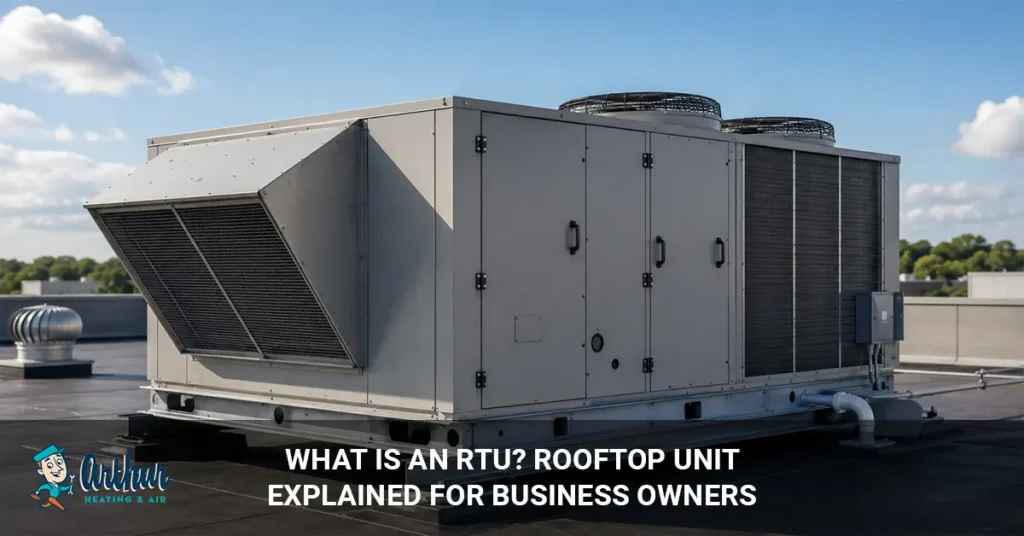
An RTU is a rooftop HVAC unit that heats and cools a building from a single system installed on the roof.
If you run or manage a commercial space, you’ve likely heard this term before. It comes up often when talking about heating and cooling systems for offices, shops, and warehouses.
In simple terms, an RTU (rooftop unit) is an all-in-one HVAC system. It sits on the roof and handles both heating and cooling. Unlike systems with separate indoor and outdoor parts, everything is built into one unit.
This setup saves space inside your building. It also makes the system easier to manage for many businesses.
What Does RTU Stand for in HVAC?
RTU stands for rooftop unit, which is a packaged HVAC system installed on the roof of a building.
In simple terms, it means all heating and cooling components are built into one unit. This includes the compressor, coils, and fan. Everything works together in a single system instead of being split into indoor and outdoor parts.
RTUs are mainly used in commercial buildings because they can handle larger spaces and constant use. They are also easier to install and maintain, which makes them a practical choice for business owners.
How Does a Rooftop Unit Work?
A rooftop unit works by pulling indoor air, heating or cooling it, and sending it back through the building.
The system runs in a continuous cycle to keep the temperature steady. It takes in air through return ducts, processes it inside the unit, and pushes it back through supply ducts.
Inside the unit, key parts handle different steps:
- The compressor moves refrigerant through the system
- The evaporator coil absorbs heat from indoor air
- The condenser coil releases that heat outside
- The blower pushes the conditioned air back into the building
As this cycle repeats, the air is cooled or heated based on the thermostat setting. Because everything is built into one unit, the system stays compact and works efficiently for commercial spaces.
Types of Rooftop Units
Rooftop units come in different types based on how they heat, cool, and control airflow.
The right type depends on your building size, climate, and how the space is used. Some systems are simple and focus only on cooling, while others offer full heating and cooling with better control.
The most common types include:
- Cooling-only RTUs: Best for buildings that only need air conditioning
- Gas/electric RTUs: Use gas for heating and electricity for cooling
- Heat pump RTUs: Provide both heating and cooling using electricity
- VAV (Variable Air Volume) systems: Adjust airflow based on demand for better efficiency
Each option fits a different need. Choosing the right one helps improve comfort, control energy costs, and keep your system running efficiently.
Where Are RTUs Commonly Used?
RTUs are commonly used in commercial buildings where efficient, centralized heating and cooling is needed.
They are a popular choice because they save indoor space and are easy to manage. Since the unit sits on the roof, it keeps equipment out of the way and allows more usable space inside the building.
You’ll typically find RTUs in:
- Office buildings
- Retail stores and shopping centers
- Restaurants
- Warehouses
- Schools and commercial facilities
These spaces benefit from consistent temperature control and a system that can handle daily use without complicated setup.
Benefits of RTU Systems for Business Owners
RTU systems benefit business owners by saving space, simplifying installation, and making maintenance easier.
Because the unit is installed on the roof, it keeps valuable indoor space free for daily operations. This is especially useful in commercial buildings where every square foot matters.
RTUs are also easier to install since all components are built into one unit, making them a smart option during larger HVAC system upgrades.
This reduces setup time and avoids the complexity of multiple system parts. Maintenance is more convenient too, as technicians can service the unit on the roof without disrupting your business activities.
Key benefits include:
- More usable indoor space
- Simple, all-in-one system design
- Faster and easier installation
- Convenient maintenance access
- Flexible for business growth and upgrades
These advantages make RTUs a practical and cost-effective choice for many commercial properties.
Disadvantages of Rooftop Units
Rooftop units have some drawbacks, mainly due to their outdoor placement and long-term operating costs.
Because RTUs sit on the roof, they are exposed to sun, rain, wind, and debris all year. This constant exposure can cause wear and tear faster than indoor systems, which may reduce their lifespan over time.
Energy efficiency can also vary. Older or poorly maintained units often use more energy, which can increase utility bills. In some cases, performance may drop if the system is not serviced regularly.
Another important factor is the building structure. Not every roof is designed to support the weight of an RTU, so a structural check may be needed before installation.
Key drawbacks include:
- Exposure to harsh weather conditions
- Potentially shorter lifespan
- Higher energy use in older units
- Roof must support the system weight
Understanding these limitations helps you plan better and avoid unexpected costs later.
RTU vs Split System: What’s the Difference?
The main difference is that an RTU is a single unit on the roof, while a split system has separate indoor and outdoor units.
An RTU combines all components into one system, which makes installation simpler for commercial buildings. A split system, on the other hand, separates the condenser outside and the air handler inside, which is more common in homes and smaller spaces.
This setup changes how each system is used. RTUs are easier to access for maintenance and work well for large, open areas. Split systems offer more flexibility, especially when you need different temperature zones in smaller spaces.
Key differences include:
- Design: RTU is all-in-one, split system has separate units
- Location: RTU on the roof, split system indoor + outdoor
- Best use: RTU for commercial, split for residential or small spaces
- Maintenance: RTU easier to access, split systems require indoor and outdoor servicing
Choosing between them depends on your building size, layout, and how much control you need over different areas.
How Much Does an RTU Cost?
An RTU typically costs between $5,000 and $25,000 or more, depending on the size, efficiency, and installation requirements.
Smaller units for light commercial spaces cost less, while larger systems for big buildings require a higher investment. The total price includes both the unit and installation, which can vary based on how complex the setup is.
Several factors affect the final cost:
- Unit size (tonnage) and capacity
- Energy efficiency rating
- Brand and model
- Installation difficulty, including roof access
- Ductwork or structural modifications
It’s also important to think beyond the upfront cost. A high-efficiency unit may cost more at first, but it can lower your energy bills over time. Choosing the right system can help you save money in the long run.
How to Choose the Right RTU for Your Business
Choose the right RTU by matching the system to your building size, usage, and climate.
Start by understanding your building’s size and layout because this determines how much heating and cooling power you need. A unit that is too small will struggle to keep up, while a unit that is too large can waste energy and increase costs.
Climate also plays an important role since buildings in hotter or colder areas need systems that can handle those conditions efficiently. You should also think about how your space is used every day, including how many people are inside and how long the system runs.
Energy efficiency is another key factor because a more efficient unit can lower your utility bills over time. It’s also smart to plan for future growth so your system can handle increased demand if your business expands.
Working with an HVAC professional helps ensure the system is properly sized and installed, which improves performance and prevents costly issues later.
Maintenance Tips to Extend RTU Lifespan
Regular maintenance keeps your RTU running efficiently and helps prevent costly breakdowns.
The system is built to last, but it still needs routine care to perform well over time. Small issues can turn into expensive repairs if they are not handled early.
You should replace air filters regularly to keep airflow strong and prevent strain on the system. Scheduling seasonal inspections and regular commercial HVAC maintenance helps catch problems before they become serious.
Cleaning the coils improves efficiency and keeps the unit from working harder than needed. It’s also important to check electrical components to make sure everything is safe and functioning properly.
When you stay consistent with maintenance, your RTU will last longer, run more efficiently, and keep your energy costs under control.
When Should You Replace Your Rooftop Unit?
You should replace your rooftop unit when it becomes inefficient, unreliable, or too costly to maintain.
Every RTU has a limited lifespan, and performance naturally drops over time. As the system ages, it may struggle to keep temperatures consistent and start using more energy, which increases your utility bills.
If your unit is around 10 to 15 years old, needs frequent repairs, or cannot maintain comfort levels, it’s usually more cost-effective to replace it instead of fixing it again and again.
Newer models are more energy-efficient and perform better, which can reduce operating costs, but it’s also important to understand the average HVAC installation cost before replacing your system.
Final Thoughts
Rooftop units are a reliable and efficient choice for many commercial buildings.
They work well because everything is built into one system, which saves space and makes maintenance easier. For business owners, this means fewer complications and more consistent performance.
To get the best results, you need to choose the right unit for your building and keep up with regular maintenance. When done right, an RTU can deliver steady comfort, lower energy costs, and long-term value for your business.