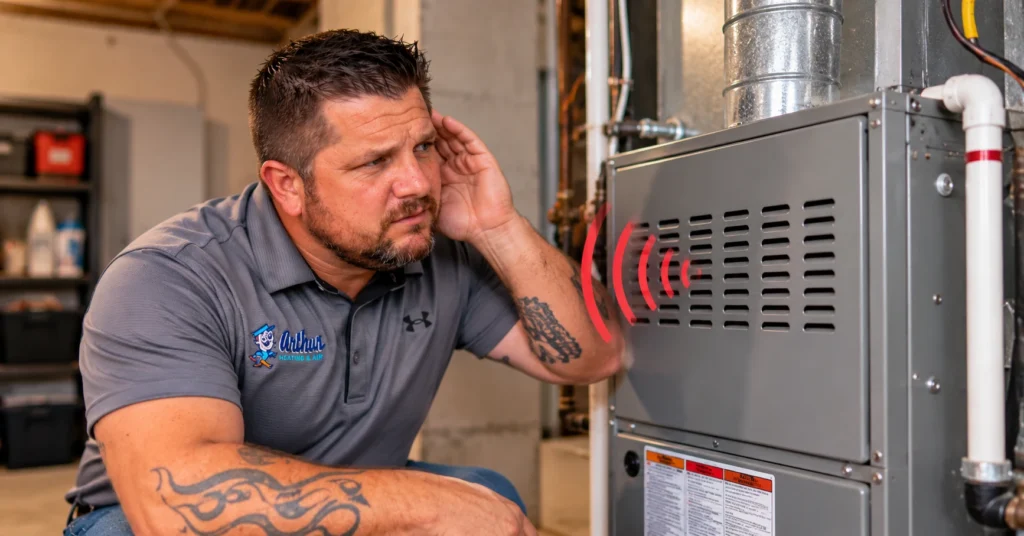
Strange heater noises can mean anything from a loose part or airflow problem to an ignition or motor issue. Some sounds are normal, but a new, loud, or repeated noise can mean your heater needs attention.
A brief click when the heater starts is usually not a concern. However, loud banging, grinding, screeching, or repeated clicking should not be ignored.
The type of noise can help you understand what may be wrong. Here are the most common heater sounds, what they can mean, and when it’s time to call an HVAC professional.
What Do Strange Heater Noises Mean?
Strange heater noises usually point to a problem with a loose part, restricted airflow, ignition, or a worn mechanical component. The type of noise can give you a good clue about what may be wrong.
| Heater Noise | What It May Mean |
| Banging or booming | Dirty burners or delayed ignition |
| Rattling | Loose panel, screw, or internal part |
| Screeching | Worn motor or bearing |
| Squealing | Motor or belt problem |
| Clicking | Ignition or electrical issue |
| Grinding | Blower motor or bearing problem |
| Whistling | Restricted airflow or duct leak |
| Hissing | Air leak or pressure problem |
| Popping | Duct expansion or burner issue |
| Scraping | Damaged blower wheel or loose component |
A brief click when your heater starts or stops can be normal. But loud, repeated, or unusual sounds should not be ignored, especially if the heater is also struggling to heat your home.
The sound can help identify the likely cause, but it cannot always confirm the problem. An HVAC professional may need to inspect the heater and test its components to determine exactly what is causing the noise. For more information about other common heater problems, see our guide to common heater problems.
10 Common Heater Noises and What They Mean
1. Banging or Booming Noise
A banging or booming heater noise can be caused by dirty burners, delayed ignition, or a loose part inside the system. In a gas furnace, delayed ignition can allow gas to build up before it ignites, creating a loud boom.
Dirty burners can also affect how the furnace ignites and burns fuel. A loose panel or internal component may bang when the blower starts or shuts off.
If the banging happens repeatedly, especially when the furnace starts, don’t ignore it. Turn the system off and have a qualified HVAC professional inspect it.
2. Rattling Noise
A rattling heater noise is usually caused by a loose panel, screw, duct section, or internal component. The vibration from the blower can make loose parts rattle while the heater is running.
Check the outside of the unit for a loose access panel or anything resting against the heater. Don’t remove panels that give you access to internal or electrical components.
If the rattling continues or seems to come from inside the unit, turn the heater off and have it inspected. A loose internal part can damage other components if the system keeps running.
3. Screeching or Squealing Noise
A screeching or squealing heater noise usually points to a worn blower motor, bearing, belt, or another moving part. As these components wear out, they can produce a high-pitched sound while the heater runs.
Older heating systems that use a blower belt may squeal when the belt becomes loose, worn, or damaged. A failing motor or bearing can also make the noise more noticeable over time.
Don’t ignore a squealing or screeching sound that keeps coming back or gets louder. Have an HVAC professional inspect the moving parts before the problem leads to a larger repair or system breakdown.
4. Clicking Noise
A brief clicking sound when your heater starts is usually normal, but repeated clicking can point to an ignition or electrical problem. The system may click as the thermostat calls for heat and the furnace begins its startup sequence.
If you hear clicking over and over but the heater never starts or produces heat, the igniter, flame sensor, control board, or another component may be causing the problem.
If the clicking continues without the heater producing heat, turn the system off and have a qualified HVAC professional diagnose the issue. Avoid opening the furnace or attempting to repair electrical or ignition components yourself.
5. Grinding Noise
A grinding heater noise usually means the blower motor, bearings, blower wheel, or another moving part has a problem. Worn bearings can make the motor grind as it runs. A damaged or loose blower wheel may also rub against the housing and create a grinding sound.
Grinding is not a normal heater sound. If the noise is loud, continuous, or getting worse, turn the heater off and have an HVAC professional inspect it. Continuing to run the system could cause more damage to the motor or other components.
6. Whistling Noise
A whistling heater noise is often caused by restricted airflow, a dirty air filter, blocked vents, or a leak in the ductwork. When air has trouble moving through the system, it can create a noticeable whistling sound.
Start with the simple checks. Replace the air filter if it is dirty, and make sure supply vents and return air openings are not blocked by furniture or other objects. A dirty filter can also affect heater performance, so learn more about how dirty air filters affect your heater.
If the whistling continues after these checks, there may be a duct leak or another airflow problem. An HVAC professional can inspect the system and find the source of the noise.
7. Hissing Noise
A hissing heater noise usually comes from escaping air, a duct leak, restricted airflow, or a pressure-related issue. You may hear some normal airflow, but a new, loud, or persistent hiss can indicate a problem.
Check the air filter and make sure the vents and return openings are clear. If the hissing continues, an HVAC professional can inspect the ductwork and heating system to find the source.
If you smell gas along with the hissing sound, treat it as a potential gas leak. Do not try to locate the leak yourself. Leave the area and follow your local gas utility or emergency instructions.
8. Popping Noise
An occasional popping heater noise can come from ductwork expanding and contracting, but loud or repeated popping may indicate a burner or ignition problem. Metal ducts can make a popping sound as they heat up and cool down.
If the popping happens right when the furnace starts, the cause may be more serious. Dirty burners or delayed ignition can cause a louder pop or boom as the system ignites.
Don’t ignore repeated or increasingly loud popping, especially if it comes directly from the furnace. Turn the system off if the sound is severe and have a qualified HVAC professional inspect it.
9. Scraping or Metal-on-Metal Noise
A scraping or metal-on-metal heater noise usually means a blower wheel, motor, or another internal component is damaged or out of position. The sound often occurs when two metal parts rub against each other while the heater is running.
A loose component or damaged blower wheel can get worse if you continue running the system. It may also cause additional damage to the motor or other parts.
If the scraping is loud, continuous, or getting worse, turn the heater off and have a qualified HVAC technician inspect it.
10. High-Pitched or Electrical Noise
A high-pitched or electrical heater noise can indicate a problem with the motor, capacitor, transformer, or another electrical component. A failing electrical part may make an unusual buzzing, humming, or high-pitched sound before it stops working.
You may also notice other warning signs, such as a burning smell, repeated breaker trips, trouble starting, or the heater shutting down unexpectedly.
Don’t open the electrical compartment or try to repair the component yourself. Electrical and HVAC repairs can be dangerous, so have a qualified professional diagnose and repair the problem.
Which Heater Noises Are Normal?
Some heater noises are normal, especially short sounds when the system starts, runs, or shuts down. A brief thermostat click, blower startup, or occasional popping from expanding ductwork can be part of normal operation.
Normal heater sounds are usually quiet, brief, and consistent. They should not suddenly become louder or change in frequency.
A new, loud, repeated, or unusual noise deserves attention, especially if the heater also struggles to heat your home, cycles on and off, or shuts down unexpectedly. In these cases, have a qualified HVAC professional inspect the system.
When Should You Turn Off Your Heater?
Turn off your heater if it makes a loud or unusual noise, smells like gas or burning, produces smoke, or shows another clear sign of a safety problem. Don’t keep running the system when something seems seriously wrong.
Turn the heater off and seek professional help if you notice:
- A strong gas smell
- Smoke coming from the system
- A burning electrical smell
- Loud banging or booming
- Grinding or metal-on-metal sounds
- Repeated ignition attempts
- Severe shaking or vibration
- Electrical problems or repeated breaker trips
- A carbon monoxide alarm
If the strange noise is also accompanied by repeated shutdowns, see our guide on why your heater keeps shutting off.
If you smell gas, leave the area immediately. Do not try to find the leak, relight the heater, or operate electrical switches. Follow your local gas utility or emergency instructions.
If your carbon monoxide alarm sounds, leave the home immediately and follow your local emergency instructions. Do not return until it is safe to do so.
Is It Safe to Fix a Noisy Heater Yourself?
You can safely check a few basic things yourself, but gas, electrical, ignition, and internal mechanical repairs should be handled by a qualified HVAC professional. Simple checks can sometimes identify an easy problem without putting you at risk.
You can safely:
- Check that the thermostat is set correctly
- Replace a dirty air filter
- Make sure supply and return vents are not blocked
- Check for an obviously loose exterior panel
Avoid opening gas burners, adjusting gas valves, accessing electrical components, or working on internal combustion parts unless you have the proper training and qualifications.
If the noise continues or you’re not sure what’s causing it, don’t guess or take the heater apart. Have a qualified HVAC professional inspect the system and identify the problem safely.
When Should You Call an HVAC Professional?
You should call an HVAC professional when a heater noise is new, loud, repeated, getting worse, or affecting how the system works. A strange sound can be an early warning that a component needs repair or is starting to fail.
Professional help is especially important if:
- The heater makes loud banging or booming sounds.
- You hear grinding or metal-on-metal noises.
- The heater keeps clicking but won’t start.
- You smell gas or burning.
- The system repeatedly shuts down.
- The circuit breaker trips more than once.
- The heater shakes or vibrates unusually.
- You suspect an ignition or electrical problem.
- The heater isn’t producing enough heat.
An HVAC technician can inspect the system, identify where the noise is coming from, and determine what needs to be done. If your heater needs professional heater repair, getting the problem diagnosed early can help prevent further damage.
How to Prevent Strange Heater Noises
Regular heater maintenance can help prevent strange noises by keeping the system clean, improving airflow, and catching worn parts before they fail. A few simple habits can also reduce unnecessary wear on your heating system.
You can help prevent heater noise by:
- Replacing the air filter when it gets dirty.
- Keeping supply and return vents clear.
- Scheduling regular professional HVAC maintenance.
- Having unusual sounds checked before they get worse.
- Following the manufacturer’s maintenance recommendations.
- Having worn or damaged components repaired or replaced promptly.
Don’t wait for a strange noise to turn into a complete breakdown. Regular service can help catch worn components before they become noisy or fail. See our guide to annual heater maintenance for more ways to keep your heating system running properly. Addressing a small problem early can help prevent additional damage and a more expensive repair.
Strange Heater Noises FAQs
Why is my heater making a loud banging noise?
A loud banging heater noise can result from dirty burners, delayed ignition, or a loose component. If the banging happens repeatedly, have a qualified HVAC professional inspect the system.
Why does my heater make a clicking sound?
A brief click during startup is usually normal, but repeated clicking can signal an ignition or electrical problem. If the heater keeps clicking without starting, have it checked by a professional.
Why is my heater making a rattling noise?
A rattling heater noise is often caused by a loose panel, screw, duct section, or internal part. Check any accessible exterior panel, but have the system inspected if the noise continues.
Why does my heater sound like it’s grinding?
A grinding noise usually points to a problem with the blower motor, bearings, blower wheel, or another moving part. Turn the heater off if the grinding is loud or continuous and arrange for professional service.
Why is my heater making a high-pitched noise?
A high-pitched heater noise can come from a worn motor, bearing, belt, or other moving component. An HVAC professional can inspect the system and identify the source.
Is it normal for a heater to make popping noises?
Occasional popping can be normal as metal ductwork expands and contracts, but loud or repeated popping should be checked. It can also point to a burner or ignition problem.
Should I turn off my heater if it is making a strange noise?
Turn off your heater if the noise is loud, continuous, or accompanied by gas, burning, smoke, electrical, or other safety concerns. Have the system inspected before turning it back on.
Can a dirty air filter cause heater noises?
Yes, a dirty air filter can restrict airflow and cause whistling or other unusual operating noises. Replace the filter with the correct size and type recommended for your system.
When should I call an HVAC technician for a noisy heater?
Call an HVAC technician when a heater noise is new, loud, repeated, getting worse, or accompanied by poor heating or system shutdowns. Gas, electrical, ignition, and major mechanical issues should be handled by a qualified professional.
Final Thoughts
Strange heater noises can be an early warning of a loose part, airflow problem, ignition issue, or mechanical failure. While some brief sounds are normal, a new, loud, or worsening noise shouldn’t be ignored.
Start with simple checks, such as the thermostat, air filter, and blocked vents. If the noise continues or involves gas, electricity, ignition, or internal components, don’t try to fix the problem yourself.
A qualified HVAC professional can find the source of the noise and recommend the right repair. Addressing the problem early may help prevent a minor issue from turning into a costly breakdown.