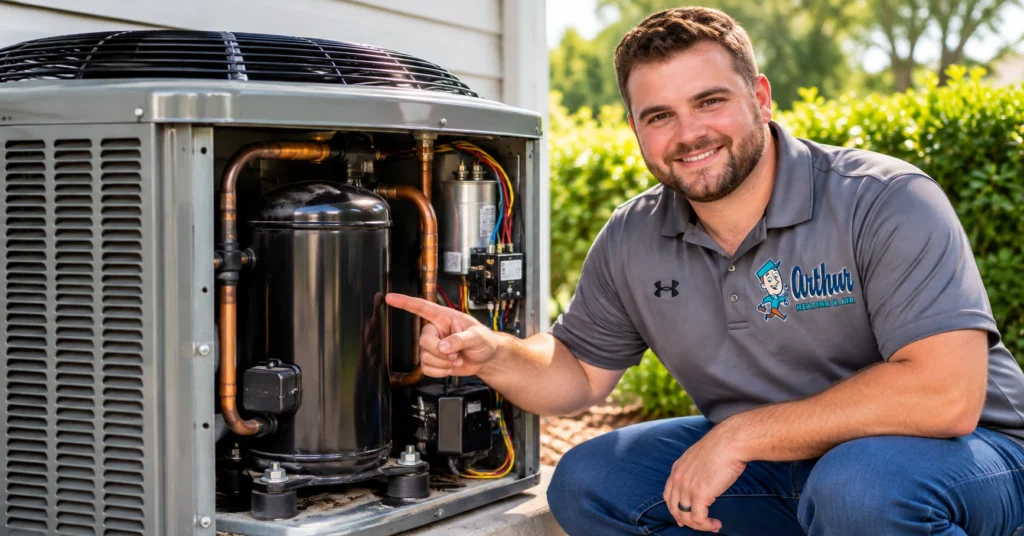
Your air conditioner may show warning signs before the compressor stops working completely. You might notice warm air, unusual noises, difficulty starting, or longer cooling times. These symptoms can point to a failing AC compressor, but they can also indicate problems with other components.
The AC compressor moves refrigerant through the cooling system. When it fails, your air conditioner may struggle to cool your home or stop working altogether.
Here are 10 signs of a failing AC compressor, what they could mean, and when to call an HVAC technician.
What Are the Warning Signs of a Failing AC Compressor?
The most common warning signs include poor cooling, unusual noises, difficulty starting, repeated breaker trips, overheating, frequent shutdowns, excessive vibration, longer cooling times, humming without startup, and unexplained increases in energy use. These symptoms can indicate a compressor problem, but none confirms compressor failure on its own.
| Warning sign | What it may indicate | What to do |
| AC isn’t cooling properly | Compressor or another cooling-system problem | Arrange an inspection |
| Unusual noises | Electrical or mechanical fault | Turn off the system if the noise is severe or persistent |
| Difficulty starting | Capacitor, electrical, or compressor issue | Avoid repeated restart attempts |
| Breaker trips repeatedly | Electrical fault or excessive current | Leave the breaker off and call a professional |
| Overheating or shutdowns | Compressor overload or another system fault | Turn off the AC and arrange service |
| Frequent cycling | Control, airflow, refrigerant, or electrical problem | Schedule diagnosis |
| Excessive vibration | Loose parts or mechanical issue | Arrange an inspection |
| Longer cooling times | Reduced cooling performance or another fault | Check the accessible air filter and monitor performance |
| Humming without startup | Starting component or compressor problem | Turn off the system |
| Higher energy bills | Reduced efficiency or another AC problem | Investigate the unexplained increase |
Let’s look at each warning sign in more detail.
1. Your AC Isn’t Cooling Your Home Properly
Poor cooling can be an early warning sign of a failing AC compressor. If the compressor cannot circulate refrigerant properly, your air conditioner may struggle to remove heat from your home.
You might notice that the AC runs for a long time without reaching the thermostat setting. The air from the vents may feel warmer than usual, even though the system is running.
However, poor cooling doesn’t always mean the compressor is failing. Low refrigerant, dirty coils, restricted airflow, and thermostat problems can produce similar symptoms.
What should you do? Check your thermostat settings and inspect your air filter if it’s safely accessible. If the system continues to struggle, arrange an HVAC inspection. A technician can check the compressor and other components to identify the cause.
2. The Compressor Makes Unusual Noises
Unusual humming, rattling, grinding, or knocking sounds can indicate an electrical or mechanical problem with your AC system.
A compressor that struggles to start may produce a humming sound. Grinding or knocking noises may point to a more serious mechanical issue, although loose components and other parts can also cause unusual sounds.
Pay attention to when the noise occurs. Does it start when the AC turns on? Does the system stop cooling afterward? Does the sound continue while the outdoor fan spins?
These details can help an HVAC technician narrow down the problem. For more information about these warning sounds, read our guide to AC clicking, buzzing, and humming noises and their possible causes.
What should you do? Turn off the AC if you hear severe grinding, persistent knocking, or unusual noises accompanied by failed startup. Don’t open the outdoor unit to investigate. Have a qualified technician inspect the system before running it again.
3. Your AC Struggles to Start
A compressor that struggles to start may have an electrical problem, a failing capacitor, or a problem with the compressor motor itself.
You might notice a delay before the outdoor unit starts cooling. The unit may also attempt to start several times without beginning a normal cooling cycle.
Some air conditioners have built-in restart delays, so a short pause after shutdown doesn’t necessarily indicate a problem.
What should you do? If the compressor repeatedly struggles to start, turn off the system and arrange professional service. A technician can test the capacitor, contactor, electrical supply, and compressor to determine which component is responsible.
Because a failed capacitor can cause startup problems that resemble compressor failure, learn about AC capacitor replacement cost before comparing possible repair options.
4. Your AC Trips the Circuit Breaker Repeatedly
Repeated breaker trips can indicate an electrical problem involving the compressor or another component in the AC system.
A compressor with an electrical fault may draw excessive current. Damaged wiring, a faulty capacitor, or other electrical problems can also cause a breaker to trip.
A single trip doesn’t prove that the compressor has failed. However, repeated trips should never be ignored.
What should you do? Leave the breaker off if it trips repeatedly and contact a qualified HVAC technician. Don’t keep resetting it to force the AC to run. The technician can inspect the electrical system and identify the cause before restoring operation.
5. The Compressor Overheats or Shuts Down
An overheating compressor may shut down when a protective device interrupts its operation.
This can happen because of electrical problems, inadequate heat removal, or other conditions that cause the compressor to operate outside its normal range.
You might notice that the AC stops cooling during hot weather and starts working again after a while. That pattern can suggest overheating, but it doesn’t confirm the cause.
What should you do? Turn off the AC if it repeatedly shuts down or struggles to restart. A technician can check the compressor, condenser, electrical components, and system operating conditions to identify the problem.
Don’t keep restarting the unit in the hope that it will continue running.
6. Your AC Turns On and Off Frequently
Frequent starting and stopping is known as short cycling. A compressor problem can contribute to short cycling, but other faults can cause it too.
You may notice that the AC starts, runs briefly, shuts off, and then starts again. Your home may never reach the temperature set on the thermostat.
Possible causes include thermostat problems, restricted airflow, refrigerant issues, overheating, and electrical faults.
What should you do? Check your thermostat settings and accessible air filter. If the system continues cycling frequently, arrange professional diagnosis. Repeated shutdowns can place additional stress on the equipment.
7. The Outdoor Unit Vibrates Excessively
Excessive vibration from the outdoor AC unit can indicate a loose component, an unbalanced fan, or a mechanical problem involving the compressor.
You might hear rattling or feel the unit vibrating more than usual. The vibration may occur when the compressor starts or while the system operates.
However, vibration alone doesn’t confirm compressor failure. Loose mounting hardware, fan problems, and other components can cause similar symptoms.
What should you do? Turn off the AC if the vibration is severe or comes with grinding, knocking, or failed startup. Don’t remove the unit’s panels or attempt internal repairs. Have an HVAC technician inspect the equipment.
8. Your AC Takes Longer to Cool Your Home
If your AC takes longer than usual to cool your home, the compressor may not be operating efficiently. However, several other problems can also reduce cooling performance.
You might notice that the system runs for extended periods, struggles on hot afternoons, or fails to maintain your preferred indoor temperature.
Possible causes include restricted airflow, dirty coils, low refrigerant, thermostat problems, or a compressor fault.
What should you do? Check the thermostat setting and inspect the air filter if it’s safely accessible. Keep the outdoor unit’s surrounding area clear of obstructions.
If cooling performance doesn’t improve, schedule an inspection. A technician can check the compressor and the rest of the cooling system before recommending a repair.
9. The Compressor Hums but Won’t Start
A compressor that hums without starting may have a failing capacitor, an electrical supply problem, or a fault involving the compressor motor.
You may hear a steady hum from the outdoor unit while the fan spins or remains stationary. The AC won’t provide normal cooling because the compressor isn’t operating as intended.
A failed capacitor can cause similar symptoms and may be less expensive to repair than a failed compressor. That’s why it’s important to test the starting components before deciding that the compressor needs replacement.
If your air conditioner still won’t start, follow our guide to AC not turning on troubleshooting to learn more about common startup problems and safe checks.
What should you do? Turn off the AC if the compressor hums without starting. Don’t repeatedly switch it on and off. Contact an HVAC technician to test the capacitor, electrical components, and compressor.
10. Your Energy Bills Increase Without an Obvious Reason
An unexplained increase in your energy bills can indicate that your air conditioner is working harder than usual. A compressor problem is one possible cause, but it isn’t the only explanation.
You might notice higher electricity use even though your thermostat settings and daily habits haven’t changed.
Other causes include hot weather, dirty filters, refrigerant problems, duct leaks, poor insulation, and other equipment faults.
What should you do? Compare your electricity use with previous bills while accounting for changes in weather and how often the AC runs. If energy use remains unusually high and cooling performance has declined, arrange an HVAC inspection.
Don’t assume that replacing the compressor will lower your bills without first identifying the cause.
What Causes an AC Compressor to Fail?
AC compressors can fail because of electrical faults, operating stress, overheating, refrigerant problems, or normal wear over time.
Understanding these causes can help homeowners recognize why early diagnosis matters.
Electrical Problems and Failed Starting Components
Electrical faults can prevent the compressor from starting or cause it to operate incorrectly. A failed capacitor, faulty contactor, damaged wiring, or power supply problem can create symptoms that resemble compressor failure.
A technician should test the relevant components before recommending compressor replacement.
Refrigerant Problems
Incorrect refrigerant levels or other refrigerant-system problems can affect cooling performance and compressor operation.
Low cooling performance alone doesn’t prove that refrigerant is low. A technician must inspect the system and determine whether a refrigerant problem exists before recommending a repair.
Overheating and Poor Heat Transfer
An overheating compressor may shut down or operate under excessive stress. Problems with heat transfer, electrical components, or other parts of the system can contribute to overheating.
Keeping the outdoor unit clear of obstructions and following the manufacturer’s maintenance recommendations can support normal operation, but maintenance cannot prevent every failure.
Age, Wear, and Lack of Maintenance
Compressor components can deteriorate as an AC system ages. Regular maintenance can help identify certain problems before they become more serious, although it cannot guarantee that a compressor won’t fail.
If your AC is older and needs increasingly expensive repairs, ask an HVAC professional to assess its overall condition before you decide whether to repair or replace it.
How Can You Tell If Your AC Compressor Is Bad?
You can recognize warning signs of compressor trouble, but you can’t confirm compressor failure from symptoms alone. A qualified HVAC technician must inspect the system and test the relevant components.
What Warning Signs Can Homeowners Observe Safely?
You can watch for changes in normal operation without opening electrical compartments.
Look for:
- Air that isn’t as cool as usual.
- Unusual humming, grinding, or knocking.
- Difficulty starting or repeated shutdowns.
- A breaker that trips repeatedly.
- Longer cooling cycles or unexplained increases in energy use.
Note when these symptoms occur and whether they happen together. This information can help the technician narrow down the possible causes.
You can also check your thermostat settings and inspect an accessible air filter if the system shows no signs of an electrical fault.
How Does an HVAC Technician Test the Compressor?
An HVAC technician can inspect the electrical components, evaluate compressor operation, and test the system using appropriate equipment.
Depending on the symptoms, the technician may check the capacitor, contactor, wiring, power supply, compressor electrical readings, and refrigerant-system operation.
These checks help distinguish compressor failure from a problem with another component.
Can a Bad Capacitor Look Like Compressor Failure?
Yes. A failed capacitor can prevent the compressor from starting, creating symptoms that resemble a failed compressor.
For example, the outdoor unit may hum without cooling the home. The compressor may also struggle to start or fail to operate while the fan continues running.
A technician should test the capacitor and other starting components before determining whether the compressor itself needs repair or replacement.
What Should You Do If Your AC Compressor Is Failing?
If your AC shows signs of compressor trouble, stop running the system when you notice repeated failed startup attempts, severe mechanical noises, or electrical problems. Arrange professional service to identify the cause.
When Should You Turn Off Your Air Conditioner?
Turn off the AC if the compressor repeatedly struggles to start, the system makes severe grinding or knocking noises, or the breaker trips repeatedly.
If you notice smoke or a burning smell, keep clear of the equipment and seek urgent professional assistance.
Don’t open the electrical compartment or attempt to test the compressor yourself. Electrical components can present serious hazards even after the equipment has been switched off.
When Should You Schedule an HVAC Inspection?
Schedule an inspection if your AC provides less cooling than usual, makes new noises, cycles frequently, or uses more energy without an obvious explanation.
You should also arrange service if the system repeatedly fails to start or shuts down unexpectedly.
An early inspection can help identify the cause and determine whether the repair involves a smaller electrical component or the compressor itself.
Why Shouldn’t You Keep Restarting a Malfunctioning AC?
Repeatedly restarting a malfunctioning AC won’t fix an underlying electrical or mechanical fault. It may also place additional stress on the equipment.
If the compressor hums without starting or the system repeatedly shuts down, turn it off and arrange professional diagnosis.
Can a Failing AC Compressor Be Repaired?
Sometimes, the problem that looks like compressor failure can be fixed without replacing the compressor. The right repair depends on whether the fault involves an electrical component, another system problem, or the compressor itself.
When Can a Smaller Component Repair Solve the Problem?
A failed capacitor, faulty contactor, damaged connection, or other component can prevent normal compressor operation.
If the compressor itself is still in good condition, repairing the affected component may restore normal cooling.
A technician should confirm the fault before recommending parts replacement.
When Is Compressor Replacement Necessary?
Compressor replacement may be necessary when testing confirms a serious internal or electrical failure that cannot be repaired economically.
The technician should explain the diagnosis, the proposed repair, and any available alternatives before you approve the work.
Should You Repair or Replace an Older AC System?
The decision depends on the repair estimate, the age and condition of your AC, warranty coverage, and the expected value of the repair.
If the compressor replacement is expensive and your system has other significant problems, replacing the entire AC may be worth considering.
Ask for a written estimate and compare the long-term value of both options before making a decision.
How Much Does AC Compressor Replacement Cost?
AC compressor replacement costs vary by system type, compressor model, labor rates, warranty coverage, and whether additional repairs are needed.
The final price may also depend on equipment accessibility and the condition of the rest of the system. For a broader breakdown of repair expenses, see our guide to AC repair costs to understand the factors that can affect your final bill.
What Affects Compressor Replacement Cost?
Several factors influence the estimate:
- The compressor model and equipment specifications.
- Labor and diagnostic fees.
- Warranty coverage.
- Whether related electrical components need repair.
- Whether other system repairs are required.
- Local service rates.
Ask the HVAC company for a written estimate that separates the compressor, labor, and additional work.
Is Replacing the Compressor Worth It?
Replacing the compressor may make sense if the rest of the AC system is in good condition and the repair offers reasonable value.
For an older system with several major problems, replacing the entire unit may be a better long-term option.
A qualified technician can explain the condition of your system and help you compare the options. Don’t decide based on the compressor price alone.
Frequently Asked Questions About AC Compressor Failure
What are the first signs of a failing AC compressor?
Early warning signs can include reduced cooling, unusual noises, difficulty starting, longer cooling times, or repeated shutdowns. These symptoms can also indicate other AC problems, so a technician should confirm the cause.
Can an AC compressor fail without warning?
Yes. Some compressor failures happen suddenly, while others develop gradually. Changes in cooling performance, unusual noises, or repeated startup problems may appear beforehand, but not every failure provides clear warning signs.
What does a failing AC compressor sound like?
A failing compressor may produce unusual humming, rattling, grinding, or knocking sounds. However, other components can make similar noises, so sound alone cannot confirm compressor failure.
Can a bad capacitor damage an AC compressor?
A faulty capacitor can prevent a compressor from starting or operating correctly. Continued attempts to run a malfunctioning system may place additional stress on its components. Turn off the AC if the compressor repeatedly fails to start and arrange professional diagnosis.
Should I turn off my AC if the compressor is failing?
Yes, if the system repeatedly fails to start, makes severe mechanical noises, or shows signs of an electrical problem. Turn it off and arrange an HVAC inspection rather than repeatedly restarting it.
Is it worth replacing an AC compressor?
It depends on the repair cost, system age, warranty coverage, and overall equipment condition. Compare the compressor replacement estimate with the cost and expected value of replacing the entire system.
Get Professional Help With Your AC Compressor
A failing AC compressor may show warning signs such as poor cooling, unusual noises, difficulty starting, overheating, or repeated shutdowns. However, these symptoms don’t always mean the compressor itself has failed.
If your air conditioner isn’t cooling properly or shows signs of an electrical or mechanical problem, a qualified HVAC technician can inspect the system, identify the cause, and recommend the right repair.
Need help with your air conditioner? Visit Arthur Air to learn about its HVAC services and request assistance.
Recognizing warning signs early can help you address problems before they lead to a complete cooling breakdown.