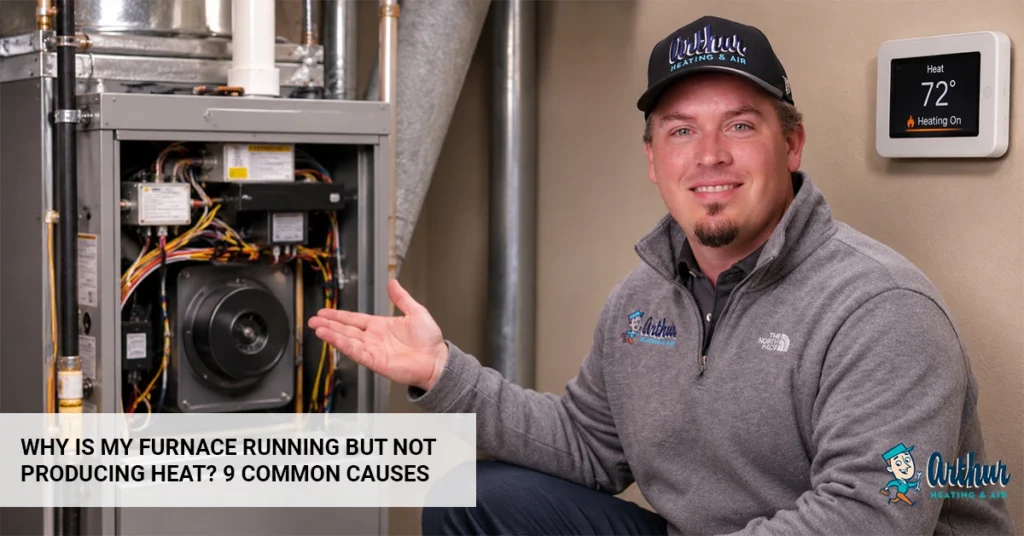
Is your furnace running, but your home still feels cold? This usually means the furnace is getting power, but something is stopping it from producing or delivering warm air. Common causes include a dirty air filter, incorrect thermostat settings, a faulty ignitor, or a problem with the gas supply.
Sometimes, the blower keeps running even when the burners aren’t producing heat. This can happen when the furnace overheats or a safety switch shuts down the heating cycle.
You can check a few things yourself, such as the thermostat, air filter, and vents. But problems with the ignition system, gas valve, or electrical components need a qualified HVAC technician.
Below, we’ll explain nine common reasons your furnace runs without producing heat, how to recognize each problem, and what you can do about it.
1. Your Thermostat Fan Is Set to ON Instead of AUTO
Your furnace may blow cool air because the thermostat fan is set to ON instead of AUTO. When you select ON, the blower runs continuously, even when the furnace isn’t heating your home.
As a result, you may feel room-temperature air coming from the vents between heating cycles. This doesn’t necessarily mean your furnace has a problem.
The AUTO setting works differently. It runs the blower when the furnace produces heat and stops it after the heating cycle ends.
How to Check Your Thermostat Settings
Check your thermostat before looking for a mechanical problem. Follow these steps:
- Make sure the thermostat is set to HEAT.
- Check the fan setting. If it says ON, change it to AUTO.
- Set the temperature a few degrees above the current room temperature.
- Wait several minutes for the furnace to start a heating cycle.
- Check whether warm air comes through the vents.
If your furnace still blows cool air, the problem may involve the ignition system, airflow, or another heating component.
2. A Dirty or Clogged Furnace Air Filter Is Restricting Airflow
A dirty furnace air filter can block airflow, cause the furnace to overheat, and shut down the burners. The blower may keep running, but your home won’t receive enough warm air.
Your furnace needs proper airflow to heat your home. Over time, dust, pet hair, and other debris collect on the filter. As the filter gets clogged, less air can pass through the system. This makes your furnace work harder and can affect its heating performance.
A dirty filter can affect more than airflow. Learn how dirty air filters affect heater performance and why regular filter replacement matters.
Common problems caused by a dirty furnace filter include:
- Weak airflow from the supply vents
- Uneven heating throughout your home
- Furnace overheating
- Frequent heating cycle interruptions
- Increased energy use
In some cases, the furnace shuts off the burners to prevent overheating while the blower continues running to cool the system.
Signs Your Furnace Filter Needs Replacement
Check your air filter if you notice any of these signs:
- The filter looks gray or covered with dust.
- Airflow from the vents feels weaker than usual.
- Some rooms stay colder than others.
- Your furnace starts and stops more often than usual.
- Your home takes longer to reach the thermostat setting.
How to Replace a Dirty Furnace Filter
Replacing a furnace filter is a simple maintenance task. Follow these steps:
- Turn off the furnace before removing the filter.
- Find the filter compartment.
- Remove the old filter and check its size.
- Choose a replacement with the correct dimensions and filter rating.
- Follow the airflow arrow when installing the new filter.
- Make sure the filter fits properly.
- Turn the furnace back on and check whether it heats normally.
Check your furnace manufacturer’s recommendations for filter replacement frequency. Many filters need replacement every one to three months, depending on the filter type, household conditions, and furnace usage.
If your furnace still doesn’t produce heat after replacing the filter, it may have another airflow or overheating problem. Have an HVAC technician inspect the system to find the cause.
3. The Furnace Ignitor or Pilot Light Isn’t Working
A faulty ignitor or an extinguished pilot light can stop your gas furnace from producing heat. Without a working ignition source, the burners can’t light, even if the furnace blower continues running.
Most modern gas furnaces use an electronic ignition system. Older models may have a standing pilot light that stays lit and ignites the burners when the thermostat calls for heat.
How the Furnace Ignition System Works
Your furnace follows a specific sequence to ignite the burners and produce heat. Here’s how it works:
- The thermostat sends a signal to the furnace to start heating.
- The inducer motor starts to move combustion gases toward the exhaust.
- The furnace checks its safety controls.
- The hot surface ignitor heats up or the electronic ignition system activates.
- The gas valve opens when the required safety conditions are met.
- The burners ignite and start producing heat.
- The blower circulates warm air through your home’s ductwork.
If the ignitor doesn’t heat up or the burners fail to light, the furnace may stop the heating cycle to prevent unsafe operation.
Signs of a Faulty Furnace Ignitor
Look for these common warning signs:
- The furnace starts but doesn’t produce warm air.
- You hear clicking sounds as the furnace tries to ignite.
- The burners don’t light.
- The furnace starts briefly and then shuts down.
- The system displays an ignition-related error code.
A damaged hot surface ignitor may need replacement. If your furnace uses a standing pilot light, the problem could involve the pilot assembly, thermocouple, or gas supply.
Don’t try to repair the gas valve, ignition wiring, or other internal components yourself. A qualified HVAC technician can inspect the ignition system, identify the failed part, and recommend the right repair.
4. A Dirty Flame Sensor Is Preventing the Burners From Staying On
A dirty or faulty flame sensor can cause your furnace burners to ignite briefly and then shut off. This happens when the sensor fails to detect the flame properly.
The flame sensor is a small safety component inside your gas furnace. It checks whether the burners have ignited and sends a signal to the control board. If the sensor doesn’t detect a flame, the furnace shuts off the gas supply to prevent unburned gas from building up.
Over time, dirt, oxidation, and residue can collect on the sensor. This buildup can interfere with its ability to detect the burner flame.
Signs of a Dirty or Faulty Flame Sensor
Look for these common warning signs:
- The burners ignite but shut off after a few seconds.
- The furnace repeatedly tries to restart.
- Your vents blow cool air between heating cycles.
- The furnace displays a flame-sensing or ignition error code.
- The heating system enters a safety lockout.
A dirty flame sensor and a faulty ignitor can cause similar heating problems, but they serve different purposes. The ignitor lights the burners, while the flame sensor confirms that the flame is present.
A qualified HVAC technician can test the sensor, check its condition, and determine whether it needs cleaning or replacement. If the problem continues, the technician can also inspect the wiring and furnace control board.
5. Your Furnace Has a Gas Supply Problem
Your gas furnace may stop producing heat if it isn’t getting enough fuel to ignite the burners. Even if the blower motor keeps running, the furnace can’t heat your home without a steady gas supply.
Several problems can interrupt gas delivery, including:
- An interruption in the natural gas supply
- A closed or faulty gas valve
- A malfunctioning gas pressure regulator
- A damaged gas line
- Low gas pressure
If the gas supply is interrupted, the burners may fail to ignite. The furnace may also make several attempts to start before shutting down for safety.
Signs of a Furnace Gas Supply Problem
Look for these common signs:
- The furnace runs, but the burners don’t ignite.
- The system repeatedly attempts to start.
- The furnace shuts down during the ignition process.
- Other gas appliances in your home also stop working, depending on the cause of the supply problem.
These symptoms can also point to an ignition or electrical issue. A professional inspection can help identify the actual cause.
Important safety warning: If you smell gas, leave your home immediately. Don’t turn electrical switches on or off, use appliances, or try to find the leak. Contact your gas utility or emergency services from a safe location.
Never attempt to adjust gas valves, repair gas lines, or test gas connections yourself. A qualified HVAC technician can inspect the gas supply, test the furnace gas valve, and determine why your burners aren’t producing heat.
6. The Furnace High-Limit Switch Is Shutting Down the Burners
Your furnace may stop producing heat because the high-limit switch detects that the system is getting too hot. This safety switch shuts off the burners to protect the furnace from overheating.
The high-limit switch monitors the temperature inside the furnace. When the temperature rises above the safe operating range, it tells the control board to stop the burners.
Restricted airflow is one of the most common reasons this happens. For example, a clogged air filter can prevent enough air from moving across the heat exchanger. As heat builds up inside the furnace, the high-limit switch may shut down the burners while the blower continues running to cool the system.
Signs of a High-Limit Switch Problem
Watch for these common warning signs:
- The furnace starts heating but shuts off before reaching the thermostat setting.
- The blower keeps running after the burners stop.
- The furnace repeatedly starts and stops.
- Airflow from the vents feels weak.
- The heating system frequently shuts down for safety.
What Causes a Furnace to Overheat?
Several problems can cause your furnace to overheat:
- Dirty or clogged air filters
- Blocked return air vents
- Closed or obstructed supply vents
- Dirty blower components
- Restricted airflow through the heating system
- A faulty high-limit switch
Start by checking your air filter and making sure furniture or other objects aren’t blocking the supply and return vents.
If the furnace continues to overheat, have an HVAC technician inspect the system. The technician can check airflow, test the high-limit switch, and identify the underlying problem.
Don’t repeatedly reset the furnace or bypass the safety switch. Doing so won’t fix the problem and may lead to equipment damage or unsafe operation.
7. A Blocked Exhaust Vent or Condensate Drain Is Affecting Furnace Operation
A blocked exhaust vent or clogged condensate drain can cause your high-efficiency furnace to shut down before completing a heating cycle. Both systems help your furnace operate safely, and a blockage can interrupt normal operation.
High-efficiency gas furnaces produce water during the heating process. They also use intake and exhaust pipes to bring in combustion air and remove exhaust gases. If either system becomes blocked, the furnace may stop heating to protect itself.
How a Blocked Exhaust Vent Affects Heating
Your furnace needs a clear exhaust path to release combustion gases safely. Leaves, dirt, snow, ice, or other debris can block the outdoor intake or exhaust openings.
When airflow becomes restricted, the furnace pressure switch may prevent the burners from igniting or shut them down during operation.
You may notice that the furnace starts but stops before producing warm air.
How a Clogged Condensate Drain Stops a Furnace
A high-efficiency furnace produces condensation as it extracts heat from combustion gases. The condensate drain carries this water away from the system.
If the drain becomes clogged, water can collect inside the furnace or drain pan. Depending on the furnace design, this can activate a safety switch and interrupt the heating cycle.
You may also notice water leaking around the furnace.
Signs of a Venting or Condensate Problem
Look for these common warning signs:
- The furnace starts but shuts down shortly afterward.
- You notice water around the furnace.
- The system displays a pressure switch or drainage-related error code.
- The furnace repeatedly attempts to ignite.
- The outdoor intake or exhaust opening appears blocked.
You can visually check accessible outdoor vent openings for leaves, snow, ice, or other obvious obstructions. Only remove loose debris that you can reach safely without opening or modifying the vent system.
Don’t insert objects into the pipes, disconnect venting, or attempt to repair the pressure switch. A qualified HVAC technician can inspect the exhaust system, condensate drain, and safety controls to find the cause.
8. The Furnace Burner Is Dirty or Not Igniting Properly
Dirty or damaged furnace burners can prevent your heating system from producing enough heat. When dirt or debris builds up around the burners, it can interfere with the gas and air mixture needed for proper combustion.
The burners create the flame that heats the furnace’s heat exchanger. If they don’t ignite properly or produce an uneven flame, your furnace may struggle to heat your home. In some cases, the system may shut down to prevent unsafe operation.
Signs of a Dirty Furnace Burner
Look for these common warning signs:
- The furnace struggles to ignite.
- The burner flames appear uneven or unusual.
- The furnace shuts down shortly after starting.
- Your home doesn’t heat evenly.
- You hear unusual popping sounds or notice delayed ignition.
These symptoms can also point to gas pressure, ignition, or other combustion problems.
A qualified HVAC technician can inspect the burners, clean them when necessary, and check the gas pressure and combustion process against the manufacturer’s specifications.
Never try to clean or adjust gas burners while the furnace is operating. If you notice unusual flames, delayed ignition, or repeated shutdowns, arrange a professional inspection before using the system again.
9. Your Furnace Blower Motor or Heating Components Are Malfunctioning
A faulty blower motor or damaged furnace component can prevent your heating system from delivering warm air throughout your home. Even if the furnace produces heat, a problem with the blower can stop that heat from reaching your rooms.
The blower motor pushes heated air through the ductwork and out of your vents. If the motor stops working, overheats, or runs at the wrong speed, your home may receive little or no warm air.
In some cases, the burners continue producing heat while the blower fails to circulate it. This can cause the furnace to overheat and activate its safety controls.
Signs of a Blower Motor Problem
Watch for these common warning signs:
- Little or no airflow from the vents.
- Unusual humming, rattling, or grinding noises.
- The blower starts and stops unexpectedly.
- Some rooms receive very little warm air.
- The furnace overheats or shuts down repeatedly.
A blower motor isn’t the only component that can cause these problems. A faulty control board, damaged capacitor, loose wiring, or malfunctioning motor control can also affect furnace operation.
A qualified HVAC technician can test the blower motor and electrical components to find the problem. Depending on the damage, the motor or another faulty part may need repair or replacement.
What Should You Check When Your Furnace Runs But Doesn’t Produce Heat?
Before scheduling furnace repair, check a few basic things that could be stopping your furnace from heating your home. Start with the thermostat, air filter, and vents. These checks can help you rule out common problems without opening the furnace or handling internal components.
Use this checklist to get started:
| What to check | What to look for |
| Thermostat | Make sure it’s set to HEAT, and the temperature is higher than the current room temperature. |
| Fan setting | Change ON to AUTO if the blower runs continuously. |
| Air filter | Check for dust, dirt, and restricted airflow. |
| Supply vents | Make sure furniture and other objects aren’t blocking airflow. |
| Return vents | Keep return air openings clear. |
| Furnace power | Make sure the furnace power switch is on. |
| Circuit breaker | Check whether the furnace breaker has tripped. |
| Error codes | Look for diagnostic lights or error codes on the furnace display. |
If you find a dirty air filter, replace it with the correct size and type. If a vent is blocked, move the furniture or other objects away from it.
You can also check whether the furnace power switch is on and whether its circuit breaker has tripped. If the breaker trips repeatedly, don’t keep resetting it. Contact a qualified HVAC technician.
Important: Don’t remove furnace access panels, touch internal wiring, adjust gas components, or bypass safety switches. These tasks require professional training.
If your furnace still doesn’t produce warm air after these basic checks, have an HVAC technician inspect the system to identify the underlying problem.
When Should You Call a Professional for Furnace Repair?
Call an HVAC professional if your furnace still doesn’t produce heat after basic troubleshooting or shows signs of a mechanical, electrical, or gas-related problem. If your furnace continues running without producing warm air, schedule professional furnace repair services to identify the faulty component and restore reliable heating. These issues often require proper testing and repair to keep your heating system operating safely.
Don’t ignore repeated furnace problems. Continuing to run a malfunctioning system can lead to further damage. Furnaces can develop several problems that affect heating performance and reliability. Read about these common heater problems to recognize other issues that may require professional attention.
Here are six signs that it’s time to schedule professional furnace repair:
1. The furnace repeatedly shuts down. If your furnace keeps starting and stopping, it may have an overheating, airflow, or ignition problem. A technician can inspect the system and find out why the heating cycle keeps interrupting.
If your furnace repeatedly shuts down and leaves your home without heat during cold weather, contact a professional for emergency heating repair to diagnose the problem.
2. The burners won’t ignite or stay lit. A faulty ignitor, dirty flame sensor, gas valve, or another ignition component may prevent the burners from producing heat.
3. The furnace continuously blows cold air. If your vents keep blowing cold air, the problem may involve the thermostat, ignition system, gas supply, or another heating component.
4. You hear unusual noises. Grinding, loud banging, or repeated clicking can indicate a problem with the blower motor, burners, or ignition system. Have a technician inspect the furnace before the problem gets worse.
5. You notice a burning electrical smell. Turn off the furnace if you can do so safely and arrange a professional inspection. If you smell gas, leave the building immediately and contact your gas utility or emergency services from a safe location.
6. The furnace displays repeated error codes. Diagnostic lights and error codes can point to problems with the ignition system, pressure switch, high-limit switch, or control board. A technician can use these codes to help diagnose the problem.
A professional furnace inspection can help identify the faulty component, prevent further equipment damage, and restore reliable heating to your home.
How Can You Prevent Your Furnace From Running Without Producing Heat?
Regular furnace maintenance can help prevent unexpected heating problems and keep your system running properly. Simple tasks, such as replacing dirty air filters and keeping vents clear, can reduce strain on your furnace and improve airflow.
Here are five ways to keep your furnace in good working condition.
Replace Furnace Filters Regularly
Check your furnace filter regularly and replace it when it becomes dirty or clogged. Follow the manufacturer’s recommendations for replacement frequency.
A clean filter allows air to move freely through the system. It also helps reduce strain on the blower motor and lowers the risk of overheating.
Schedule Annual Furnace Maintenance
Have an HVAC professional inspect your furnace at least once a year, preferably before the heating season starts. Scheduling annual heater maintenance can help identify worn components, ignition problems, and airflow restrictions before they cause unexpected heating failures.
During maintenance, a technician can inspect the ignition system, burners, heat exchanger, blower motor, electrical connections, and safety controls. Regular inspections can help catch small problems before they turn into costly repairs.
Professional furnace maintenance helps identify ignition problems, dirty burners, worn components, and airflow restrictions before they cause unexpected heating failures.
Keep Supply and Return Vents Clear
Keep furniture, rugs, and other objects away from your supply and return vents.
Blocked vents can restrict airflow and make it harder for your furnace to distribute heat evenly. Clear vents also help reduce the risk of overheating.
Keep Outdoor Furnace Vents Clear
If your furnace has outdoor intake and exhaust pipes, check that their openings aren’t blocked by leaves, snow, ice, or other debris.
Clear outdoor vents help your furnace bring in combustion air and remove exhaust gases properly. Never modify the venting system or insert objects into the pipes.
Address Furnace Problems Early
Don’t ignore unusual noises, weak airflow, repeated shutdowns, or uneven heating. These symptoms can indicate a developing problem with your furnace.
Have an HVAC technician inspect the system when you notice something unusual. Fixing small problems early can help prevent more expensive repairs and unexpected heating failures.
Frequently Asked Questions
Why Is My Furnace Running But Blowing Cold Air?
Your furnace may blow cold air because the thermostat fan is set to ON, the burners aren’t igniting, or a safety switch has stopped the heating cycle. A dirty air filter can also restrict airflow and cause the furnace to overheat. Check your thermostat settings and air filter first. If the problem continues, have an HVAC technician inspect the system.
If your furnace continues blowing cold air instead of warm air, read our guide on heater blowing cold air and its common causes to understand what may be preventing your system from heating properly.
Why Does My Furnace Turn On But Not Heat the House?
Your furnace may turn on without heating your home because of a faulty ignitor, restricted airflow, a dirty flame sensor, or a gas supply problem. The blower can run even when the burners aren’t producing heat. Check the thermostat and air filter to rule out basic problems before scheduling professional repair.
Why Does My Furnace Blow Warm Air and Then Turn Cold?
Your furnace may blow warm air and then turn cold because the burners are shutting down before the heating cycle finishes. Common causes include restricted airflow, a dirty flame sensor, overheating, or a faulty safety switch. A technician can inspect the system and determine why the heating cycle keeps stopping.
Can a Dirty Air Filter Cause a Furnace to Stop Producing Heat?
Yes, a dirty air filter can cause your furnace to stop producing heat. A clogged filter restricts airflow, which can make the furnace overheat. When the temperature gets too high, the high-limit switch may shut off the burners to protect the system. Replace the dirty filter, but have a technician inspect the furnace if overheating continues.
How Long Should It Take for a Furnace to Produce Heat?
Most gas furnaces begin producing warm air within a few minutes after a heating cycle starts. The exact timing depends on the furnace model, ignition sequence, and blower settings. If your furnace continues running but doesn’t produce warm air after several minutes, check the thermostat and air filter. If the problem continues, arrange a professional inspection.
Should I Turn Off My Furnace If It Is Blowing Cold Air?
Yes, you can turn off your furnace if it keeps blowing cold air and basic troubleshooting doesn’t resolve the problem. Set the thermostat to OFF and arrange professional service if you suspect a mechanical or heating problem. If you smell gas or your carbon monoxide alarm sounds, leave the building immediately and contact emergency services from a safe location.
Can a Furnace Blower Run Without the Burners Working?
Yes, a furnace blower can run even when the burners aren’t producing heat. This can happen when the thermostat fan is set to ON, a safety control shuts down the burners, or the blower continues running to cool the furnace after a heating cycle. That’s why you may feel room-temperature or cool air coming from your vents.
Get Professional Help When Your Furnace Isn’t Producing Heat
If your furnace keeps running without producing heat, it may need professional repair. The problem could be as simple as a thermostat setting or as serious as a faulty ignitor, gas valve, or blower motor.
Start by checking your thermostat, replacing a dirty air filter, and making sure your vents aren’t blocked. These simple steps can help resolve common heating problems.
If your furnace still doesn’t produce warm air, don’t keep restarting it or attempting to repair internal components yourself. An HVAC technician can inspect the ignition system, burners, blower motor, and safety switches to find the cause.
Need help with a furnace that isn’t producing heat? Arthur Heating & Air can help you identify heating system problems and determine the right repair. Contact the team to discuss your furnace concerns and get your home’s heating system back on track.