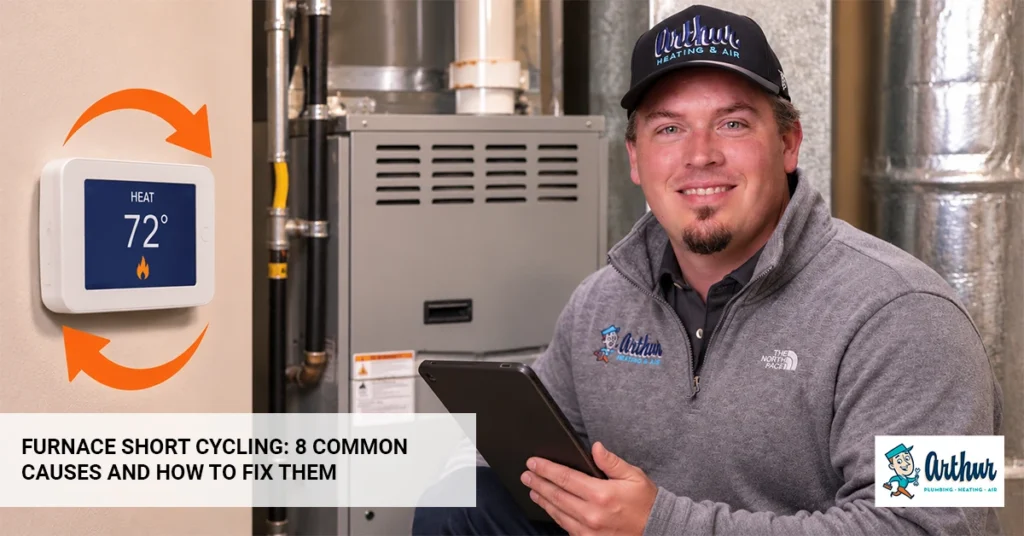
Does your furnace keep turning on and off without heating your home properly? This problem is called furnace short cycling. It often happens because of a dirty air filter, a thermostat issue, restricted airflow, or overheating.
Other problems, such as a dirty flame sensor, blocked exhaust vent, or oversized furnace, can also interrupt normal heating cycles.
When your furnace keeps restarting, your home may not stay comfortable. Frequent starts and stops can also put extra strain on the heating system and increase energy use.
Some causes are easy to check, such as a clogged air filter or blocked vent. Others need an HVAC technician to inspect the system.
Let’s look at 8 common causes of furnace short cycling, how to recognize them, and what you can do to fix the problem.
What Is Furnace Short Cycling?
Furnace short cycling happens when your heating system turns on and off more often than it should. Instead of running long enough to heat your home, the furnace shuts down after a short period and starts again soon afterward.
During a normal heating cycle, the thermostat detects that the room is too cold and signals the furnace to start. The furnace ignites, produces heat, and sends warm air through your ductwork. Once your home reaches the set temperature, the burners shut off. The blower may continue running briefly to move the remaining warm air.
Short cycling interrupts this process. Your furnace may shut down because it is overheating, detecting a safety issue, or receiving an incorrect signal from the thermostat.
How a Normal Furnace Heating Cycle Works
A typical gas furnace follows these steps during a heating cycle:
- The thermostat detects that the room temperature is below the set temperature.
- It sends a heating signal to the furnace.
- The furnace begins its startup and ignition sequence.
- The burners ignite and heat the heat exchanger.
- The blower moves warm air through the ductwork.
- The furnace continues heating until the thermostat reaches its target temperature.
- The burners shut off, and the blower runs briefly before stopping.
The exact sequence and timing depend on the furnace model and its controls.
How to Recognize Furnace Short Cycling
You may have a short-cycling problem if your furnace repeatedly shuts down after running for only a few minutes.
Watch for these common signs:
- The furnace turns on and off every few minutes.
- The burners shut down before your home reaches the thermostat setting.
- Your home stays cold even though the furnace keeps restarting.
- The heating system starts and stops repeatedly throughout the day.
- Your energy bills increase without an obvious change in usage.
- You hear frequent startup and shutdown sounds.
A furnace naturally turns on and off as your thermostat controls the temperature. The concern is a repeated pattern of unusually short heating cycles, not normal operation.
How Often Should a Furnace Normally Turn On and Off?
A furnace’s normal run time varies with the equipment, outdoor temperature, home size, insulation, and thermostat settings. Some systems may run for around 10 to 20 minutes per cycle, but this is only a general guide—not a fixed rule.
If your furnace runs for just a few minutes before shutting down and then restarts shortly afterward, it may be short cycling. Repeated short cycles are worth investigating because an airflow restriction, overheating, thermostat issue, or another fault may be interrupting normal operation.
Have an HVAC technician inspect the system if the problem continues or you cannot identify a simple cause.
1. A Dirty or Clogged Furnace Air Filter Is Restricting Airflow
A dirty furnace air filter can cause short cycling by reducing airflow and causing the system to overheat. When the furnace gets too hot, its high-limit switch may shut off the burners to protect the equipment.
Your furnace needs steady airflow to move heat safely through the system. Over time, dust, pet hair, and other debris collect on the filter and make it harder for air to pass through.
A dirty filter can also affect your heating system in other ways. Learn more about how dirty air filters affect your heater and why regular replacement matters.
When airflow drops, heat can build up inside the furnace. The high-limit switch may then shut off the burners before your home reaches the thermostat setting. Once the furnace cools down, it may start heating again.
Signs Your Furnace Filter Is Restricting Airflow
A clogged air filter can cause several noticeable problems:
- The furnace turns on but shuts off after a few minutes.
- Air coming from the supply vents feels weaker than usual.
- Some rooms stay colder than others.
- The furnace starts and stops more often than usual.
- The air filter looks gray, dusty, or heavily clogged.
How to Fix a Dirty Furnace Air Filter
Replacing a clogged air filter is one of the first steps to take when troubleshooting furnace short cycling.
Follow these steps:
- Turn off the furnace before removing the filter.
- Find the filter compartment, usually near the return-air duct or furnace blower.
- Remove the existing filter.
- Check the filter’s size and the airflow direction marked on its frame.
- Install a replacement with the correct dimensions and a rating recommended by the furnace manufacturer.
- Make sure the filter fits securely without gaps.
- Turn the furnace back on and monitor its heating cycle.
Check the filter regularly and replace it according to the manufacturer’s instructions. Many common filters need changing every one to three months, but the schedule depends on the filter type, system use, pets, and household dust.
If your furnace continues to short cycle after you replace the filter, the problem may involve blocked vents, dirty components, or another overheating issue. Have an HVAC technician inspect the system rather than assuming the filter was the only cause.
2. Your Thermostat Is Causing the Furnace to Short Cycle
A faulty thermostat, incorrect settings, or poor placement can cause your furnace to turn on and off too frequently. Since the thermostat controls when your furnace starts and stops, inaccurate temperature readings or inconsistent signals can interrupt a normal heating cycle.
For example, a thermostat installed near a sunny window, fireplace, or heating appliance may sense more warmth than the rest of your home. It may tell the furnace to stop heating even though other rooms are still cold.
A thermostat affected by cold drafts can have the opposite problem. It may read a lower temperature than the actual room temperature and cause the furnace to run longer than necessary.
Common Thermostat Problems That Cause Short Cycling
Several thermostat issues can interfere with normal furnace operation:
- Incorrect temperature or heating settings
- Placement near direct sunlight or heat-producing appliances
- Cold drafts affecting temperature readings
- Loose or damaged thermostat wiring
- A faulty temperature sensor
- Incorrect thermostat configuration or cycle settings
How to Check and Fix Thermostat Problems
Check these basic settings before calling an HVAC technician:
- Make sure the thermostat is set to HEAT.
- Check the temperature setting and compare it with the room temperature.
- Set the fan to AUTO instead of ON.
- Check whether the thermostat is near a window, direct sunlight, or a heat-producing appliance.
- Replace the batteries if your thermostat uses them.
- Check the manufacturer’s instructions for any adjustable heating-cycle settings.
If the furnace still short cycles, the thermostat may have a faulty sensor, wiring problem, or incorrect configuration. An HVAC technician can test the thermostat, inspect its wiring, and determine whether it needs adjustment or replacement.
Don’t attempt to repair damaged thermostat wiring yourself. Leave electrical testing and wiring repairs to a qualified professional.
3. The Furnace Is Overheating and Triggering the High-Limit Switch
A furnace may short-cycle when it overheats and triggers the high-limit switch. This safety device shuts off the burners when the furnace temperature rises above its safe operating range.
The high-limit switch helps protect your furnace from excessive heat. When it detects overheating, it interrupts the burner operation. The blower may continue running to move air through the system and help lower the temperature.
Once the furnace cools down, it may try to start another heating cycle. If the cause of the overheating remains, the same shutdown can happen again.
If your heating system repeatedly shuts down during operation, read our guide on why your heater keeps shutting off to understand other possible causes.
What Causes a Furnace to Overheat?
Restricted airflow is one of the most common reasons a furnace overheats. Other possible causes include:
- Dirty or clogged air filters
- Blocked supply or return vents
- Dirty blower components
- Restricted or damaged ductwork
- Poor airflow across the heat exchanger
- A faulty high-limit switch
When airflow is restricted, the furnace cannot remove heat efficiently. This can raise the internal temperature and trigger the safety switch.
Signs of a Furnace Overheating Problem
You may notice these warning signs when your furnace overheats:
- The burners start but shut down before the thermostat reaches its setting.
- The blower continues running after the burners stop.
- The furnace repeatedly starts and stops.
- Airflow from the supply vents feels weak.
- The system frequently shuts down before completing a heating cycle.
How to Address Furnace Overheating
Start with a few basic airflow checks:
- Inspect the air filter and replace it if it’s dirty.
- Make sure supply and return vents are open and unobstructed.
- Check that furniture, rugs, or other objects aren’t blocking airflow.
If the furnace continues overheating, contact an HVAC technician. They can inspect the blower, ductwork, heat exchanger airflow, and high-limit switch to identify the cause.
Never bypass the high-limit switch or repeatedly reset the furnace to keep it running. This safety control helps protect the equipment from dangerous overheating. A technician should diagnose and repair the underlying problem.
4. A Dirty Flame Sensor Is Interrupting the Heating Cycle
A dirty or faulty flame sensor can cause your furnace to shut off shortly after the burners ignite. This happens when the sensor cannot properly detect the burner flame.
The flame sensor is a safety component in a gas furnace. It checks whether the burners have ignited and sends a signal to the furnace control board.
If the sensor doesn’t detect a flame, the control board shuts off the gas supply. This safety feature helps prevent unburned gas from building up inside the furnace.
Over time, dirt, oxidation, and residue can collect on the sensor. This buildup may interfere with flame detection and cause the furnace to shut down even when the burners briefly ignite.
Signs of a Dirty or Faulty Flame Sensor
A flame sensor problem may cause these symptoms:
- The burners ignite but shut off after a few seconds.
- The furnace repeatedly attempts to ignite.
- The heating system enters a safety lockout.
- The furnace displays an ignition-related error code.
- The system makes repeated startup attempts without producing steady heat.
How to Fix a Flame Sensor Problem
A flame sensor may need cleaning or replacement, depending on its condition. An HVAC technician can inspect the sensor, test its operation, and check whether it sends the correct signal to the control board.
If cleaning doesn’t resolve the issue, the sensor may need replacement. The technician can also check the sensor wiring, burner assembly, and other ignition components to rule out additional problems.
Don’t remove or clean internal furnace components unless you’re qualified to do so. A professional can handle the repair safely and confirm that the furnace detects the flame correctly.
5. Your Furnace Is Too Large for Your Home
An oversized furnace can cause short cycling because it produces more heat than your home needs. As a result, your home reaches the thermostat’s target temperature quickly, and the furnace shuts off before running for a longer cycle.
Every furnace has a specific heating capacity designed to match a home’s heating requirements. If the system produces too much heat for the space, the indoor temperature can rise quickly.
The thermostat then tells the furnace to stop heating. Once the temperature drops, the furnace starts again. This repeated pattern can lead to frequent starts and stops.
Signs Your Furnace May Be Oversized
These symptoms may indicate that your furnace is too large for your home:
- The furnace runs for only a few minutes at a time.
- Your home heats up quickly but cools down soon afterward.
- The furnace starts and stops frequently.
- Some rooms feel noticeably warmer than others.
- Indoor temperatures fluctuate throughout the day.
These signs don’t automatically mean your furnace is oversized. Thermostat problems, restricted airflow, and other issues can cause similar symptoms.
How to Fix an Oversized Furnace Problem
An HVAC professional can determine whether your furnace is too large by comparing its heating capacity with your home’s actual heating needs.
A proper assessment should consider:
- Your home’s square footage and layout
- Insulation levels
- Ceiling height
- Window size, type, and condition
- Air leaks around doors, windows, and other openings
- Local climate and outdoor temperatures
- Existing ductwork and airflow
If the furnace is significantly oversized, replacing it with a properly sized system may be the best long-term solution.
Ask the HVAC contractor to perform a professional heating load calculation before recommending replacement equipment. This calculation considers more than square footage and helps determine the furnace capacity your home actually needs.
6. Blocked Air Vents or Ductwork Are Restricting Airflow
Blocked supply vents, return vents, or restricted ductwork can cause furnace short cycling by limiting airflow through your heating system.
Your furnace needs proper airflow to distribute heat and maintain a safe operating temperature. When air can’t move through the system freely, heat may build up inside the furnace and trigger the high-limit switch.
The switch can shut off the burners before your home reaches the thermostat’s target temperature. If the airflow problem continues, the furnace may repeat this cycle.
How Closed Supply Vents Affect Furnace Operation
Supply vents deliver heated air from your furnace into your rooms. When furniture, rugs, curtains, or other objects block these openings, warm air cannot circulate properly.
Closing too many supply vents can also affect system airflow and increase duct pressure, depending on your ductwork and furnace design. This may make it harder for your system to distribute heat evenly.
How Blocked Return Vents Cause Overheating
Return vents pull air from your rooms back into the furnace so it can be heated again.
When these vents are blocked by furniture, boxes, or other objects, less air can return to the system. This can reduce airflow across the heat exchanger and cause the furnace to overheat.
How to Improve Airflow Throughout Your Home
Follow these simple steps to check for blocked vents:
- Check every supply vent and remove objects blocking the openings.
- Make sure return air vents are clear.
- Avoid closing multiple supply vents to control room temperatures.
- Move furniture, rugs, or curtains away from floor and wall vents.
- Turn on the furnace and check whether airflow improves.
If your furnace continues to short-cycle, the problem may be inside the ductwork. Leaks, damaged sections, blockages, or improperly sized ducts can restrict airflow even when the visible vents are clear.
An HVAC technician can inspect the duct system, measure airflow, and identify problems that aren’t visible from the vents.
7. A Blocked Exhaust Vent or Faulty Pressure Switch Is Interrupting Operation
A blocked exhaust vent or faulty pressure switch can cause your gas furnace to shut down before completing a heating cycle. Both components play an important role in keeping the furnace operating safely.
The pressure switch checks whether the inducer motor and venting system are creating the required pressure conditions for safe operation. If the switch doesn’t detect the expected pressure, it prevents the burners from operating or interrupts the heating cycle.
A blocked vent can cause this problem by preventing combustion gases from leaving the furnace properly.
How Furnace Exhaust Venting Works
Your furnace needs a clear path to bring in combustion air and remove exhaust gases safely.
High-efficiency gas furnaces typically use separate intake and exhaust pipes. These pipes often extend through an exterior wall or roof.
Leaves, dirt, ice, snow, or other debris can block the outdoor openings. When this happens, the furnace may fail to complete its ignition sequence or shut down shortly after starting.
Signs of a Pressure Switch Problem
A blocked vent or pressure switch issue may cause these symptoms:
- The furnace starts but shuts down during the ignition process.
- The system repeatedly attempts to restart.
- The furnace displays a pressure switch or ignition-related error code.
- The burners fail to stay lit.
- You notice visible debris blocking an accessible outdoor vent opening.
These symptoms can also point to other ignition or venting problems, so they don’t confirm a faulty pressure switch on their own.
How to Fix an Exhaust Vent or Pressure Switch Problem
Start by visually checking accessible outdoor intake and exhaust openings for obvious obstructions. Only do this if you can reach them safely from the ground.
Don’t climb onto a roof, insert objects into the pipes, disconnect the venting system, or adjust the pressure switch yourself.
If the furnace continues shutting down, contact an HVAC technician. They can inspect the inducer motor, pressure switch, exhaust piping, and electrical connections to identify the cause.
Never bypass the pressure switch or other furnace safety controls. These components help prevent unsafe operation.
8. A Clogged Condensate Drain Is Causing Furnace Shutdowns
A clogged condensate drain can cause a high-efficiency gas furnace to shut down before completing its heating cycle. When water cannot drain properly, it may back up inside the system and activate a safety switch.
High-efficiency furnaces produce condensation as they extract additional heat from combustion gases. This water collects inside the furnace and flows through a condensate trap and drain line.
Over time, dirt, algae, and other debris can build up inside the drain line. If the blockage prevents water from draining, the condensate may collect in the system and trigger a safety shutdown.
Signs of a Clogged Furnace Condensate Drain
A blocked condensate drain may cause several noticeable symptoms:
- The furnace starts but shuts down shortly afterward.
- You notice water around the furnace.
- The system displays a drainage-related error code.
- The furnace repeatedly attempts to restart.
- Water collects near the condensate drain or pump.
How to Fix a Clogged Condensate Drain
If you suspect a blocked condensate drain, have an HVAC technician inspect the drainage system. The technician can check the drain line, condensate trap, and drain pump to locate the blockage.
Depending on the problem, the repair may involve:
- Clearing debris from the condensate drain line
- Cleaning buildup from the condensate trap
- Checking the drain pump for proper operation
- Inspecting the safety switch and electrical connections
- Checking for leaks or damaged drain components
If you notice water leaking around the furnace, arrange a professional inspection. Avoid repeatedly restarting the system because the underlying drainage problem may still be present.
How to Fix Furnace Short Cycling: Troubleshooting Steps
You can check a few basic things before scheduling furnace repair. Start with the thermostat, air filter, and vents because these are common sources of heating and airflow problems.
Furnace short cycling is one of several problems that can affect heating performance. Learn about common heater problems homeowners experience and how to recognize them.
Use this checklist to identify simple issues:
| What to check | What to do |
| Air filter | Replace it if it’s dirty or clogged. |
| Thermostat | Make sure it’s set to HEAT, and the temperature setting is correct. |
| Fan setting | Select AUTO instead of ON if you don’t want the blower running continuously. |
| Supply vents | Remove furniture, rugs, and other objects blocking airflow. |
| Return vents | Make sure the openings are clear and unobstructed. |
| Outdoor vents | Visually check accessible intake and exhaust openings for leaves, dirt, or other debris. |
| Furnace display | Look for diagnostic lights or error codes and check the owner’s manual for their meaning. |
| Circuit breaker | Check whether the furnace breaker has tripped. |
If a circuit breaker trips repeatedly, don’t keep resetting it. Turn off the system and contact a qualified HVAC technician.
For safety, don’t remove furnace access panels, touch internal wiring, adjust gas components, or bypass safety switches. Leave internal inspections and repairs to a professional.
If your furnace continues to short cycle after these basic checks, an HVAC technician can test the system, identify the underlying problem, and recommend the right repair.
Is Furnace Short Cycling Dangerous?
Furnace short cycling isn’t always an immediate safety emergency, but repeated shutdowns can indicate a problem that needs attention. Ignoring the issue may increase component wear, affect indoor comfort, and raise energy use.
When your furnace starts and stops frequently, its components go through more startup cycles than normal. Depending on the cause, this can put additional strain on the ignitor, blower motor, electrical components, and other parts.
How Repeated Heating Cycles Affect Furnace Components
Frequent furnace restarts can increase wear on several components:
- Ignitor: Repeated startup attempts can put additional stress on the ignition system.
- Blower motor: Frequent starts and stops can increase motor wear.
- Electrical components: Repeated cycling can place additional demands on electrical controls and connections.
- Heating system: Frequent shutdowns can make it harder to maintain a comfortable indoor temperature.
The amount of wear depends on how often the furnace cycles and what is causing the problem.
Why Frequent Shutdowns Can Increase Energy Bills
Furnace short cycling may increase energy use because the system repeatedly starts without running long enough to heat your home efficiently.
Each startup requires energy to operate the ignition system, motors, and other components. If the furnace keeps restarting throughout the day, your energy consumption may increase.
The actual impact depends on the furnace type, the underlying problem, and how frequently the system shuts down.
When to Turn Off Your Furnace
Stop using your furnace and arrange professional service if you notice repeated overheating, unusual electrical or burning smells, or persistent safety shutdowns.
Pay attention to these serious warning signs:
- Gas smell: Leave the building immediately. Don’t operate electrical switches, appliances, or anything that could create a spark. Contact your gas utility or emergency services from a safe location.
- Carbon monoxide alarm: Leave the building immediately and seek emergency assistance. Don’t re-enter until emergency responders confirm it’s safe.
- Repeated overheating: Turn off the furnace if you can do so safely and arrange an HVAC inspection.
- Burning electrical smell: Stop using the system and have a qualified technician inspect it.
Never ignore a gas smell or carbon monoxide alarm. Your safety should always come before troubleshooting or attempting a furnace repair.
When Should You Call an HVAC Professional for Furnace Short Cycling?
Call an HVAC professional if your furnace keeps turning on and off after basic troubleshooting or shows signs of an ignition, electrical, or safety problem.
If your furnace continues turning on and off every few minutes, professional furnace repair service can help identify the underlying problem and restore reliable heating.
Some furnace issues require specialized tools and technical knowledge to diagnose. Trying to repair internal components without proper training can create additional problems or put your safety at risk.
Schedule professional furnace repair if you notice any of these problems:
1. The furnace turns on and off every few minutes.
Frequent shutdowns may indicate restricted airflow, thermostat problems, overheating, or another system fault. A technician can identify what’s interrupting the heating cycle.
2. The furnace repeatedly overheats.
If the high-limit switch keeps shutting down the burners, the system may have an airflow restriction or a faulty safety component. A professional can inspect the blower, filter, ductwork, and limit switch.
3. The burners keep shutting down.
A dirty flame sensor, ignition problem, or gas supply issue may prevent the burners from staying lit. These components require proper testing and inspection.
4. The furnace displays repeated error codes.
Diagnostic codes can point to problems with the pressure switch, ignition system, control board, or other components. An HVAC technician can check the manufacturer’s error-code guide and test the affected parts.
5. Basic troubleshooting doesn’t solve the problem.
If replacing the air filter, checking the thermostat, and clearing accessible vents don’t stop the short cycling, the system needs a more detailed inspection.
A qualified HVAC technician can test the furnace, identify the underlying problem, and recommend the appropriate repair before the issue causes further damage.
How Can You Prevent Furnace Short Cycling?
Regular furnace maintenance can help prevent short cycling and keep your heating system running properly. Replacing dirty filters, keeping vents clear, and scheduling annual inspections can reduce the risk of common heating problems.
Follow these maintenance practices to keep your furnace in good condition.
Replace Air Filters Regularly
Check your furnace air filter regularly and replace it according to the manufacturer’s recommendations. A clogged filter restricts airflow and can cause the furnace to overheat.
A clean filter helps maintain proper airflow, supports efficient heating, and reduces strain on the blower motor.
Schedule Annual Furnace Maintenance
Have an HVAC professional inspect your furnace at least once a year, preferably before the heating season begins. Following a consistent maintenance schedule can help reduce unexpected heating problems. Read our guide to annual heater maintenance to learn what your system needs each year.
A professional maintenance visit may include:
- Inspecting the burners and ignition system
- Checking the blower motor and airflow
- Inspecting the heat exchanger
- Testing electrical connections
- Checking safety controls and switches
- Inspecting the exhaust and condensate drainage systems, where applicable
Regular inspections can help identify worn or faulty components before they cause heating problems.
Keep Air Vents and Returns Clear
Keep furniture, rugs, curtains, and other objects away from supply and return vents.
Clear openings allow air to circulate properly throughout your home. This helps your furnace distribute heat evenly and reduces the risk of airflow-related overheating.
Maintain Proper Thermostat Placement
Keep your thermostat away from direct sunlight, heating appliances, fireplaces, and cold drafts.
Poor placement can cause inaccurate temperature readings. This may make your furnace turn on or off before the rest of your home reaches a comfortable temperature.
Address Furnace Problems Early
Don’t ignore repeated shutdowns, unusual noises, weak airflow, or inconsistent heating.
Contact an HVAC technician when you notice these problems. Early repairs can prevent minor issues from developing into more expensive furnace problems and help your heating system operate reliably.
Frequently Asked Questions
Why Does My Furnace Turn On and Off Every Few Minutes?
Your furnace may turn on and off every few minutes because of a dirty air filter, thermostat problem, restricted airflow, or overheating. Other possible causes include a dirty flame sensor, blocked exhaust vent, or oversized furnace. Check the air filter and thermostat first. If the problem continues, schedule an HVAC inspection.
How Long Should a Furnace Run Before Shutting Off?
A furnace’s normal heating cycle depends on its model, home insulation, thermostat settings, and outdoor temperature. Some residential furnaces run for around 10 to 20 minutes per cycle, but this isn’t a fixed rule. If your furnace repeatedly shuts down after only a few minutes, it may be short cycling.
Can a Dirty Air Filter Cause Furnace Short Cycling?
Yes. A dirty air filter can restrict airflow and cause the furnace to overheat. When the temperature gets too high, the high-limit switch may shut off the burners to protect the system. Replacing the clogged filter can restore airflow, but repeated overheating requires professional inspection.
Can a Bad Thermostat Cause Furnace Short Cycling?
Yes. A faulty thermostat, damaged wiring, or poor thermostat placement can cause your furnace to start and stop too frequently. Incorrect temperature readings may cause the system to shut down before your home reaches the desired temperature. An HVAC technician can test the thermostat and its wiring.
Will Furnace Short Cycling Increase My Energy Bill?
Yes. Furnace short cycling can increase energy use because the system repeatedly starts without completing normal heating cycles. Frequent restarts can also put additional strain on furnace components. Fixing the underlying problem can help restore consistent heating and reduce unnecessary operation.
Should I Turn Off My Furnace If It Keeps Short Cycling?
If your furnace repeatedly short cycles and you suspect overheating, electrical problems, or another safety issue, stop using it and arrange professional service. Don’t repeatedly reset the system to keep it running. If you smell gas or your carbon monoxide alarm sounds, leave the building immediately and seek emergency assistance.
Can an Oversized Furnace Cause Short Cycling?
Yes. An oversized furnace can heat your home too quickly and reach the thermostat’s target temperature before completing a longer heating cycle. The furnace then shuts off and starts again when the temperature drops. A professional heating load calculation can determine whether your furnace is properly sized.
How Much Does It Cost to Fix Furnace Short Cycling?
The cost of fixing furnace short cycling depends on the underlying problem. A simple filter replacement or thermostat adjustment may cost relatively little, while replacing an ignitor, flame sensor, blower motor, or other component can cost more. An HVAC technician can diagnose the issue and provide an estimate before starting the repair.
Get Professional Help for Furnace Short Cycling
Furnace short cycling can have several causes, including dirty air filters, thermostat problems, overheating, faulty flame sensors, and restricted airflow.
Start by checking your thermostat, replacing a clogged air filter, and making sure your supply and return vents aren’t blocked. These simple steps may resolve minor airflow or thermostat issues.
If your furnace keeps turning on and off every few minutes, don’t ignore the problem. Repeated short cycles can increase wear on system components, affect indoor comfort, and lead to more expensive repairs.
Arthur Heating & Air can help homeowners diagnose furnace problems and find the right repair solution. Contact the team to discuss your heating concerns and schedule professional furnace service.