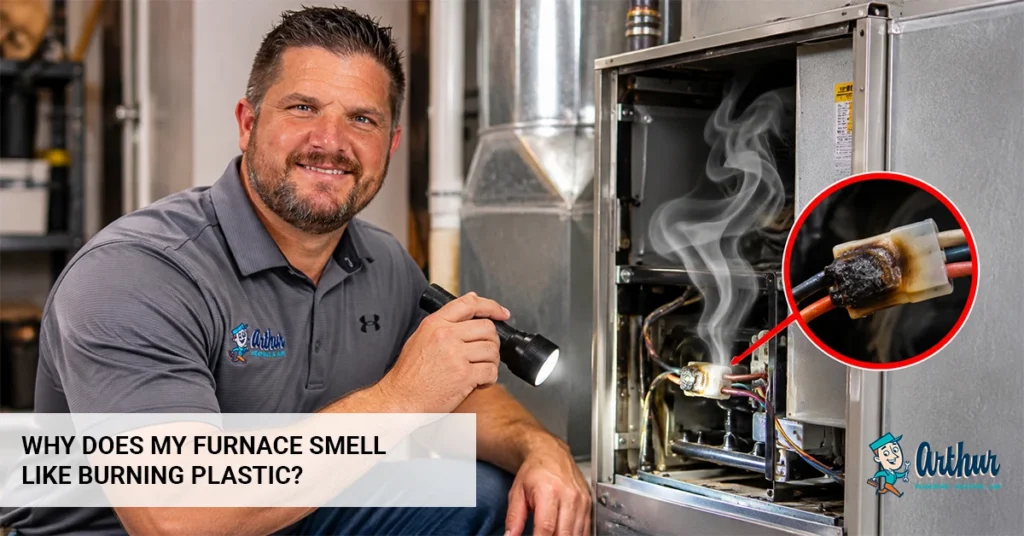
If your furnace smells like burning plastic, something may be overheating inside the system. The smell could come from damaged wiring, a hot blower motor, melting plastic parts, or an object sitting too close to the furnace.
A little dust burning off when you turn on your furnace for the first time is fairly common. But a sharp plastic or electrical burning smell is different. It could mean something is wrong with the system.
Turn off your furnace if you notice a burning plastic smell. Don’t keep running it to see if the smell goes away. If you see smoke or flames, leave the house and call emergency services. Otherwise, contact an HVAC technician to check the system before turning it back on.
Knowing what causes this smell can help you understand what’s happening and what to do next.
Is a Burning Plastic Smell From a Furnace Dangerous?
Yes, a burning plastic smell from your furnace can be dangerous. It may mean that electrical wiring is overheating, wire insulation is melting, or an internal component is getting too hot.
Sometimes, a furnace produces a mild burning smell when you turn it on for the first time after summer. This usually happens because dust has settled on the heating components. But a sharp plastic or electrical burning smell is not normal. It needs attention.
Watch for these warning signs:
- Strong plastic smell: Something near the furnace may be melting, or wire insulation may be overheating.
- Electrical burning odor: Loose wiring or damaged electrical parts may be getting too hot.
- Smoke from the furnace: This could signal a serious overheating problem or fire.
- Burning smell that keeps coming back: The furnace may have an ongoing electrical or mechanical issue.
- Buzzing or grinding noises: The blower motor or another internal component may not be working properly.
If you notice smoke or flames, leave the house and call emergency services. Don’t try to find the source yourself.
If there’s no visible smoke but you can smell burning plastic, turn off the furnace. If you suspect an electrical problem, switch off the circuit breaker only if you can do so safely. Don’t turn the furnace back on until an HVAC technician has checked it and confirmed it’s safe to use.
If your heating system needs urgent professional attention, contact a provider offering emergency heating repair.
7 Reasons Your Furnace Smells Like Burning Plastic
A furnace can smell like burning plastic for several reasons. The most common causes include overheated wiring, a failing blower motor, melting plastic parts, and restricted airflow. Some problems are minor, but others can create a fire risk.
Other issues can also affect your heating system. Read our guide to common furnace problems to understand other warning signs and possible causes.
Here are seven possible causes and what you should know about each one.
1. Overheated Electrical Wiring or Insulation
Overheated electrical wiring can cause a strong burning plastic smell when your furnace runs. The protective coating around electrical wires may start to melt when it gets too hot.
This can happen because of loose connections, damaged wires, or faulty electrical parts. As the wiring overheats, you may notice a sharp plastic or electrical burning smell.
Other warning signs include:
- Loose or damaged electrical connections.
- Cracked or melted wire insulation.
- Buzzing sounds near the furnace.
- Furnace turning on and off unexpectedly.
- A burning smell that gets stronger while the system runs.
If your furnace repeatedly shuts down, learn why your heater keeps shutting off and what may be causing the problem.
What should you do?
Turn off your furnace if you notice a burning plastic smell. Don’t open the electrical panel or try to repair the wiring yourself. Contact a qualified HVAC technician to inspect the connections, check for damaged insulation, and find the source of the overheating.
Damaged wiring can increase the risk of an electrical short or fire, so don’t restart the furnace until a technician confirms it’s safe.
2. Plastic or Foreign Objects Near the Furnace
A plastic bag, storage container, or other household item near your furnace can cause a burning plastic smell. When these items get too close to hot furnace surfaces or exhaust components, they may soften, melt, or release a strong odor.
This often happens when people use the space around their furnace to store household supplies.
Check for items such as:
- Plastic bags or packaging materials.
- Plastic storage bins.
- Cleaning supplies with plastic parts.
- Cardboard boxes and other stored materials.
- Household items placed too close to hot furnace surfaces.
What should you do?
Turn off the furnace and let it cool before dealing with anything nearby. If you can safely identify and remove the object without touching the equipment, do so. Keep plastic, cardboard, and other combustible materials away from the furnace.
If the burning smell doesn’t go away or you can’t find its source, call an HVAC technician. Don’t turn the furnace back on until you’ve ruled out a problem with the heating system.
Always follow the manufacturer’s clearance requirements to keep the area around your furnace safe.
3. An Overheating Furnace Blower Motor
A furnace blower motor can produce a burning plastic smell when it gets too hot. The blower motor pushes warm air through your home’s ductwork and into each room. If it struggles to run or develops a mechanical problem, it can overheat.
A few things can cause this problem:
- Worn motor bearings: Damaged bearings can make the motor work harder and generate extra heat.
- Restricted airflow: Poor airflow can put additional strain on the blower motor.
- Excessive motor strain: A motor that runs under too much load may overheat.
- Damaged electrical connections: Faulty wiring can cause the motor to overheat.
- A failing motor: An old or damaged motor may struggle to operate properly.
You may notice other signs before the motor stops working completely. For example, the furnace may make a humming or grinding noise, produce weak airflow, or turn on and off unexpectedly.
If your heating system makes unusual sounds, read our guide to strange heater noises to understand what different furnace noises may indicate.
What should you do?
Turn off your furnace if you notice a burning smell. Don’t keep running it to see if the problem goes away. Call an HVAC technician to inspect the blower motor, check its electrical connections, and look for signs of overheating.
Depending on the damage, the technician may recommend repairing or replacing the motor.
4. A Dirty or Clogged Air Filter
A dirty furnace air filter can restrict airflow and cause your heating system to overheat. When the furnace can’t pull in enough air, heat may build up inside the system. This can cause the high-limit safety switch to shut off the burners to protect the furnace.
A clogged filter can also make the blower motor work harder than usual. Over time, this extra strain may affect the motor’s performance.
Watch for these common signs of a dirty furnace filter:
- Weak airflow from heating vents.
- Rooms taking longer to warm up.
- Furnace turning on and off more often than usual.
- Uneven heating throughout your home.
- More dust collecting around vents.
A dirty filter usually causes airflow problems or a dusty burning smell. It doesn’t normally produce a strong plastic odor. However, restricted airflow can contribute to overheating and other furnace problems.
Learn more about how dirty air filters affect your heater and why replacing them regularly helps maintain proper airflow.
What should you do?
Turn off the furnace before checking the air filter. If there’s no smoke, electrical damage, or other immediate danger, check whether the filter is clogged. Replace it with the correct size and type recommended by your furnace manufacturer.
If you still notice a burning plastic smell, don’t restart the system. Contact an HVAC technician to inspect the furnace and find the actual source of the odor.
5. A Failing Blower Motor Capacitor
A failing blower motor capacitor can make your furnace blower struggle to start or run properly. The capacitor helps provide the electrical boost some blower motors need to start and keep running.
When the capacitor gets weak or stops working, the motor may struggle, overheat, or stop running altogether. In some cases, a damaged capacitor or overheated motor can produce a burning electrical or plastic-like smell.
Watch for these warning signs:
- The blower motor takes longer to start.
- You hear a humming or buzzing sound.
- Airflow from the vents feels weak.
- The blower starts and stops unexpectedly.
- The furnace shuts down repeatedly.
What should you do?
Turn off your furnace if you notice a burning smell. Contact an HVAC technician to test the capacitor and check whether the blower motor has also been damaged.
Don’t open the furnace’s electrical compartment or try to replace the capacitor yourself. Capacitors can hold an electrical charge even after the power is turned off. Let a trained technician handle the inspection and repair.
6. Melting Plastic Components Inside the Furnace
Damaged or overheated plastic components inside your furnace can cause a noticeable burning plastic smell. Some furnaces have plastic connectors, electrical coverings, and other plastic parts. If these parts get too hot or become damaged, they may start to melt and release an unpleasant odor.
This can happen because of excessive heat, faulty wiring, or a problem with another internal component.
Possible sources include:
- Damaged plastic connectors: Electrical connectors may melt when exposed to excessive heat.
- Melted wire insulation: Overheated wires can damage their protective plastic coating.
- Overheated plastic housings: Some internal plastic parts may soften or melt when temperatures rise too high.
- Loose or misplaced wiring: Wiring that sits too close to hot components may become damaged.
- Foreign materials: Small plastic objects or debris inside the furnace may melt during operation.
You may notice the smell shortly after turning on the furnace. It may also become stronger after the system has been running for several minutes.
What should you do?
Turn off your furnace and call an HVAC technician to inspect the system. The technician can check the internal components, find any melted or damaged parts, and replace them if needed.
Don’t remove the furnace panels or touch internal wiring to look for the problem. Some components can remain hot or electrically charged even after the system is switched off. Let a qualified professional handle the inspection.
7. Dust Burning Off During the First Heating Cycle
Your furnace may produce a mild burning smell when you turn it on for the first time after several months. This usually happens because dust builds up on the heating components while the system is not in use.
When the furnace starts heating, the accumulated dust gets hot and burns off. This can create a temporary dusty or slightly burnt smell.
In most cases, the odor fades as the furnace continues to run. However, a burning plastic smell is different and shouldn’t be ignored.
Here’s how to recognize a normal dusty smell:
- Mild dusty odor: Usually comes from dust burning off internal surfaces.
- Temporary smell: Often appears during the first heating cycle after a long break.
- Gradually fades: The odor should become less noticeable as the dust burns away.
- No unusual warning signs: The furnace should operate normally without smoke or unusual noises.
If the smell is sharp, smells like melting plastic, or seems electrical, don’t assume it’s just dust.
What should you do?
If you notice a mild dusty smell that quickly fades and there are no other warning signs, monitor your furnace.
If you smell burning plastic, electrical insulation, or rubber, turn off the furnace and contact an HVAC technician. Don’t keep running the system to see whether the smell disappears.
Remember: A temporary dusty smell can be normal during the first heating cycle, but a distinct burning plastic smell is not.
Burning Plastic vs. Burning Dust: How to Tell the Difference
A burning dust smell and a burning plastic smell usually point to different furnace problems. Dust may burn off when you turn on your heating system after several months, but a plastic or electrical odor can indicate an overheating component or damaged wiring.
Pay attention to how the smell starts, how strong it is, and whether it goes away.
Here’s how to tell the difference:
| Type of smell | Possible cause | What should you do? |
| Burning dust | Dust collecting on heating components | Monitor if the smell is mild and fades quickly |
| Burning plastic | Melting plastic parts or wire insulation | Turn off the furnace and arrange an inspection |
| Burning rubber | Overheated motor or mechanical parts | Turn off the system and call an HVAC technician |
| Electrical burning | Damaged wiring or overheated electrical components | Turn off the furnace and arrange an inspection |
| Musty smell | Dust, moisture, or microbial growth | Have the system checked if the smell continues |
How can you tell if the smell is serious?
A mild dusty smell during the first heating cycle usually fades as the furnace runs. A sharp plastic, rubber, or electrical burning smell is more concerning, especially if it gets stronger or keeps coming back.
If you notice a distinct burning plastic smell, turn off the furnace. Don’t wait for the odor to disappear before taking action.
Important: Your sense of smell alone can’t identify the exact problem. An HVAC technician needs to inspect the furnace to find the source and determine whether any parts need repair or replacement.
What Should You Do If Your Furnace Smells Like Burning Plastic?
If your furnace smells like burning plastic, turn it off and take the odor seriously. The smell could come from overheated wiring, a damaged blower motor, or melting internal components. Acting quickly can help prevent further damage and reduce the risk of a fire.
Here are the steps you should follow.
1. Turn Off Your Furnace
Turn off your furnace as soon as you notice a strong burning plastic or electrical smell. Don’t leave it running to see if the odor goes away.
Continuing to run the system could cause overheated wiring or damaged components to get even hotter. This may increase the risk of an electrical fire or further damage to your furnace.
If you notice smoke or flames, leave the house immediately and contact emergency services. Don’t approach the furnace to investigate.
Remember: Even if the furnace still produces warm air, that doesn’t mean it’s safe to operate. Keep it turned off until an HVAC technician checks the system and confirms it’s safe to use.
2. Turn Off the Power If It’s Safe
If you think the burning smell comes from an electrical problem, turn off the furnace’s circuit breaker if you can reach it safely. This cuts power to the system and helps prevent further electrical damage.
Keep your hands away from exposed wires, damaged parts, and hot surfaces. Don’t open the furnace’s electrical panel or try to find the problem yourself.
If you see smoke or flames, leave the building immediately and call emergency services. Don’t risk your safety by trying to reach the breaker or inspect the furnace.
Important: Only switch off the breaker if you can do so safely. Leave electrical repairs and further inspection to a qualified HVAC technician.
3. Check the Area Around Your Furnace
If there’s no smoke, fire, or immediate danger, take a look around your furnace. Sometimes, the burning plastic smell comes from household items stored too close to the heating equipment.
Look for things like:
- Plastic bags or storage containers.
- Cardboard boxes and packaging.
- Cleaning supplies.
- Paper or other flammable materials.
- Household items placed near hot furnace surfaces.
If you find something nearby, don’t touch anything hot or damaged. Remove the item only when it’s safe to do so.
Keep the area around your furnace clear and follow the manufacturer’s recommended clearance guidelines.
Remember: Don’t remove furnace panels or inspect internal wiring yourself. If you can’t find the source of the smell, contact an HVAC technician to check the system.
4. Check the Air Filter When It’s Safe
A dirty furnace air filter can block airflow and make your heating system work harder than necessary. In some cases, restricted airflow can cause the furnace to overheat.
Once the furnace is safely turned off and there are no signs of smoke or electrical damage, check the air filter.
Look for these signs:
- Thick layers of dust or dirt on the filter.
- Dark or clogged filter material.
- Reduced airflow from the heating vents.
- A filter that hasn’t been replaced for a long time.
If the filter is dirty, replace it with the correct size and type recommended by your furnace manufacturer.
Keep in mind: A clogged filter can contribute to overheating, but it usually doesn’t cause a strong burning plastic smell by itself. If you still notice the odor, keep the furnace off and contact an HVAC technician for an inspection.
5. Contact a Qualified HVAC Technician
If your furnace smells like burning plastic, call a qualified HVAC technician to inspect it before turning the system back on. For professional furnace repair services, an experienced technician can identify damaged components and recommend the right repair. A professional can find the source of the smell and determine whether any parts need repair or replacement.
During the inspection, the technician may:
- Check electrical wiring for damage or overheating.
- Inspect the blower motor for signs of wear or failure.
- Test electrical connections and the motor capacitor.
- Look for melted plastic parts or damaged insulation.
- Check the air filter and airflow for possible restrictions.
- Test the furnace’s safety controls and overall operation.
Once the problem is identified, the technician can recommend the right repair.
Don’t try to fix electrical or internal furnace problems yourself. A professional inspection can help prevent further damage and make sure your heating system is safe to use again.
Can You Run Your Furnace If It Smells Like Burning Plastic?
No, you should not run your furnace if it smells like burning plastic. The odor may indicate overheated wiring, melting insulation, a failing blower motor, or another damaged component.
Even if your furnace still produces warm air, it doesn’t mean the system is safe to use. Continuing to run it could make the problem worse.
Here are some risks of operating a furnace with a burning plastic smell:
- Fire risk: Overheated wiring or melting insulation can increase the risk of an electrical fire.
- More component damage: Continued operation can cause additional damage to electrical and mechanical parts.
- Unexpected shutdowns: The furnace may stop working if its safety controls detect overheating.
- Unsafe operation: A damaged electrical component may create additional safety concerns.
- Higher repair costs: Ignoring the problem can lead to more extensive repairs.
What should you do?
Turn off your furnace as soon as you notice a distinct burning plastic or electrical smell. If you suspect an electrical problem, switch off the circuit breaker if it’s safe to do so.
Don’t restart the system just because the smell disappears. Contact a qualified HVAC technician to inspect the furnace and identify the problem.
Only use the furnace again after a professional has checked it and confirmed that it’s safe to operate.
How Do HVAC Technicians Find the Source of a Burning Plastic Smell?
An HVAC technician can find the source of a burning plastic smell by inspecting the furnace’s electrical parts, blower motor, airflow, and internal components. The goal is to identify what’s overheating or damaged and fix the problem before the furnace runs again.
Here’s what a technician typically checks during the inspection.
Electrical Wiring and Connections
An HVAC technician checks the furnace’s wiring and electrical connections for signs of overheating, melting, or damage. Loose connections and worn wire insulation can create excessive heat and produce a burning plastic smell.
During the inspection, the technician may look for:
- Loose or damaged electrical connections.
- Melted or cracked wire insulation.
- Burn marks around electrical components.
- Signs of overheating near the control board.
- Damaged wiring or connectors.
If the technician finds damaged wiring or loose connections, they can repair or replace the affected parts.
Why does this matter?
Damaged wiring can cause electrical shorts, repeated furnace problems, and even fire hazards. Finding and fixing the problem helps protect your heating system and your home.
Blower Motor Inspection
An HVAC technician checks the blower motor for overheating, worn parts, and signs of damage. The blower motor moves warm air through your home’s ductwork, so any problem with it can affect your furnace’s performance.
During the inspection, the technician may check for:
- Overheating: Signs that the motor is getting hotter than it should.
- Worn bearings: Damaged bearings that can cause grinding or squealing noises.
- Unusual sounds: Humming, rattling, or buzzing during operation.
- Motor damage: Worn or damaged parts that affect how the motor runs.
- Restricted airflow: Blocked airflow that forces the blower motor to work harder.
If the motor is damaged or overheating, the technician can determine whether it needs repair or replacement.
Why does this matter?
A failing blower motor can cause weak airflow, poor heating, and repeated furnace shutdowns. Finding the problem early can help prevent further damage to the heating system.
Capacitor Testing
An HVAC technician tests the blower motor capacitor to make sure it’s working properly. The capacitor helps some blower motors start and run. If it becomes weak or fails, the motor may struggle to start, overheat, or stop working.
During the inspection, the technician may check for:
- A weak or failed capacitor.
- Signs of swelling, leaking, or physical damage.
- Electrical readings outside the manufacturer’s recommended range.
- Problems with the blower motor that may have affected the capacitor.
If the capacitor is faulty, the technician may recommend replacing it with the correct type and rating.
Why does this matter?
A failing capacitor can prevent the blower motor from running properly. Replacing a damaged capacitor can restore normal motor operation and help prevent further problems.
Airflow and Filter Inspection
An HVAC technician checks the air filter, blower assembly, and ductwork to see if anything is blocking airflow. Poor airflow can cause the furnace to overheat and put extra strain on its components.
During the inspection, the technician may check for:
- A dirty or clogged air filter.
- Dust buildup around the blower assembly.
- Blocked air returns or supply vents.
- Airflow problems inside the ductwork.
- Signs of overheating caused by restricted airflow.
If the technician finds a blockage or dirty filter, they can recommend the necessary cleaning or replacement.
Why does this matter?
Good airflow helps your furnace maintain a safe operating temperature. Fixing airflow problems can reduce strain on the blower motor and help prevent overheating.
Internal Component Inspection
An HVAC technician also checks the internal furnace components for signs of melting, overheating, or physical damage. This helps identify whether a plastic part, electrical connector, or damaged wire is causing the burning smell.
The inspection may include:
- Melted plastic connectors or housings.
- Damaged wire insulation.
- Burn marks around internal components.
- Foreign objects or debris inside the furnace.
- Signs of excessive heat near electrical parts.
If the technician finds a damaged component, they can determine whether it needs repair or replacement.
Why does this matter?
A damaged internal part can cause the burning smell to return or lead to further furnace problems. Finding the exact source helps ensure the right repair.
System Safety Testing
After completing the repairs, the HVAC technician tests the furnace to make sure it operates properly and safely.
This may include checking:
- Electrical connections and components.
- Blower motor operation.
- Airflow and temperature performance.
- Furnace safety switches and controls.
- Overall system operation.
The technician also checks whether the original problem has been resolved before recommending that you use the furnace again.
Why does this matter?
Removing the source of the smell is only part of the job. The furnace must also pass the necessary safety checks before you start using it again.
A proper inspection helps prevent the same problem from returning and gives you more confidence in your heating system.
How Much Does It Cost to Fix a Furnace That Smells Like Burning Plastic?
The cost to fix a furnace that smells like burning plastic depends on what’s causing the problem. A simple air filter replacement may cost very little, while damaged electrical wiring or a failing blower motor can require more expensive repairs.
The final price also depends on your furnace type, the cost of replacement parts, and the labor involved. For a broader breakdown of typical repair expenses, see our guide to furnace repair costs.
Here are some common furnace repair types and what can affect their cost:
| Repair type | What affects the cost? |
| Air filter replacement | Filter size, type, and quality |
| Electrical wiring repair | Extent of wire damage and labor required |
| Capacitor replacement | Capacitor type and replacement labor |
| Blower motor repair | Motor condition and parts required |
| Internal component replacement | Damaged part and availability |
| Furnace inspection | Diagnostic time and service fees |
What Factors Affect Furnace Repair Costs?
Several things can affect how much you’ll pay to fix your furnace:
- Type of damage: Replacing a small component usually costs less than repairing major electrical damage.
- Replacement parts: Some furnace parts are more expensive or harder to find than others.
- Labor costs: Repair prices depend on the time and skill needed to complete the job.
- Furnace age: Older systems may need additional repairs or hard-to-find parts.
- Location: HVAC service rates vary by city and service provider.
What should you do?
Ask your HVAC technician to inspect the furnace and explain what’s causing the burning plastic smell. Before approving any work, request a breakdown of the repair, replacement parts, labor charges, and total estimated cost.
Don’t delay necessary repairs just to save money. If the smell indicates overheating wiring or melting components, keep the furnace turned off until a professional confirms it’s safe to operate.
How to Prevent Burning Plastic Smells From Your Furnace
Regular furnace maintenance can help prevent overheating, airflow problems, and damaged components that may cause burning plastic smells. A few simple habits can keep your heating system in better condition and help you catch problems early.
Here are some ways to reduce the risk of unusual furnace odors.
Replace Furnace Air Filters Regularly
Replace your furnace air filter regularly to keep air moving freely through the heating system. A dirty filter can restrict airflow, make the blower motor work harder, and contribute to overheating.
Check your filter every month, especially during the heating season. Replace it according to the manufacturer’s recommendations.
Look for these signs that your filter needs changing:
- Thick dust or dirt covering the filter.
- Reduced airflow from heating vents.
- More dust collecting around your home.
- Furnace running longer than usual.
- Uneven heating between rooms.
Use the correct filter size and type for your furnace. A clean filter helps maintain proper airflow and reduces unnecessary strain on the blower motor.
Keep the Furnace Area Clean
Keep the area around your furnace clean and free of items that could melt or catch fire. Plastic bags, cardboard boxes, cleaning products, and other household supplies should stay away from the heating equipment.
A few simple habits can help:
- Avoid using the furnace area for storage.
- Keep plastic containers and packaging away from hot surfaces.
- Remove dust and debris from the surrounding area.
- Follow the manufacturer’s recommended clearance requirements.
Keeping the space clear reduces the chance of nearby materials getting too hot or melting when the furnace runs.
Schedule Annual Furnace Maintenance
Have a qualified HVAC technician inspect your furnace at least once a year, preferably before the heating season starts.
During routine maintenance, the technician can check the electrical connections, blower motor, air filter, and other important components.
Schedule regular furnace maintenance services to help identify worn components, airflow restrictions, and potential electrical problems.
Learn more about the importance of annual heater maintenance and the steps that help keep your heating system in good condition.
Regular inspections can help identify:
- Loose or damaged electrical wiring.
- Worn blower motor parts.
- Dirty filters and airflow restrictions.
- Damaged internal components.
- Signs of overheating.
Fixing these problems early can help your furnace run more reliably and reduce the risk of unexpected breakdowns.
Pay Attention to Unusual Furnace Noises
Pay attention to new or unusual sounds coming from your furnace. Buzzing, grinding, rattling, or repeated clicking can point to an electrical or mechanical problem.
For example, a buzzing sound may come from an electrical component, while grinding could indicate worn blower motor bearings.
If you hear unusual noises along with a burning plastic smell, turn off the furnace and call an HVAC technician. Don’t keep running the system to see if the noise goes away.
Address Small Problems Early
Don’t ignore small changes in how your furnace operates. Weak airflow, frequent cycling, unexpected shutdowns, and unusual smells can all indicate a developing problem.
Watch for these warning signs:
- Rooms taking longer to warm up.
- Furnace turning on and off frequently.
- Warm air coming from some vents but not others.
- New buzzing or rattling sounds.
- Burning or electrical odors.
If you notice any of these issues, arrange an inspection before the problem gets worse.
Taking care of furnace problems early can help prevent expensive repairs and keep your heating system working properly. However, if you notice a burning plastic smell, turn off the furnace and treat it as an immediate safety concern rather than waiting for routine maintenance.
Frequently Asked Questions
Why Does My Furnace Smell Like Burning Plastic When I Turn It On?
Your furnace may smell like burning plastic when you turn it on because of overheated wiring, damaged insulation, a failing blower motor, or melting plastic parts. Dust burning off during the first heating cycle can also cause a temporary odor, but it usually smells different. If you notice a sharp plastic or electrical burning smell, turn off the furnace and call an HVAC technician.
Why Does My Furnace Smell Like Melting Plastic but There Is No Smoke?
Your furnace can smell like melting plastic even when there’s no visible smoke. Overheated wire insulation, damaged electrical connectors, or plastic components may release an odor before producing visible smoke. Don’t assume the furnace is safe just because you can’t see smoke. Turn it off and arrange a professional inspection.
Is a Burning Plastic Smell From a Furnace a Fire Hazard?
Yes, a burning plastic smell can indicate a fire hazard. Overheated wiring, loose electrical connections, and melting internal components can create excessive heat and increase the risk of an electrical fire. Turn off your furnace and have an HVAC technician find the source before using it again.
Why Does My Furnace Smell Like Burning Plastic Only When the Heat Is Running?
Your furnace may smell like burning plastic only when the heat is running because certain components get hot during operation. Damaged wiring, a struggling blower motor, or overheated plastic parts may release an odor as temperatures rise. Turn off the system if you notice a distinct plastic burning smell and arrange an inspection.
Can a Dirty Furnace Filter Cause a Burning Plastic Smell?
A dirty furnace filter can restrict airflow and contribute to overheating. It can also make the blower motor work harder than usual. However, a clogged filter doesn’t normally cause a strong plastic burning smell. Check the filter only when it’s safe, and have the furnace inspected if the odor continues.
Should I Turn Off My Furnace If It Smells Like Burning Plastic?
Yes, turn off your furnace as soon as you notice a distinct burning plastic or electrical smell. If you suspect an electrical problem, switch off the circuit breaker if it’s safe to do so. Don’t restart the furnace until an HVAC technician has inspected it and confirmed that it’s safe to operate.
How Long Should a Furnace Burning Smell Last?
A mild dusty smell during the first heating cycle may disappear as accumulated dust burns off. However, a distinct burning plastic or electrical smell isn’t normal, even if it lasts only a few minutes. Turn off the furnace and arrange a professional inspection rather than waiting for the smell to disappear.
Can Electrical Problems Cause a Plastic Burning Smell From Heating Vents?
Yes, electrical problems can cause a plastic burning smell that travels through your home’s heating vents. Overheated wiring, damaged insulation, or faulty electrical components may release odors that spread through the ductwork. Turn off the furnace and contact an HVAC technician to inspect the system.
Get Professional Help for a Furnace That Smells Like Burning Plastic
If your furnace smells like burning plastic, don’t ignore it. The odor could come from overheated wiring, a failing blower motor, damaged insulation, or melting internal parts.
A mild dusty smell during the first heating cycle may be normal, but a sharp plastic or electrical burning smell needs immediate attention.
Turn off your furnace and contact an experienced HVAC technician. A professional can inspect the system, find the source of the odor, and recommend the right repair. This helps prevent further damage and reduces the risk of electrical problems or fire.
Don’t take chances with your home’s safety. Schedule a professional furnace inspection before turning your heating system back on.