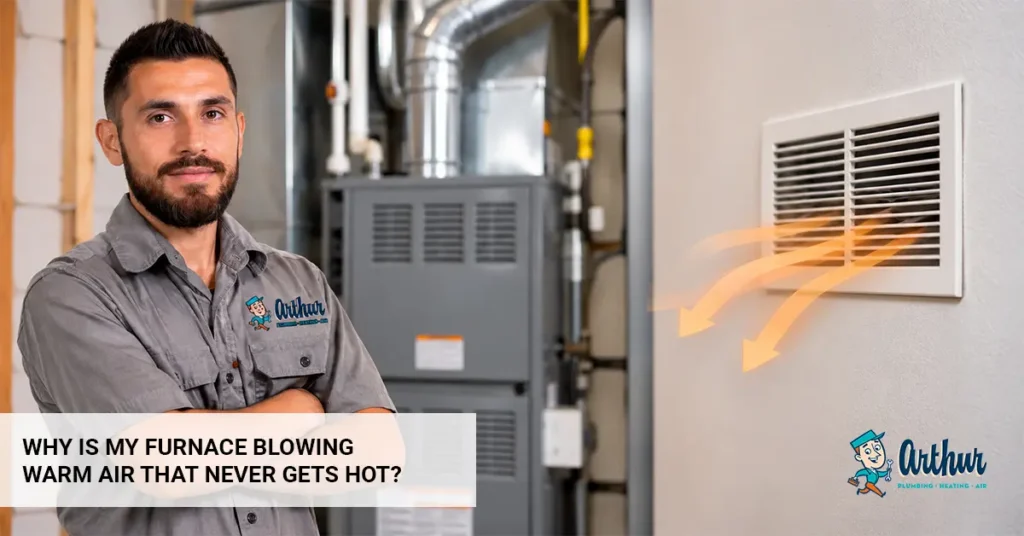
When your furnace blows warm air but never gets hot enough, your home may take longer to reach a comfortable temperature. You might notice that the furnace keeps running, but some rooms still feel cold. As a result, your heating system may struggle to keep up with the thermostat setting.
Several problems can cause this. A dirty air filter, incorrect thermostat settings, dirty burners, a faulty flame sensor, or an ignition issue may affect how well your furnace heats your home. Some problems are easy to check yourself, while others need professional attention.
The good news is that understanding the possible causes can help you narrow down the problem. You can also take a few simple steps before calling an HVAC technician. However, if your furnace still produces lukewarm air, it’s best to have it inspected before the issue leads to more serious repairs.
Why Is My Furnace Blowing Warm Air That Never Gets Hot?
Your furnace may blow warm air without getting hot enough because of a dirty air filter, incorrect thermostat settings, dirty burners, a faulty flame sensor, or an ignition problem. These issues can affect how much heat your furnace produces or cause the burners to shut off too soon.
To understand why this happens, it helps to know how a gas furnace works. First, the thermostat tells the furnace to start. Next, the burners ignite and heat the heat exchanger. The blower then moves air across the heat exchanger and sends the heated air through your home’s vents.
However, something can interrupt this process. For example, a dirty flame sensor may cause the burners to shut off shortly after they ignite. A clogged air filter can also restrict airflow, causing the furnace to overheat and activate its safety controls.
The way your furnace behaves can offer clues about the problem. If the air starts warm but turns cool after a few minutes, the burners may be shutting off too soon. On the other hand, if the air stays mildly warm throughout the heating cycle, the issue may involve airflow, burner performance, or the system’s heating capacity.
Keep in mind that warm supply air isn’t always a sign of a problem. The normal temperature depends on the furnace model and operating conditions. An HVAC technician can measure the temperature difference between the return and supply air to check whether the furnace is heating within the manufacturer’s recommended range.
9 Common Reasons Your Furnace Is Blowing Warm Air Instead of Hot Air
Several issues can stop your furnace from heating your home properly. Some are related to simple settings or routine maintenance. Others involve the burners, ignition system, or internal components.
Here are nine common reasons your furnace may be blowing lukewarm air instead of producing enough heat.
1. Dirty or Clogged Furnace Air Filter
A dirty furnace air filter can restrict airflow and cause your furnace to overheat. When this happens, the system’s safety controls may shut off the burners to protect the equipment. The blower may continue running, but the air coming through your vents can gradually become cooler.
Your furnace needs steady airflow to work properly. However, dust, pet hair, and other debris collect on the filter over time. As the filter gets clogged, less air can pass through the system. Learn more about how dirty air filters affect your heater and why regular filter replacement is important.
You may notice these signs:
- Warm air that turns cooler during a heating cycle.
- Furnace turning on and off more often than usual.
- Some rooms taking longer to heat up.
- Weak airflow from several vents.
- Furnace shutting down before reaching the thermostat setting.
How to fix it:
Start by checking your furnace air filter. If it looks dirty or clogged, replace it with the correct size and type recommended by the manufacturer.
Many standard 1-inch filters need replacement every one to three months. However, you may need to change yours more often if you have pets, a dusty home, or heavy furnace use.
After replacing the filter, run your furnace and see whether its performance improves. If the air still feels lukewarm or the furnace keeps cycling on and off, another issue may be affecting the system. Have an HVAC technician inspect it to find the cause.
2. Incorrect Thermostat Settings
Incorrect thermostat settings can affect how your furnace runs and how warm the air feels coming from your vents. A wrong operating mode or fan setting may make it seem like your furnace isn’t heating properly.
Your thermostat tells the furnace when to start and stop. If the temperature setting is too low, the furnace may stop heating before your home feels comfortable.
The fan setting can also make a difference. When you set the fan to ON, the blower runs continuously, even between heating cycles. As a result, it may circulate room-temperature air through the vents when the burners aren’t producing heat. The AUTO setting runs the blower only when the furnace needs to move heated air, along with its normal shutdown cycle.
How to fix it:
Check your thermostat settings before looking for a bigger problem.
- Make sure the system is set to HEAT.
- Set the target temperature a few degrees above the current room temperature.
- Set the fan to AUTO if you don’t want it running continuously.
- Replace the batteries if the thermostat display is weak or unresponsive.
If the settings are correct but your furnace still blows lukewarm air during a heating cycle, the thermostat may not be the cause. An HVAC technician can check its operation, wiring, and connection to the furnace.
3. Dirty or Clogged Furnace Burners
Dirty or clogged furnace burners can interfere with combustion and reduce your furnace’s ability to produce heat. If dirt or debris blocks the burners, they may struggle to maintain a steady flame.
Your gas furnace uses burners to mix fuel with air and produce heat. That heat warms the heat exchanger, which then transfers warmth to the air moving through your home. However, when the burners become dirty or obstructed, they may not work as intended.
Watch for these warning signs:
- Furnace struggling to heat your home.
- Delayed or failed ignition.
- Unusual noises when the furnace starts.
- Burners shutting off unexpectedly.
- Home taking longer than usual to reach the thermostat setting.
How to fix it:
Have a qualified HVAC technician inspect the burners and check for dirt, debris, or other problems affecting combustion.
If cleaning is needed, the technician can clean the burner assembly and check the flame pattern. They can also inspect the gas supply and combustion system to make sure everything is working safely.
Avoid removing or cleaning gas burners yourself. Working on these components without proper training can create fire, gas, and combustion hazards.
4. Faulty or Dirty Furnace Flame Sensor
A dirty or faulty flame sensor can cause your furnace burners to shut off shortly after ignition. When this happens, your furnace may blow warm air for a short time before the air becomes cooler.
The flame sensor is a safety device in a gas furnace. It checks whether the burners have ignited and a flame is present. A faulty flame sensor is one of several common furnace problems that can interrupt normal heating operation. If the sensor cannot detect the flame, the furnace’s control board shuts off the gas supply to prevent unburned gas from building up.
You may notice these warning signs:
- Furnace starts but shuts down after a few seconds.
- Warm air comes through the vents briefly.
- Furnace repeatedly tries to restart.
- Heating cycles end before your home reaches the set temperature.
- Furnace displays an error code related to ignition or flame detection.
How to fix it:
Ask a qualified HVAC technician to inspect the flame sensor. Dirt, corrosion, damaged wiring, or a faulty sensor can interfere with its operation.
If dirt is causing the problem, professional cleaning may restore normal operation. However, a damaged sensor or wiring issue may require repair or replacement.
If your furnace keeps starting and shutting down, avoid repeatedly resetting it. Have a technician inspect the system to find the cause and make sure it operates safely.
5. Low Gas Supply or Gas Pressure Problems
Low gas supply or incorrect gas pressure can prevent your furnace burners from producing enough heat. When the burners don’t receive the proper fuel supply, your furnace may struggle to heat your home.
A gas furnace needs the correct gas pressure to operate safely and produce its expected heat output. However, problems with the gas line, regulator, or overall fuel supply can affect how the burners work.
You may notice these warning signs:
- Furnace produces less heat than usual.
- Burners have trouble staying lit.
- Furnace struggles to start.
- Heating performance changes unexpectedly.
- Other gas appliances also have trouble working.
How to fix it:
Gas supply and pressure problems need professional attention. An HVAC technician can measure the gas pressure, inspect the regulator, and check whether the furnace is receiving the correct fuel supply.
Never adjust gas valves, regulators, or supply lines yourself. These components require proper testing and handling to prevent leaks and other safety risks.
If you smell gas, leave the property immediately. Don’t operate electrical switches, use open flames, or try to restart the furnace. Contact your gas utility or emergency services from a safe location.
6. Furnace Ignition Problems
A faulty ignition system can prevent your furnace burners from lighting properly. As a result, your furnace may start a heating cycle but fail to produce enough heat for your home.
Most modern gas furnaces use electronic ignition instead of a standing pilot light. Depending on the model, your furnace may have a hot surface igniter or a spark ignition system.
If the igniter becomes damaged or the ignition controls stop working, the burners may not light at all. They may also shut down shortly after ignition, leaving your home without enough heat.
Common warning signs include:
- Furnace starts but produces little or no heat.
- Repeated clicking sounds during startup.
- Burners fail to ignite.
- Furnace shuts down shortly after starting.
- Ignition-related error codes appear on the display.
How to fix it:
Have a qualified HVAC technician inspect the ignition system. They can check the hot surface igniter or spark igniter, wiring, and control board to find the problem.
Depending on the cause, the technician may repair an electrical connection or replace a faulty ignition component.
Avoid touching, removing, or testing the igniter yourself. These parts can be fragile, and the system involves high temperatures and electrical components.
7. Furnace Short Cycling
Furnace short cycling happens when your heating system turns on and off more often than normal. These frequent shutdowns can prevent your home from getting enough heat and make the temperature feel inconsistent.
Several issues can cause short cycling. Common examples include a clogged air filter, a dirty flame sensor, restricted airflow, an overheating furnace, or an incorrectly sized heating system. Learn more about furnace short cycling and why your heating system may repeatedly turn on and off.
When the furnace shuts down before completing a normal heating cycle, your home may not reach the temperature set on the thermostat. The system then starts again, sometimes only a few minutes later.
Look for these common signs:
- Furnace starts and stops every few minutes.
- Warm air comes through the vents for a short time.
- Indoor temperatures remain uncomfortable.
- Furnace repeatedly attempts to restart.
- Heating bills increase without an obvious reason.
How to fix it:
Start with a few basic checks. Inspect the air filter and replace it if it’s dirty. Also, make sure the thermostat is set to HEAT, and the fan is set to AUTO.
If your furnace continues to short-cycle, contact an HVAC technician. They can inspect the high-limit switch, flame sensor, blower motor, airflow, and other components to identify the cause.
Fixing the underlying problem can help your furnace complete normal heating cycles, reduce unnecessary wear, and keep your home more comfortable.
8. Dirty or Damaged Heat Exchanger
A damaged or heavily restricted heat exchanger can affect your furnace’s performance and create serious safety risks. The heat exchanger transfers heat from the burners to the air that circulates through your home.
In a gas furnace, hot combustion gases pass through the heat exchanger while indoor air moves around its exterior. This process warms the air without allowing combustion gases to mix with the air inside your home.
However, cracks, corrosion, or heavy deposits can affect how the heat exchanger works. A damaged heat exchanger may also allow combustion gases, including carbon monoxide, to enter areas they shouldn’t.
Possible warning signs include:
- Furnace struggling to heat your home.
- Furnace shutting down unexpectedly.
- Unusual noises during operation.
- Visible rust or corrosion.
- Furnace safety controls activating repeatedly.
How to fix it:
Have a qualified HVAC technician inspect the heat exchanger and test the furnace’s combustion and safety systems.
If the heat exchanger is cracked or damaged, it may need to be replaced. Depending on your furnace’s age, overall condition, and repair cost, replacing the entire unit may be a more practical option.
Never attempt to inspect or repair the heat exchanger yourself. A damaged heat exchanger can create a carbon monoxide hazard.
If your carbon monoxide alarm sounds, get everyone outside immediately. Contact emergency services from a safe location and don’t re-enter until the property has been declared safe.
9. Incorrect Furnace Size or Poor Heating System Performance
An incorrectly sized furnace or poor heat distribution can make it difficult to keep your home comfortable. Even if the furnace produces enough heat, your rooms may not receive it evenly.
For example, an undersized furnace may struggle to heat a large home during very cold weather. On the other hand, an oversized furnace may heat the area around the thermostat quickly and shut down before the rest of the house gets warm.
Other factors can also affect your heating performance, including:
- Poor attic or wall insulation.
- Air leaks around doors and windows.
- Undersized or poorly designed ductwork.
- Leaking duct connections.
- Incorrect furnace installation.
How to fix it:
Ask an HVAC technician to evaluate your furnace size, ductwork, airflow, and overall heating performance.
If the furnace is incorrectly sized, a professional can calculate your home’s heating needs and recommend a suitable system. They may also suggest sealing duct leaks, improving insulation, or making other changes to reduce heat loss.
Don’t assume you need a bigger furnace just because your home feels cold. A larger unit won’t necessarily solve the problem and may cause short cycling. A proper inspection can help determine whether the issue comes from the furnace, ductwork, or insulation.
How to Tell If Your Furnace Is Not Heating Properly
You may have a furnace heating problem if the air feels lukewarm, some rooms stay cold, or the system runs longer than usual. These warning signs can help you spot a problem before it leads to more expensive repairs.
Watch for these common symptoms:
1. Air from the vents feels lukewarm: If the air doesn’t seem warm enough to heat your rooms, your furnace may have a burner, ignition, or airflow problem. However, keep in mind that normal supply-air temperature varies by furnace type and operating conditions.
2. Rooms take longer to heat up: If your furnace runs but your home takes too long to reach the thermostat setting, the system may not be producing or distributing enough heat.
3. Furnace runs continuously: A furnace that runs for long periods without reaching the set temperature may have an airflow problem, limited heating capacity, or excessive heat loss in your home.
4. Furnace turns on and off frequently: Frequent starting and stopping is known as short cycling. A dirty air filter, overheating, or a faulty flame sensor may cause this problem.
5. Some rooms remain colder than others: Uneven heating may point to leaking ducts, blocked vents, poor insulation, or an unbalanced heating system.
6. Heating bills increase unexpectedly: If your furnace uses more energy but your home still feels cold, it may not be heating or distributing air efficiently.
7. Furnace displays an error code: Some furnaces show diagnostic codes when they detect ignition problems, overheating, or other operating faults. Check your owner’s manual to understand what the code means.
If you notice several of these signs, schedule a professional furnace inspection. An HVAC technician can check the airflow, burners, ignition system, and temperature rise to find out why your furnace isn’t heating properly.
How to Fix a Furnace That Blows Warm Air but Doesn’t Get Hot
You can check a few basic things when your furnace blows lukewarm air instead of heating your home properly. Start with the thermostat, air filter, and vents. These simple checks may help you find an airflow or setting issue before calling an HVAC technician.
1. Check Your Thermostat Settings
First, make sure your thermostat is set to HEAT, and the target temperature is higher than the current room temperature.
Next, check the fan setting. If it’s set to ON, the blower may continue running between heating cycles and circulate unheated air through your vents. Switching it to AUTO allows the fan to follow the furnace’s normal heating cycle.
If your thermostat display looks unusual, check the batteries if your model uses them.
2. Inspect and Replace the Furnace Air Filter
A clogged air filter can restrict airflow and cause your furnace to overheat. This may trigger the system’s safety controls and interrupt normal heating.
Turn off the furnace before removing the filter. If it looks dirty or clogged, replace it with the correct size and type recommended by the manufacturer.
Also, check the airflow arrow on the filter. It should point toward the furnace.
3. Make Sure Supply and Return Vents Are Clear
Blocked supply or return vents can interfere with airflow and make it harder for your furnace to heat your home evenly.
Open the supply registers and move furniture, rugs, and curtains away from them. Then, check the return grilles to make sure dust, furniture, or other objects aren’t blocking incoming air.
Keeping both supply and return vents clear helps your heating system circulate air properly.
4. Check the Thermostat Batteries
Weak thermostat batteries can cause display problems or unreliable operation in battery-powered models.
If your thermostat shows a low-battery warning or behaves unusually, replace the batteries with the type recommended by the manufacturer.
After replacing them, check whether the display works normally and the thermostat can control your furnace.
5. Check the Furnace Display for Error Codes
Many modern furnaces have a diagnostic light or electronic display that shows error codes when something goes wrong.
If you notice a flashing light or error code, check your furnace owner’s manual. It may help you identify an ignition, airflow, or safety-related problem.
Don’t remove furnace panels or try to bypass internal safety controls. If the same error keeps appearing, contact a qualified HVAC technician.
If these basic checks don’t improve your furnace’s heating performance, the problem may involve the burners, flame sensor, ignition system, or another internal component. A professional inspection can help identify the cause and prevent further damage.
Can a Furnace Blowing Lukewarm Air Increase Energy Bills?
Yes. A furnace blowing lukewarm air can increase energy bills if it runs longer than usual or struggles to keep your home at the desired temperature.
When your furnace cannot produce or distribute enough heat, it may need more operating time to warm your home. As a result, you may use more energy without getting the comfort you expect.
Here are five ways poor heating performance can affect your energy use.
- Longer heating cycles: Your furnace may run for extended periods when it struggles to reach the thermostat’s target temperature. This can increase energy consumption.
- Repeated heating attempts: A furnace that short-cycles may start and stop frequently. These repeated heating cycles can waste energy and put extra strain on system components.
- Poor indoor temperature control: Uneven heating can leave some rooms cold while others feel comfortable. You may be tempted to raise the thermostat, which can increase heating costs.
- Increased equipment wear: Frequent cycling and abnormal operating conditions can put additional stress on furnace components. Over time, this may lead to more repairs.
- Reduced heating efficiency: Problems with airflow, combustion, or heat distribution can prevent your furnace from operating as intended. This may cause it to use more energy to provide the same level of comfort.
If your energy bills keep rising while your home stays cold, schedule a furnace inspection. Fixing the underlying problem can restore proper heating, reduce unnecessary energy use, and help prevent more expensive repairs.
When Should You Call an HVAC Technician?
Call an HVAC technician if your furnace continues blowing lukewarm air after basic troubleshooting or shows signs of a mechanical, electrical, or combustion problem.
Some furnace issues are not safe to diagnose or repair without proper training. A professional can inspect the system, identify the cause, and recommend the right repair.
Contact an HVAC technician if you notice:
- Furnace continues producing lukewarm air.
- Burners repeatedly shut off.
- Furnace frequently short cycles.
- Ignition system fails to start.
- Unusual noises come from the burners or blower.
- Furnace repeatedly displays error codes.
- Heating bills increase without a clear reason.
- You suspect a gas pressure or heat exchanger problem.
What will an HVAC technician inspect?
During a furnace inspection, the technician may check several parts of the heating system, including:
- Thermostat: Checks its operation, settings, and connection to the furnace.
- Air filter and airflow: Looks for restrictions that may affect heating performance.
- Burners and ignition system: Checks whether the burners ignite and operate properly.
- Flame sensor and electrical connections: Looks for problems that may interrupt burner operation.
- Gas pressure and combustion: Measures gas pressure and checks whether the furnace burns fuel properly.
- Heat exchanger: Inspects for cracks, corrosion, or other damage.
- Safety controls: Tests the high-limit switch and other safety components.
- Ductwork: Checks for leaks, blockages, and uneven heat distribution.
These checks help the technician find out why your furnace isn’t producing or delivering enough heat. Based on the results, they can recommend the right repair instead of replacing parts unnecessarily.
Important safety warning: If you smell gas, leave the property immediately. Don’t operate electrical switches, use open flames, or try to restart the furnace. Contact your gas utility or emergency services from a safe location. If your carbon monoxide alarm sounds, get everyone outside and seek emergency assistance. Don’t re-enter until the property has been declared safe.
Getting professional help early can prevent further damage, reduce safety risks, and help restore reliable heating.
Frequently Asked Questions
Why Is My Furnace Blowing Warm Air but Not Heating My House?
Your furnace may blow warm air without heating your house because of a dirty air filter, faulty flame sensor, dirty burners, ignition problems, or restricted airflow. These issues can reduce heat production or cause the burners to shut off too soon. Start by checking the thermostat and air filter. If the problem continues, have an HVAC technician inspect the system.
Should Furnace Air Feel Hot Coming Out of the Vents?
Furnace air should feel warmer than the air inside your home, but it doesn’t always feel extremely hot. The temperature depends on the furnace type, airflow, and operating conditions. If the air feels lukewarm and your home cannot reach the thermostat setting, your heating system may need professional attention.
Why Does My Furnace Run Constantly but Never Get Hot?
Your furnace may run continuously without producing enough heat because of a dirty air filter, burner problem, ignition issue, incorrect gas pressure, or heat loss through poorly insulated areas. An undersized furnace may also struggle to heat your home during very cold weather. An HVAC technician can inspect the system and identify the cause.
Can a Dirty Air Filter Make Furnace Air Lukewarm?
Yes, a dirty air filter can contribute to lukewarm airflow by restricting air movement through the furnace. This restriction may cause the system to overheat and activate its high-limit switch, which shuts off the burners. The blower may continue running and circulate cooler air. Replacing a clogged filter can help restore proper airflow.
Why Does My Furnace Blow Warm Air Then Turn Cold?
Your furnace may blow warm air and then turn cold when the burners shut off before completing a normal heating cycle. A dirty flame sensor, restricted airflow, overheating, or an ignition problem can cause this behavior. The blower may continue running after the burners shut off, pushing cooler air through the vents.
If your heater blows completely cold air, read our guide on why your heater blows cold air and how to address the problem.
Can a Bad Flame Sensor Cause Lukewarm Air?
Yes, a dirty or faulty flame sensor can cause lukewarm air from your furnace. If the sensor cannot detect the burner flame, the furnace control board shuts off the gas supply as a safety measure. The blower may continue running, which can make the air feel warm briefly before it cools down.
How Long Should a Furnace Take to Heat a House?
The time a furnace takes to heat your home depends on its size, heating capacity, outdoor temperature, insulation, and ductwork. A properly sized and maintained furnace should maintain the thermostat setting under its designed operating conditions. If your home takes unusually long to warm up, have an HVAC technician check the system.
Should I Turn Off My Furnace If It Is Not Heating Properly?
Turn off your furnace if you notice repeated overheating, unusual mechanical noises, or signs of a serious malfunction. If you smell gas, leave the property immediately and contact your gas utility or emergency services from a safe location. If your carbon monoxide alarm sounds, get everyone outside and seek emergency assistance. For less urgent heating problems, arrange a professional inspection instead of repeatedly restarting the system.
Restore Reliable Heating With Professional Furnace Repair
A furnace that blows warm air but never gets hot enough can leave your home uncomfortable and increase energy use. Common causes include a dirty air filter, incorrect thermostat settings, a faulty flame sensor, dirty burners, or ignition problems.
Start with a few simple checks. Replace a clogged air filter, review your thermostat settings, and make sure your supply and return vents are clear. These steps may solve minor airflow or setting issues.
However, if your furnace still struggles to heat your home, contact a qualified HVAC technician. However, if your furnace still struggles to heat your home, contact our team for reliable furnace repair services to identify the problem and restore reliable heating. A professional inspection can identify the underlying problem and help you avoid unnecessary repairs.
Don’t ignore ongoing heating issues. Fixing them early can help prevent further damage, improve system performance, and keep your home comfortable throughout the heating season.