
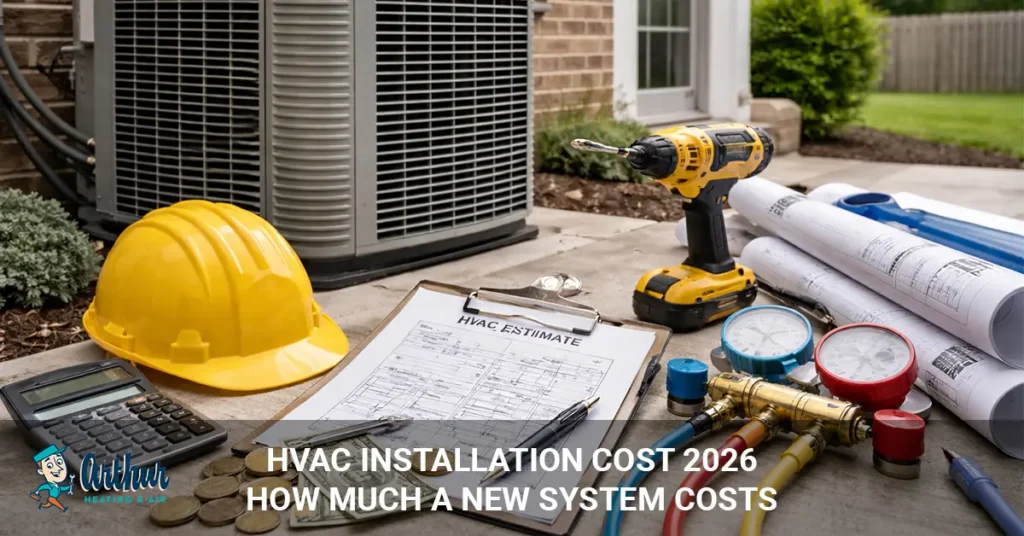
A new HVAC system costs about $5,000 to $22,000 installed in 2026, with many standard residential installations falling between $5,000 and $12,500. Your final price depends on the system type, home size, efficiency, ductwork, labor, and installation complexity.
A simple replacement with existing ductwork usually costs less than installing HVAC in a home that has never had central heating and cooling. Premium-efficiency equipment, larger homes, difficult access, and major ductwork changes can push the price much higher.
If you’re comparing HVAC quotes, don’t look at the equipment price alone. The installation, permits, electrical work, ductwork, thermostat, removal, and startup can all affect your final bill.
How Much Does HVAC Installation Cost in 2026?
Most homeowners can expect to pay about $5,000 to $22,000 for a complete HVAC installation in 2026, depending on the system and installation requirements. A standard-efficiency air conditioner and furnace with an uncomplicated duct layout commonly falls around $5,000 to $12,500.
Angi’s 2026 data puts overall HVAC replacement costs at about $5,000 to $22,000, with an average around $7,500.
Here’s a practical way to think about the pricing:
| HVAC Project | Typical Installed Cost |
| Central AC | $4,000–$8,000 |
| Heat pump | $4,200–$7,600 |
| Furnace | $2,000–$10,000 |
| Standard AC + furnace | $5,000–$12,500 |
| Larger or premium HVAC system | $12,500–$22,000+ |
These figures provide a starting point rather than a quote. Local labor rates, equipment availability, home size, efficiency, and ductwork can change the final price significantly.
HVAC Installation Cost by System Type
The type of HVAC system you install has a major effect on the total project price. Central AC, furnaces, heat pumps, and ductless systems have different equipment and installation requirements.
| System Type | Typical Installed Cost |
| Central AC | $4,000–$8,000 |
| Air-source heat pump | $4,500–$8,000 |
| Furnace | $2,000–$10,000 |
| Ductless mini-split | $1,300–$8,000 |
| Geothermal heat pump | $6,000–$20,000 |
These ranges come from current 2026 market pricing compiled by This Old House. The source notes that the figures can vary by equipment, home, and installation conditions.
Central AC Installation Cost
A central AC system typically costs about $4,000 to $8,000 installed when the home already has suitable ductwork. For a more detailed breakdown, see our guide to AC installation cost. Higher-efficiency equipment and more complicated installations can increase the price.
Central AC works with your existing furnace or air handler to cool the home through the duct system.
If you already have functional ductwork, the contractor may only need to replace the outdoor condenser, indoor coil, refrigerant lines or related components, and controls. That usually costs less than installing an entirely new distribution system.
Heat Pump Installation Cost
An air-source heat pump typically costs about $4,500 to $8,000 installed for the equipment and basic installation. See our guide to heat pump installation cost for more details on pricing. Heat pumps can provide both heating and cooling, which makes them an alternative to separate AC and furnace equipment.
The final price can increase if the installation requires electrical upgrades, new ductwork, or other modifications.
Cold-climate homes may also need backup heat, depending on the system and local conditions.
Furnace Installation Cost
A new furnace typically costs about $2,000 to $10,000 installed, depending mainly on the fuel type, efficiency, size, and installation requirements. You can also review our guide to furnace installation cost for a closer look at furnace pricing.
Current pricing varies by furnace type:
| Furnace Type | Typical Installed Cost |
| Electric furnace | $2,000–$7,000 |
| Gas furnace | $3,800–$10,000 |
| Oil furnace | $6,750–$10,000 |
A gas furnace can cost more to install than an electric model because it requires proper combustion venting and a gas connection.
Ductless Mini-Split Installation Cost
A ductless mini-split can cost roughly $1,500 to $4,000 for cooling, while ductless heat-pump systems can range from about $1,300 to $8,000 depending on the setup. Our guide to mini-split installation cost covers the main factors that affect the total price.
Mini-splits can make sense when a home doesn’t have ductwork or when you only need heating and cooling in specific rooms.
A multi-zone system costs more because the installation uses multiple indoor units and additional connections.
What Is Included in HVAC Installation Cost?
A typical HVAC installation quote can include equipment, labor, basic materials, removal of old equipment, permits, and system startup, but the exact scope depends on the contractor and project.
Before accepting a quote, check whether it includes:
- New HVAC equipment
- Installation labor
- Removal and disposal of old equipment
- Thermostat
- Refrigerant lines or connections
- Condensate drain work
- Electrical connections
- Gas connections when required
- Ductwork modifications
- Permits and inspections
- System testing and startup
Don’t assume every quote includes all of these items.
Ask the contractor to provide an itemized estimate so you can compare one proposal with another.
What Factors Affect HVAC Installation Cost?
System size, efficiency, ductwork, labor, and installation complexity usually have the biggest effect on HVAC installation cost. Two homes with the same square footage can receive very different installation quotes because their existing systems and installation conditions differ.
System Size
Larger HVAC systems generally cost more because they require more equipment and installation work.
However, bigger doesn’t automatically mean better.
A contractor should size your system according to the home’s heating and cooling load rather than choosing equipment based only on square footage. A Manual J load calculation can help determine the appropriate capacity.
An oversized system can also create comfort and humidity problems, so don’t pay extra for capacity your home doesn’t need.
Energy Efficiency
Higher-efficiency HVAC equipment usually costs more upfront but can reduce energy consumption over time.
For cooling systems and heat pumps, contractors use efficiency ratings such as SEER2. Furnaces use AFUE to describe heating efficiency.
A higher rating isn’t always the best financial choice for every home. Compare the additional equipment cost with your expected energy savings and how long you plan to stay in the house.
Ductwork
New or heavily modified ductwork can add thousands of dollars to an HVAC installation.
If your existing ducts are correctly sized and in good condition, the contractor may be able to reuse them.
If the ducts are damaged, poorly sized, leaking, or incompatible with the new system, repairs or replacement can increase the project cost. Current cost guides also identify ductwork as one of the common reasons HVAC projects become more expensive than the initial estimate.
Labor
HVAC labor costs increase when installation takes more time or requires specialized work.
A straightforward replacement with existing connections may take much less labor than a first-time installation that requires new ductwork, electrical work, refrigerant lines, or difficult access.
Labor rates also vary by location.
Permits and Local Codes
Permits and inspections can add a few hundred dollars to an HVAC project, depending on your location and the work involved.
Local requirements vary. Your contractor should tell you which permits the project requires and whether the quote includes those fees.
Not Sure What Size or System You Need?
Avoid costly mistakes with a professional recommendation.
 Get My System Size & Recommendation
HVAC Installation Cost by Home Size
Larger homes generally need higher-capacity HVAC equipment, so installation costs often increase with home size. However, square footage alone shouldn’t determine the system size.
Current market examples show average installation costs of about $8,138 for a 1.5-ton system serving a 1,000-square-foot home, around $8,344 for a 3-ton system serving a 1,800-square-foot home, and about $17,090 for a 5-ton system serving a 3,000-square-foot home.
| Home Size | Example System Size | Example Average Cost |
| 1,000 sq. ft. | 1.5 tons | $8,138 |
| 1,200 sq. ft. | 2 tons | $8,241 |
| 1,800 sq. ft. | 3 tons | $8,344 |
| 2,500 sq. ft. | 4 tons | $12,670 |
| 3,000 sq. ft. | 5 tons | $17,090 |
Use these numbers as examples rather than a sizing chart. Your home’s insulation, windows, climate, layout, ductwork, and heat gain can change the required equipment size.
How Much Does HVAC Labor Cost?
HVAC labor can make up a significant portion of the installation price, especially when the project requires extensive modifications.
A basic replacement with existing ductwork and accessible equipment takes less labor than a new installation that requires ductwork, electrical upgrades, or difficult access.
For example, HomeAdvisor currently estimates professional AC installation labor at about $300 to $1,600 for a typical AC installation, with more complex work costing more.
Don’t compare contractors based only on their labor line.
A contractor who charges more for labor may include more installation work, better commissioning, permits, or warranty support. Compare the total installed price and scope of work instead.
New HVAC Installation vs. HVAC Replacement Cost
Installing HVAC in a home without an existing system usually costs more than replacing an existing system because you may need new ductwork, electrical work, controls, and other infrastructure.
| Cost Factor | New HVAC Installation | HVAC Replacement |
| Existing equipment | None | Usually present |
| Existing ductwork | May need new installation | Often reusable |
| Removal | Usually not required | Usually required |
| Electrical changes | May be needed | Usually limited |
| Duct modifications | Often more extensive | Often limited |
| Installation complexity | Usually higher | Usually lower |
A replacement can still become expensive if the existing ductwork needs major repairs or the new system requires electrical or structural changes.
This is why you should ask the contractor to inspect the entire system rather than pricing the equipment alone.
How to Save Money on HVAC Installation
The best way to control HVAC installation costs is to compare detailed quotes and choose equipment based on your home’s needs rather than simply buying the cheapest or most expensive system.
Get Multiple Quotes
Get at least two or three detailed estimates when possible.
Ask each contractor to list:
- Equipment model
- System size
- Efficiency rating
- Labor
- Ductwork
- Electrical work
- Permits
- Removal
- Warranty coverage
- Total installed price
This makes it much easier to compare proposals.
Don’t Choose Equipment Based Only on Price
The cheapest HVAC system isn’t always the cheapest option over its full service life.
A very inexpensive system may have lower efficiency or fewer features. A premium system may cost more upfront without providing enough energy savings to justify the difference.
Look at the total cost, expected energy use, warranty, and installation quality.
Check Available Rebates
Local utility companies and state programs may offer HVAC incentives that reduce your upfront cost.
Available programs change frequently, so check current state and utility incentives before purchasing equipment. Current 2026 guidance also notes that federal HVAC incentives changed after 2025, making local and state programs particularly important to verify.
Schedule Installation Before an Emergency
Planning your HVAC replacement before the old system fails can give you more time to compare equipment and contractors.
Emergency replacements can leave homeowners with fewer options because they need heating or cooling restored immediately.
If your system is old and repair costs keep increasing, get replacement estimates before a major breakdown occurs.
When Should You Replace Your HVAC System?
Replacement usually makes more financial sense when an older system needs frequent repairs, has a major component failure, or operates far less efficiently than newer equipment.
Consider getting replacement quotes if you notice:
- Frequent breakdowns
- Rising energy bills
- Poor or uneven comfort
- Major refrigerant or compressor problems
- Expensive repairs
- An aging system with declining performance
Air conditioners and heat pumps commonly last around 10 to 15 years, while furnaces can last 15 to 20 years or longer with proper care. Age alone doesn’t mean you need a replacement, but an older system with repeated problems deserves a closer look.
Regular HVAC maintenance can help keep a properly functioning system running efficiently and may help identify problems before they become major repairs.
Frequently Asked Questions
How much does a new HVAC system cost in 2026?
A complete HVAC installation typically costs about $5,000 to $22,000 in 2026, with many standard installations falling around $5,000 to $12,500. System type, size, efficiency, ductwork, and labor determine the final price.
What is the average cost to install an HVAC system?
Angi’s 2026 data puts the average HVAC replacement cost at about $7,500, with typical projects ranging from $5,000 to $22,000. Your actual price can vary significantly by system and location.
How much does a central AC system cost to install?
A central AC system typically costs about $4,000 to $8,000 installed. Existing ductwork, system efficiency, equipment size, and local labor rates can change the final price.
How much does a heat pump cost to install?
An air-source heat pump typically costs about $4,500 to $8,000 installed. Ductwork changes, electrical upgrades, equipment size, and system complexity can increase the total.
How much does a furnace cost to install?
A new furnace typically costs about $2,000 to $10,000 installed. Electric furnaces generally fall on the lower end, while gas and oil systems can cost more because of their installation requirements.
Does HVAC installation include ductwork?
HVAC installation may include ductwork, but you should confirm it in the written estimate. If your home needs new or extensive ductwork, the project can cost substantially more than a simple equipment replacement.
How long does HVAC installation take?
A straightforward HVAC replacement can often take a day, while complex installations can take longer. New ductwork, electrical changes, difficult access, and multiple system components can extend the project.
Is it cheaper to replace an HVAC system or install a new one?
Replacing an existing HVAC system usually costs less than installing a completely new system because the home may already have usable ductwork and electrical connections.
A first-time installation can require much more infrastructure, which increases labor and material costs.
What is the most expensive part of HVAC installation?
The equipment, ductwork, and labor usually account for the largest portions of an HVAC installation bill. Larger or high-efficiency equipment costs more, while extensive ductwork and difficult installation conditions can add thousands to the project.
Final Thought
Plan on spending roughly $5,000 to $22,000 for a new HVAC installation in 2026, with a straightforward standard-efficiency system often costing around $5,000 to $12,500. Larger homes, premium equipment, new ductwork, electrical upgrades, and difficult installations can push the price well above that range.
The best way to get a realistic number for your home is to compare detailed estimates from qualified HVAC contractors. Make sure each quote lists the equipment, system size, efficiency, labor, ductwork, permits, removal, warranty, and any additional work.
Don’t choose a system based only on the lowest upfront price. Proper sizing and installation matter just as much as the equipment itself.
Ready to Install Your New HVAC System?
Get expert installation with upfront pricing and long-term reliability.
 Schedule My HVAC Installation