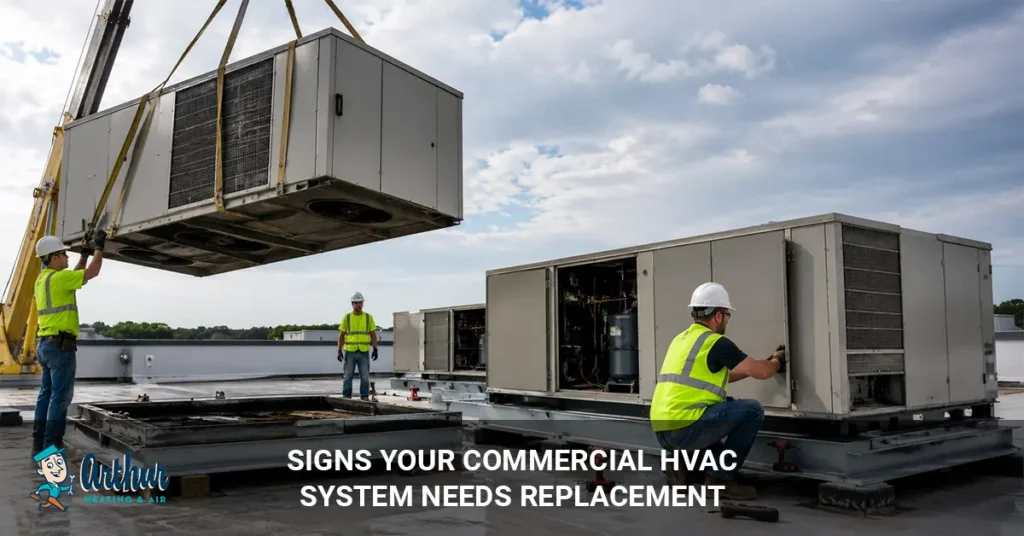
Your commercial HVAC system needs replacement when it stops working efficiently, breaks down often, or costs too much to run.
Most systems don’t fail all at once. They show clear warning signs over time. If you catch these signs early, you can avoid sudden breakdowns and expensive disruptions to your business.
This guide explains the key signs that tell you when it’s time to replace your HVAC system instead of continuing with repairs.
How Long Does a Commercial HVAC System Last?
A commercial HVAC system usually lasts about 10 to 15 years with proper maintenance.
The actual lifespan depends on how often the system runs, how well it is maintained, and the conditions it operates in. Systems in busy buildings or harsh environments tend to wear out faster.
As the system gets older, efficiency drops and repair needs increase. That’s the point when you should start planning for a replacement to avoid unexpected breakdowns.
Sign 1: Your System Is More Than 10–15 Years Old
Your HVAC system needs replacement if it is more than 10 to 15 years old.
Older systems lose efficiency over time and are more likely to break down. They often use outdated technology and consume more energy to do the same job.
You may also notice uneven temperatures, especially during heavy use in summer or winter. Even if the system is still running, replacing it can reduce energy costs and improve performance in the long run.
Sign 2: Frequent Repairs Are Adding Up
Your HVAC system likely needs replacement if you are paying for repairs often.
Frequent service calls and ongoing commercial AC repairs mean the system is wearing out and becoming less reliable. Small fixes may seem manageable at first, but the total cost can add up quickly over time.
If repair costs start to approach the price of a new system, it makes more sense to replace it. A new unit can reduce ongoing expenses and give you more reliable performance.
Sign 3: Rising Energy Bills
Your HVAC system may need replacement if your energy bills keep increasing.
As the system ages, it loses efficiency and has to work harder to heat or cool your building. This extra effort leads to higher energy use and rising monthly costs.
If your bills are going up without a clear reason, your HVAC system is often the cause. Replacing it with a more efficient unit and scheduling regular HVAC tune-ups can help lower your operating costs.
Sign 4: Uneven Heating or Cooling
Your HVAC system may need replacement if you notice uneven temperatures across your building.
Hot and cold spots mean the system is not distributing air properly. This often happens when the unit is aging or struggling to keep up with demand.
Inconsistent airflow can make spaces uncomfortable for employees and customers. If the problem keeps happening even after repairs, it’s usually a sign the system is no longer performing as it should.
Sign 5: Strange Noises or Odors
Your HVAC system may need replacement if you hear unusual noises or notice strange smells.
Sounds like banging, grinding, or rattling often mean internal parts are worn or damaged. Musty smells can point to mold or moisture issues, while burning odors may signal electrical problems caused by common commercial HVAC problems.
These warning signs usually get worse over time. If they keep coming back, the system may be failing, and replacement is often the safer option.
Sign 6: System Struggles to Maintain Temperature
Your HVAC system may need replacement if it cannot maintain the set temperature.
If the system runs for long periods but still fails to heat or cool properly, it is no longer working efficiently. This usually means key components are worn out or the system cannot handle the building’s demand.
When a unit works harder than it should, it uses more energy and wears down faster. Over time, this leads to more breakdowns and higher costs.
A properly working system should reach and hold the desired temperature without running nonstop.
Sign 7: Poor Indoor Air Quality
Your HVAC system may need replacement if indoor air quality is getting worse.
An aging system often cannot filter and circulate air properly. This leads to more dust, humidity issues, and stale air inside the building, which can affect overall indoor air quality.
You may also notice complaints about discomfort, allergies, or breathing issues from employees or customers. If air quality problems continue even after maintenance, the system may no longer be performing as it should.
Sign 8: Outdated Technology and Controls
Your HVAC system may need replacement if it lacks modern controls and efficiency features.
Older systems do not have advanced controls like smart thermostats or energy management tools. This makes it harder to control temperature, track performance, and reduce energy use.
Newer systems are built to be more efficient and easier to manage. They offer better control, improved performance, and lower operating costs.
If your system feels outdated or hard to manage, upgrading can give you better comfort and long-term savings.
Repair vs Replacement: Which One Makes More Sense?
Replacement makes more sense when repair costs are high, and the system keeps losing performance.
If your HVAC system is still fairly new and only needs a small fix, repair is usually the better choice. But when breakdowns happen often, and costs keep adding up, repairs stop being worth it.
An older system that struggles to perform will continue to drain money through energy bills and service calls. In that case, replacing it becomes the smarter long-term decision.
Think of replacement as an investment that improves efficiency, reduces ongoing costs, and gives you more reliable performance.
Benefits of Replacing Your Commercial HVAC System
Replacing your HVAC system improves efficiency, comfort, and long-term cost savings.
A new system uses less energy to heat and cool your building, which helps lower your utility bills. It also maintains more consistent temperatures, so your space stays comfortable throughout the day.
Newer systems improve indoor air quality by filtering and circulating air more effectively. They are also more reliable and require less maintenance, which reduces the risk of unexpected breakdowns and costly repairs.
How to Plan for HVAC Replacement
Plan your HVAC replacement early to avoid sudden failures and unexpected costs.
Start by setting a clear budget and understanding your building’s heating and cooling needs. This helps you choose a system that fits both your space and your long-term goals.
Work with an HVAC professional to select the right size and type of system. Proper sizing is important for efficiency and performance.
It’s always better to replace your system before it breaks down completely. This helps you avoid downtime and keeps your business running smoothly.
Final Thoughts
You should replace your commercial HVAC system when it becomes inefficient, unreliable, or too expensive to maintain.
Pay attention to warning signs like rising energy bills, frequent repairs, and uneven temperatures. These issues show that your system is no longer performing the way it should.
Replacing your system before it fails completely helps you avoid downtime and unexpected costs. It also improves comfort, lowers energy use, and keeps your business running smoothly.