HVAC tune-ups improve energy efficiency by helping your system run clean, balanced, and properly adjusted. This allows it to use less energy to heat or cool your home.
Over time, dirt, wear, and small issues reduce system performance. When your system is not maintained, it has to work harder to do the same job.
That extra effort leads to higher energy bills and more strain on parts. Many homeowners notice the cost increase but don’t realize maintenance is the cause.
A regular tune-up fixes these issues early. It helps your system run more smoothly, use less energy, and avoid unnecessary wear.
In this guide, you’ll learn what happens during a tune-up, how it improves efficiency, and how it helps lower your energy costs.
What Is an HVAC Tune-Up?
An HVAC tune-up is a professional service that checks, cleans, and adjusts your system to improve performance. It helps all parts work together efficiently.
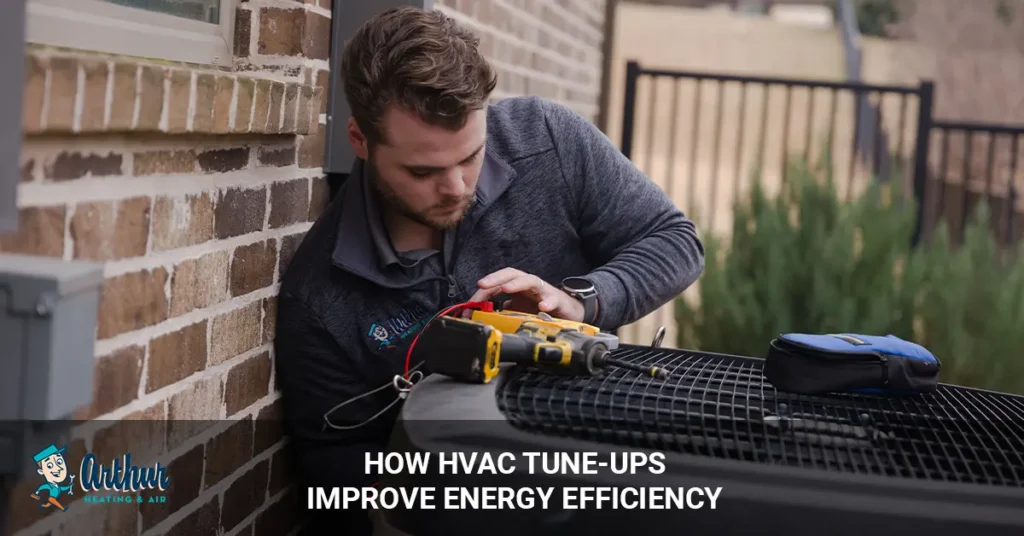
During a tune-up, a technician inspects key components, removes dirt and buildup, and makes small adjustments. This keeps the system running smoothly and using less energy.
Regular tune-ups also help catch small problems early. Fixing these issues in time prevents bigger repairs and keeps your system reliable.
How HVAC Tune-Ups Improve Energy Efficiency
HVAC tune-ups improve energy efficiency by cleaning, adjusting, and optimizing your system. This helps it use less energy to do the same job.
Dirt and buildup block airflow and slow down heat transfer. A tune-up removes these issues so air can move freely and the system can work properly.
Small adjustments also make a big difference. The technician sets the system to run at the right levels, which improves performance.
When everything is working as it should, the system doesn’t need to run as long. This reduces energy use, lowers bills, and keeps your HVAC system efficient.
Not every claim about HVAC energy savings is accurate, and some common misconceptions can lead homeowners to make the wrong decisions. See the biggest HVAC energy myths debunked before deciding which efficiency improvements are worth considering.
Key Tasks Performed During an HVAC Tune-Up
An HVAC tune-up includes cleaning, inspection, and system checks to improve efficiency and performance. Each step helps your system run smoothly and use less energy.
The technician checks and replaces the air filter if needed. Clean filters improve airflow and reduce strain on the system.
They clean the coils to improve heat transfer. This helps the system cool or heat more effectively.
Refrigerant levels are checked to ensure proper cooling. Incorrect levels can reduce efficiency and damage the system.
Electrical components are inspected, and connections are tightened. This helps the system run safely and reliably.
The thermostat is tested to make sure it controls temperature accurately. Proper control improves comfort and efficiency.
These steps work together to prevent problems, improve performance, and keep your HVAC system running efficiently. You can also follow a complete AC tune-up checklist to understand everything included in a professional service.
Benefits of Regular HVAC Tune-Ups
Regular HVAC tune-ups reduce energy costs and improve system performance. They also help your system last longer and run more reliably.
A well-maintained system uses less energy because it runs more efficiently. This leads to lower utility bills and better overall performance.
You’ll also notice better airflow and more consistent temperatures throughout your home. The system can maintain comfort without overworking.
Tune-ups help catch small problems early. This reduces the risk of breakdowns and keeps your system running smoothly year-round.
Signs Your HVAC System Needs a Tune-Up
Your HVAC system needs a tune-up when you notice reduced performance or higher energy use. These signs show the system is not running efficiently.
A sudden increase in energy bills without a change in usage is a common warning. These are also common signs your air conditioner needs repair and should not be ignored. It often means the system is working harder than it should.
Weak airflow or uneven temperatures in different rooms also point to performance issues. The system may not be distributing air properly.
Frequent cycling or longer run times are clear signs of strain. The system struggles to maintain the set temperature and needs attention.
How Often Should You Schedule an HVAC Tune-Up?
You should schedule an HVAC tune-up at least once or twice a year for best performance. Regular service keeps your system efficient and reliable.
Most systems need a tune-up before summer for cooling and before winter for heating. This prepares the system for heavy use during peak seasons.
If your system runs often or your home has high dust or pet hair, more frequent maintenance may be needed. This helps prevent buildup and keeps the system running smoothly.
How Tune-Ups Help Reduce Energy Bills
HVAC tune-ups help reduce energy bills by improving system efficiency and reducing unnecessary strain. A clean and well-adjusted system uses less power to heat or cool your home.
When airflow improves and heat transfer works properly, the system reaches the set temperature faster. This means it doesn’t need to run as long.
Shorter run times lead to lower energy use and less wear on components. Over time, this results in noticeable savings on your utility bills.
Regular tune-ups keep your system efficient, which helps control energy costs and maintain consistent performance.
DIY Maintenance vs Professional Tune-Up
Basic HVAC maintenance can be done at home, but a full tune-up requires professional service. Both are important for keeping your system efficient.
Homeowners can handle simple tasks like changing air filters and keeping the outdoor unit clean. These steps help maintain airflow and prevent dirt buildup.
However, a professional tune-up goes deeper. It includes detailed inspections, cleaning internal components, and making precise adjustments that require proper tools and training.
Relying on both DIY care and professional service helps keep your system running efficiently and reduces the risk of problems.
When to Call a Professional HVAC Technician
You should call a professional HVAC technician when your system shows signs of poor performance or hasn’t been maintained on time. Expert service helps fix issues safely and correctly.
If your system is not cooling or heating properly, running longer than usual, or making unusual noises, it needs attention. These are signs that the system is struggling.
A technician can inspect the system, find the root problem, and perform a full tune-up. This helps restore efficiency and prevent further damage.
Final Thoughts
HVAC tune-ups are essential for improving energy efficiency and reducing costs. Regular maintenance keeps your system running smoothly and reliably.
Small adjustments made during a tune-up can lead to noticeable energy savings over time. Even minor improvements help the system use less power.
Scheduling regular tune-ups helps your HVAC system perform better, last longer, and keep your home comfortable throughout the year.