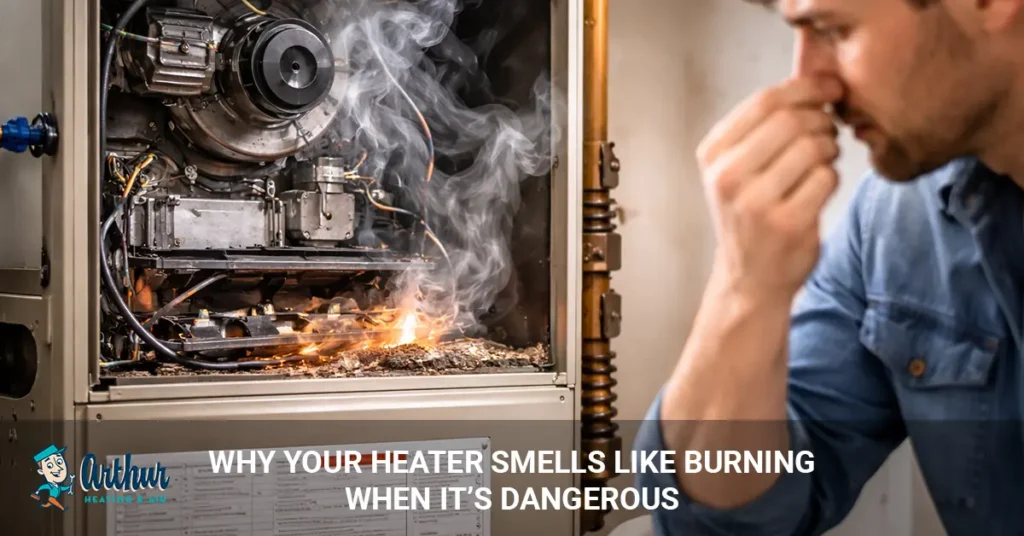
A burning smell coming from your heater isn’t always a sign of a serious problem, but it should never be ignored. If you’ve just turned on your heating system for the first time in months, the odor may simply be dust burning off the heat exchanger or other internal components. This smell is common at the beginning of the heating season and usually disappears within a few hours of operation.
However, a burning smell that continues, becomes stronger, or is accompanied by smoke, electrical odors, or unusual furnace behavior may indicate a more serious issue. Dirty air filters, overheating components, damaged wiring, worn blower motors, or debris inside the furnace can all produce burning odors that require attention. In some cases, continuing to operate the heater could damage the system or create a safety hazard.
In this guide, you’ll learn why your heater smells like burning, which odors are considered normal, the warning signs of a dangerous heating problem, safe troubleshooting steps you can take, how HVAC technicians diagnose the issue, and when it’s time to call a licensed professional.
Why Does My Heater Smell Like Burning?
A heater usually smells like burning because dust, restricted airflow, overheating components, or electrical problems are creating heat or friction inside the system. Some burning odors are completely normal, especially when you turn the heater on for the first time after months of inactivity. Others can signal a problem that requires immediate attention.
If the smell disappears after a short period and the heater operates normally, it’s often nothing more than accumulated dust burning off. However, if the odor persists, becomes stronger, or is accompanied by smoke, unusual noises, or repeated system shutdowns, the furnace should be inspected by a licensed HVAC technician.
| Burning Smell | What It Usually Means |
| Dust smell | Normal seasonal startup as dust burns off |
| Burning plastic | Overheated plastic component or wiring insulation |
| Electrical burning | Faulty wiring, capacitor, or blower motor |
| Burning rubber | Worn blower belt (older furnaces) or failing motor |
| Smoke smell | Serious overheating or potential fire hazard |
The type of odor often provides clues about the underlying problem. For example, a dusty smell is generally harmless and temporary, while an electrical or burning plastic smell may indicate overheating components that require immediate service.
If you’re unsure whether the smell is normal, it’s always safer to turn the heater off and have it inspected. Ignoring a persistent burning odor can lead to more expensive repairs and, in some cases, create a safety risk for your home.
Common Reasons Your Heater Smells Like Burning
A burning smell from your heater can have several different causes, ranging from harmless dust buildup to serious electrical or mechanical problems. Identifying the type of odor and when it occurs can help determine whether it’s safe to continue using your heating system.
Dust Burning Off the Heat Exchanger
Dust burning off the heat exchanger is the most common and least serious cause of a burning smell. During the months when your furnace isn’t running, dust naturally settles on internal components. When you turn the heater on for the first time in the fall or winter, that dust burns away.
Signs this is normal include:
- The smell appears only at the start of the heating season.
- It has a dusty or dry odor.
- The smell disappears within a few hours of operation.
- The heater otherwise operates normally.
Dirty Air Filter
A clogged air filter can cause your furnace to overheat, creating a burning odor. Restricted airflow traps heat inside the furnace, forcing components to operate at higher temperatures.
Other symptoms may include:
- Reduced airflow from vents
- Heater shutting off frequently
- Higher energy bills
- Uneven heating
Replacing the air filter is often enough to restore proper airflow and eliminate the problem. A clogged filter can also cause your heater to blow cold air by restricting airflow and forcing the furnace to overheat.
Overheating Furnace
An overheating furnace may produce a strong burning smell as internal components become excessively hot. This usually occurs because airflow is restricted or mechanical parts aren’t functioning correctly.
Common causes include:
- Dirty air filter
- Closed supply vents
- Blocked return vents
- Failing blower motor
The furnace’s high-limit switch may shut the system down to prevent damage. If this happens repeatedly, learn why your heater keeps shutting off and how short cycling can damage your heating system.
Electrical Problems
A sharp electrical burning smell can indicate overheating wires or electrical components. Problems involving the blower motor, capacitor, control board, or wiring should never be ignored because they can become fire hazards.
If you notice an electrical burning odor:
- Turn off the heating system.
- Don’t continue operating the furnace.
- Contact a licensed HVAC technician.
Burning Plastic Components
A burning plastic smell often means a plastic part or wire insulation is overheating. Loose wiring, damaged connectors, or components touching hot surfaces can all produce this odor.
Unlike a dusty smell, burning plastic usually becomes stronger over time and should be inspected immediately.
Worn Blower Motor or Belt
Older furnaces with belt-driven blower motors may produce a burning rubber smell if the belt is worn or slipping. Modern direct-drive blower motors can also create burning odors if the motor begins to fail or overheats.
You may also notice:
- Squealing noises
- Poor airflow
- Frequent system shutdowns
Clogged Air Vents
Blocked supply or return vents can reduce airflow enough to cause overheating. Furniture, rugs, curtains, or closed vents prevent heat from circulating properly, forcing the furnace to work harder.
Opening all vents helps maintain proper airflow and reduces stress on the heating system.
Debris Inside the Furnace
Leaves, pet hair, insulation, or other debris inside or around the furnace can create a burning smell when exposed to heat. Keeping the area around your furnace clean and scheduling annual maintenance helps prevent debris from affecting system performance.
Although some burning smells are harmless, persistent odors should never be ignored. If the smell continues after replacing the air filter or running the heater for a short time, schedule a professional HVAC inspection to identify and correct the underlying problem.
When Is a Burning Smell Dangerous?
A burning smell becomes dangerous when it doesn’t go away, becomes stronger, or is accompanied by smoke, gas odors, or carbon monoxide warnings. While a temporary dusty smell at the beginning of the heating season is usually harmless, persistent or unusual odors should be treated seriously.
The Smell Doesn’t Go Away
A burning smell that continues after several hours of operation usually indicates an underlying problem. If replacing the air filter and allowing the heater to run doesn’t eliminate the odor, overheating or failing components may be the cause.
Turn the system off and schedule an HVAC inspection if the smell persists.
Smoke Is Visible
Visible smoke coming from the furnace or supply vents is never normal. Smoke may indicate overheating electrical components, debris inside the furnace, or a developing fire hazard.
If you see smoke:
- Turn off the heating system immediately.
- Leave the area if necessary.
- Contact a licensed HVAC technician before using the furnace again.
Electrical Burning Odor
A sharp electrical burning smell often points to overheating wiring or electrical components. Blower motors, capacitors, relays, and control boards can all produce this type of odor if they’re failing.
Because electrical faults can become fire hazards, don’t continue operating the heater until it’s been inspected.
Burning Plastic Smell
A burning plastic odor usually means plastic insulation, wiring, or another component is overheating. This smell often becomes stronger over time and shouldn’t be ignored.
Shut the heater off and arrange for professional service as soon as possible.
Carbon Monoxide Alarm Activates
If your carbon monoxide alarm sounds, treat it as an emergency. Carbon monoxide is colorless and odorless, making a functioning detector essential for homes with fuel-burning heating systems.
If the alarm activates:
- Turn off the heating system if it’s safe to do so.
- Leave the home immediately with everyone, including pets.
- Call emergency services or your gas utility.
- Do not re-enter until the home has been declared safe.
Gas Odor (Emergency)
A natural gas smell requires immediate action. Natural gas is treated with a sulfur-like odor so leaks can be detected quickly.
If you smell gas:
- Leave the home immediately.
- Do not use electrical switches, appliances, or open flames.
- Call your gas utility and emergency services from a safe location.
- Do not restart the furnace until it has been inspected and repaired.
When it comes to unusual furnace odors, it’s always better to be cautious. If you’re unsure whether the smell is normal or dangerous, turn the system off and have it inspected by a licensed HVAC professional. Acting early can prevent equipment damage and help keep your home safe.
Can You Fix a Burning Smell Yourself?
You can safely address some common causes of a burning smell, but persistent odors or signs of overheating should always be inspected by an HVAC professional. Before attempting any troubleshooting, turn the thermostat off and allow the heating system to cool if the smell is strong or unusual.
Replace the Air Filter
A dirty air filter is one of the easiest problems to fix. Restricted airflow can cause the furnace to overheat, creating a burning odor.
To check the filter:
- Remove the existing air filter.
- Inspect it for dust and debris.
- Replace it if it’s dirty.
- Install the new filter with the airflow arrow pointing in the correct direction.
A clean filter improves airflow and helps prevent overheating.
Inspect Supply and Return Vents
Blocked vents can cause the furnace to retain excessive heat. Walk through your home and make sure:
- Supply registers are fully open.
- Return air vents aren’t blocked by furniture or rugs.
- Curtains and other household items aren’t restricting airflow.
Proper airflow allows the furnace to operate safely and efficiently.
Remove Dust Around the Furnace
Dust and debris around the furnace can create burning odors when the system is running. Carefully vacuum or wipe away dust from the exterior of the furnace and the surrounding area.
Do not remove furnace panels or clean internal components yourself.
Check the Thermostat
Make sure the thermostat is operating correctly. Verify that it’s set to Heat and that the temperature is above the current room temperature.
If the thermostat uses batteries, replace them if they’re weak or dead.
Turn the Heater Off if the Smell Continues
If the burning smell doesn’t improve after basic maintenance, turn the heating system off. Continuing to operate an overheating furnace can damage components and increase the risk of more serious problems.
Avoid repeatedly restarting the system if the odor remains.
Don’t Open Electrical or Gas Components
Never attempt to repair electrical wiring, burners, gas valves, or other internal furnace components yourself. These parts require specialized training and tools, and improper repairs can create fire hazards, gas leaks, electrical shock, or carbon monoxide risks.
If the smell is anything other than temporary dust burning off, it’s safest to stop using the heater and schedule a professional inspection. A licensed HVAC technician can identify the source of the odor and make the necessary repairs before the problem becomes more serious.
How HVAC Technicians Diagnose the Problem
HVAC technicians use specialized testing equipment to identify the exact source of a burning smell. Because several different furnace problems can produce similar odors, a complete inspection helps determine whether the issue is harmless or requires immediate repair.
Airflow Inspection
Restricted airflow is one of the most common causes of overheating and burning odors. The technician inspects the entire airflow system to identify anything preventing the furnace from cooling properly.
This inspection typically includes checking:
- Air filter condition
- Supply and return vents
- Blower motor performance
- Blower wheel cleanliness
- Ductwork for restrictions or leaks
Restoring proper airflow often eliminates overheating and improves heating efficiency.
Electrical Inspection
Electrical components are inspected for signs of overheating or damage. The technician checks wiring, capacitors, relays, contactors, and the control board for discoloration, loose connections, or melted insulation.
Electrical burning smells should always be taken seriously because they can indicate a potential fire hazard.
Blower Motor Inspection
The blower motor is responsible for circulating heated air throughout your home. If the motor is failing or overheating, it may produce a burning electrical or rubber-like odor.
The technician will inspect:
- Motor bearings
- Capacitor performance
- Fan operation
- Motor amperage
- Belt condition (on older belt-driven systems)
If necessary, worn components are repaired or replaced.
Heat Exchanger Inspection
The heat exchanger is examined for overheating, corrosion, or cracks. A damaged heat exchanger can reduce heating efficiency and, in severe cases, create a carbon monoxide hazard.
If a cracked heat exchanger is suspected, the furnace should remain off until repairs or replacement are completed.
Burner Inspection
The burners are inspected to ensure they ignite and burn properly. Dirty burners, delayed ignition, or improper flame characteristics can create excessive heat and unusual odors.
During this inspection, the technician checks:
- Burner cleanliness
- Flame appearance
- Ignition performance
- Gas pressure
- Combustion quality
Safety Control Testing
Modern furnaces include several safety devices designed to prevent overheating and unsafe operation. The technician tests components such as the high-limit switch, pressure switch, flame sensor, and rollout switch to verify they are functioning correctly.
These safety controls automatically shut down the furnace if they detect potentially dangerous operating conditions.
System Performance Testing
After completing any repairs, the technician performs a full operational test. They verify that the furnace starts correctly, heats properly, maintains normal operating temperatures, and completes a full heating cycle without producing unusual odors.
A thorough diagnosis ensures the underlying cause is corrected instead of simply masking the symptom. This helps restore safe, efficient operation and reduces the risk of recurring heating problems.
Not Sure if Your Heater is Safe To Use?
A professional inspection can catch hidden risks before they become dangerous.
 Book a Heater Safety Inspection
When Should You Call an HVAC Professional?
You should call an HVAC professional if the burning smell persists after basic troubleshooting or if you notice signs of overheating, electrical problems, or gas leaks. While a temporary dusty smell is usually harmless, ongoing burning odors often indicate a problem that requires expert diagnosis and repair.
Contact a licensed HVAC technician if you notice any of the following:
- The burning smell doesn’t go away. If the odor continues after replacing the air filter and running the heater for a short time, the furnace should be inspected.
- Smoke is coming from the furnace or vents. Visible smoke may indicate overheating components or a potential fire hazard. Turn the system off immediately.
- You smell burning plastic or electrical wiring. These odors often point to overheating electrical components, damaged wiring, or a failing blower motor that should be repaired as soon as possible.
- You smell natural gas. Leave the home immediately without using electrical switches or open flames. Contact your gas utility and emergency services from a safe location.
- The carbon monoxide alarm sounds. Turn off the heating system if it’s safe to do so, evacuate the home, and call emergency services. Do not return until the home has been declared safe.
- The heater repeatedly shuts off or blows cold air. Frequent shutdowns, poor heating performance, or unusual odors often indicate overheating or failing furnace components.
- The furnace displays an error code. Many modern furnaces display diagnostic codes that identify problems with ignition systems, safety controls, or electrical components.
Prompt service can prevent small furnace issues from becoming expensive repairs or safety hazards. A licensed HVAC technician has the equipment to identify the source of the burning smell, restore safe operation, and ensure your heating system performs reliably throughout the heating season.
How to Prevent Burning Smells
Regular maintenance is the best way to prevent your heater from developing burning odors. Keeping the furnace clean, maintaining proper airflow, and servicing the system each year can reduce the risk of overheating, electrical problems, and unexpected breakdowns.
Replace the Air Filter Regularly
A clean air filter helps your furnace operate safely and efficiently. Learn how dirty air filters affect your heater’s performance and why replacing them regularly helps prevent overheating and burning odors. Replace the filter every one to three months, or according to the manufacturer’s recommendations. Homes with pets or high dust levels may need more frequent filter changes.
A clean filter:
- Improves airflow
- Reduces overheating
- Helps lower energy bills
- Extends furnace lifespan
Schedule Annual Furnace Maintenance
A professional furnace tune-up can identify small problems before they become major repairs. Following a heater tune-up checklist each year helps prevent burning smells, improve efficiency, and keep your heating system operating safely. During annual maintenance, an HVAC technician typically:
- Cleans the burners
- Inspects the flame sensor
- Checks the blower motor
- Tests electrical components
- Verifies proper airflow
- Examines the heat exchanger
- Tests safety controls
Routine maintenance helps keep your heating system operating safely throughout the winter.
Keep Supply and Return Vents Open
Blocked vents reduce airflow and can cause the furnace to overheat. Make sure furniture, rugs, curtains, and other household items aren’t covering supply registers or return air vents.
Proper airflow helps prevent excessive heat buildup inside the furnace.
Keep the Furnace Area Clean
Dust and debris around the furnace can contribute to burning odors. Vacuum around the furnace regularly and avoid storing boxes, paint, cleaning products, or other combustible materials near the unit.
A clean furnace area also improves airflow and reduces fire risks.
Clean Dust Before Heating Season
It’s normal for dust to collect on your heating system during the warmer months. Before turning your heater on for the first time each fall, clean around accessible vents and replace the air filter. This helps minimize the temporary burning smell caused by dust burning off internal components.
Address Small Problems Early
Don’t ignore unusual furnace behavior. Burning odors, strange noises, short cycling, reduced airflow, or uneven heating are often early warning signs of developing problems. Scheduling repairs promptly can prevent more extensive damage and reduce repair costs.
Preventive maintenance is one of the simplest ways to keep your heating system operating safely and efficiently. A little routine care can improve indoor comfort, lower energy costs, reduce emergency repairs, and help your furnace last longer.
Frequently Asked Questions
Is a burning smell normal when I first turn on my heater?
Yes. A temporary burning smell is normal when you use your heater for the first time after several months. Dust accumulates on the heat exchanger and other internal components during the off-season. As the furnace warms up, the dust burns away and the smell usually disappears within a few hours.
How long should a dust-burning smell last?
A dust-burning smell typically lasts from a few minutes to a few hours. If the odor continues beyond the first day of operation or becomes stronger, your furnace should be inspected to rule out airflow restrictions, overheating, or electrical problems.
Can a dirty air filter cause a burning smell?
Yes. A clogged air filter restricts airflow, causing the furnace to overheat. The excessive heat can create a burning odor and may trigger the furnace’s high-limit safety switch, causing the system to shut down.
What does an electrical burning smell mean?
An electrical burning smell often indicates overheating wiring, a failing blower motor, a damaged capacitor, or another electrical component. Because electrical faults can become fire hazards, turn off the heating system and contact a licensed HVAC technician if you notice this type of odor.
Should I turn my heater off if it smells like burning?
If the smell is only dusty and disappears after a short time, you can usually continue running the heater. However, if the odor persists, smells like burning plastic or electrical wiring, or is accompanied by smoke or unusual noises, turn the system off and schedule professional service.
Why does my heater smell like burning but still works?
Your heater may continue operating even when a component is beginning to fail. A dirty air filter, overheating blower motor, electrical issue, or debris inside the furnace can produce a burning smell while the system still heats your home. An inspection can identify the source before it leads to a breakdown.
When is a burning smell an emergency?
A burning smell becomes an emergency if it’s accompanied by a gas odor, visible smoke, or a carbon monoxide alarm. If any of these occur, turn off the heating system if it’s safe to do so, leave the home immediately, and contact your gas utility or emergency services. Do not use the furnace again until it has been inspected and repaired.
Final Thoughts
A burning smell from your heater isn’t always a reason to panic, but it should always be taken seriously. A temporary dusty odor at the beginning of the heating season is usually normal, while persistent smells, burning plastic, electrical odors, or visible smoke often indicate a problem that needs attention.
Start by checking simple issues such as the air filter and airflow around your furnace. If the burning smell continues or you notice warning signs like smoke, repeated shutdowns, gas odors, or a carbon monoxide alarm, stop using the heating system and contact a licensed HVAC technician. Prompt maintenance and repairs can restore safe operation, improve efficiency, and help prevent more expensive furnace damage.
Still Smelling Something Burning? Get It Checked Today
Fast, reliable heater repair to protect your home and family.
 Schedule Heater Repair Now