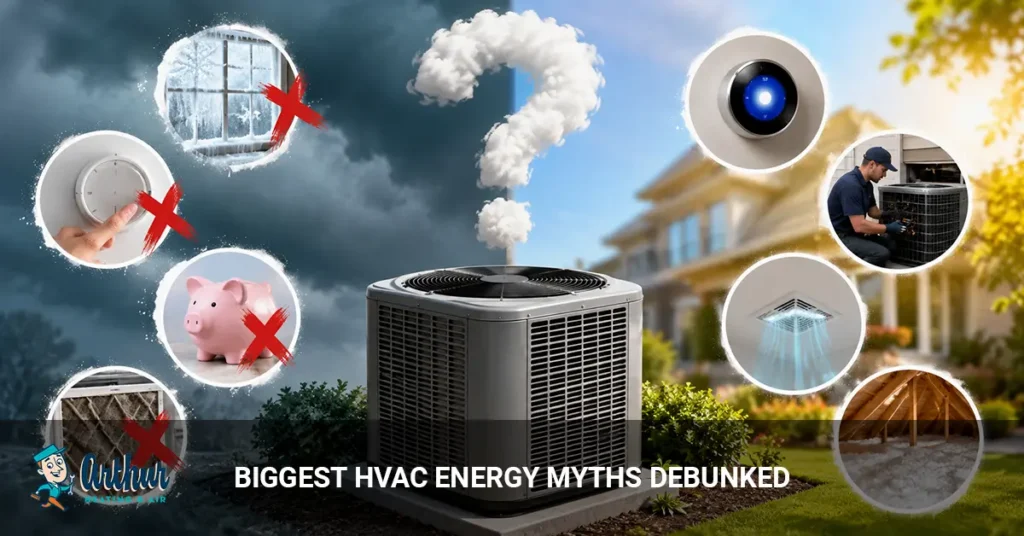
Many homeowners follow HVAC advice that sounds helpful but actually wastes energy and reduces system efficiency. Common HVAC myths can lead to higher utility bills, uneven indoor comfort, and unnecessary strain on heating and cooling equipment.
Understanding how HVAC systems really work helps homeowners make better decisions about energy use, airflow, maintenance, and indoor comfort. Small changes in HVAC habits can make a noticeable difference in both comfort and monthly energy costs.
Below are some of the biggest HVAC energy myths homeowners should stop believing.
Why HVAC Energy Myths Matter
HVAC energy myths matter because incorrect information can increase energy waste and reduce system performance. Many homeowners unknowingly follow habits that force heating and cooling systems to work harder than necessary.
Over time, these mistakes can lead to higher utility bills, uneven temperatures, poor airflow, and extra wear on HVAC equipment. Some myths can even shorten system lifespan and increase repair costs.
Understanding how HVAC systems actually operate can help homeowners lower energy bills, improve comfort, reduce system strain, maintain more stable temperatures, and support longer HVAC equipment life.
Myth: Closing Vents Saves Energy
Closing air vents usually does not save energy and can actually reduce HVAC efficiency. Most heating and cooling systems are designed to move air evenly throughout the home.
When vents are closed, airflow pressure inside the duct system increases. This can force the HVAC system to work harder and create airflow imbalances in other parts of the house.
Closing vents may also lead to reduced system efficiency, uneven indoor temperatures, increased strain on HVAC equipment, and possible duct leakage problems.
Keeping vents open helps maintain proper airflow and allows the HVAC system to operate more efficiently.
Myth: Bigger HVAC Systems Perform Better
A bigger HVAC system is not always better for comfort or energy efficiency. Oversized systems often heat or cool the home too quickly without running long enough to manage airflow and humidity properly.
This problem is known as short cycling. Short cycling increases energy use, creates uneven temperatures, and places extra wear on HVAC equipment over time.
Oversized HVAC systems may also cause poor humidity control, higher utility bills, and reduced indoor comfort throughout the home.
Proper HVAC sizing depends on several factors, including home size, insulation levels, airflow, window efficiency, and local climate conditions. A properly sized system usually performs better and operates more efficiently than an oversized unit.
Myth: Turning the Thermostat Lower Cools Faster
Lowering the thermostat far below the desired temperature does not cool the home faster. HVAC systems cool at a steady rate no matter how low the thermostat setting is.
Setting the thermostat much lower than necessary usually causes the system to run longer, which increases energy use without improving cooling speed.
Keeping thermostat settings at a reasonable level helps improve energy efficiency, reduce unnecessary HVAC runtime, and maintain more consistent indoor comfort.
Myth: HVAC Maintenance Is Not Necessary
Regular HVAC maintenance is necessary to keep heating and cooling systems operating efficiently. Dirty components, clogged air filters, and airflow restrictions can reduce performance and increase energy consumption.
Without proper maintenance, HVAC systems often work harder than necessary and become more likely to break down unexpectedly.
Poor maintenance can lead to reduced airflow, higher utility bills, dirty system components, increased repair costs, and shorter equipment lifespan.
Routine inspections, cleaning, and filter replacement help HVAC systems run more efficiently and support better long-term performance. Homeowners can follow a full HVAC maintenance checklist to improve system efficiency and prevent unnecessary problems.
Myth: Air Filters Only Affect Air Quality
Air filters affect both indoor air quality and HVAC efficiency. Dirty air filters restrict airflow, which forces heating and cooling systems to work harder to move air throughout the home.
Restricted airflow increases system strain and can reduce overall HVAC performance over time. It may also cause uneven temperatures and longer HVAC runtime.
Replacing air filters regularly helps improve airflow, reduce HVAC workload, increase energy efficiency, and maintain better indoor air quality. This guide explains how often replace HVAC air filter for proper HVAC maintenance.
Clean filters also help keep airflow more balanced throughout the house and support better heating and cooling performance.
Myth: Ceiling Fans Lower Room Temperature
Ceiling fans do not actually lower the temperature of a room. They improve comfort by moving air across the skin, which creates a cooling effect for people inside the space.
Fans help support HVAC efficiency by improving air circulation and making rooms feel cooler without lowering the thermostat setting.
Using ceiling fans properly can reduce cooling demand, improve airflow, and increase indoor comfort during warmer months.
Myth: Duct Tape Is the Best Way to Seal Ducts
Standard duct tape is usually not the best long-term solution for sealing HVAC ducts. Over time, regular duct tape can dry out, crack, and lose adhesion because of heat, airflow, and temperature changes.
Professional duct sealing methods such as mastic sealant and specialized duct sealing systems provide stronger and longer-lasting results. Homeowners can also learn about the benefits of duct sealing for improving HVAC efficiency.
Proper duct sealing helps reduce energy loss, improve airflow efficiency, increase HVAC performance, and lower heating and cooling costs.
Myth: New HVAC Systems Automatically Solve Efficiency Problems
Installing a new HVAC system does not automatically fix every energy-efficiency problem in a home. Poor insulation, air leaks, and leaky ductwork can still reduce system performance even if the equipment is high efficiency.
Many homeowners continue experiencing high utility bills after replacing HVAC equipment because the home is still losing energy through hidden leaks and insulation problems. This guide explains how home air leaks impact HVAC efficiency and increase energy waste.
Improving insulation, sealing air leaks, and upgrading ductwork often work together with HVAC systems to improve overall efficiency and indoor comfort.
Myth: Leaving HVAC Systems Running All Day Saves More Energy
Running HVAC systems continuously does not always save energy. In many homes, unnecessary system runtime increases energy consumption and places more strain on heating and cooling equipment.
Using smart thermostats or programmable temperature schedules usually provides better energy control while maintaining comfortable indoor temperatures.
Energy-saving strategies often include smart thermostats, programmable schedules, zoned HVAC systems, proper insulation, and air sealing. These improvements help reduce unnecessary HVAC runtime and improve overall efficiency.
Myth: HVAC Energy Efficiency Only Matters in Summer
HVAC energy efficiency matters all year, not just during summer cooling season. Heating systems also use a large amount of energy during colder months.
Improving HVAC efficiency can help reduce winter heating costs, lower summer cooling bills, and maintain more stable indoor temperatures throughout the year.
Myth: HVAC Systems Do Not Affect Indoor Humidity
HVAC systems play a major role in controlling indoor humidity levels. Air conditioners remove moisture from indoor air during the cooling process, which helps maintain a more comfortable indoor environment.
Poor HVAC performance, oversized systems, and airflow problems can make humidity harder to control. Excess indoor humidity may lead to discomfort, mold growth, musty odors, and higher cooling demand.
Proper HVAC operation helps improve both indoor comfort and indoor air quality.
Tips to Improve HVAC Energy Efficiency
Several simple upgrades and maintenance habits can help homeowners reduce energy waste and improve HVAC system performance.
Important energy-saving improvements include replacing air filters regularly, sealing air leaks, improving insulation, scheduling routine HVAC maintenance, installing a smart thermostat, and sealing ductwork.
These upgrades help reduce HVAC workload, improve airflow, and support better long-term energy efficiency.
When to Call an HVAC Professional
Homeowners should contact an HVAC professional if they notice rising utility bills, uneven temperatures, weak airflow, frequent system cycling, or indoor humidity problems.
Professional HVAC inspections can identify hidden efficiency issues and help improve overall system performance.
HVAC professionals can evaluate airflow problems, duct leakage, HVAC sizing, insulation issues, and overall system efficiency. Early inspections often help prevent larger HVAC problems and unnecessary energy waste.
Final Thoughts
Many common HVAC energy myths can actually reduce system efficiency and increase utility costs. Understanding how heating and cooling systems really work helps homeowners make better decisions about maintenance, airflow, and energy use.
Proper airflow, regular maintenance, insulation upgrades, air sealing, and smart thermostat settings all play an important role in HVAC efficiency.
By avoiding common HVAC misconceptions and following proven energy-saving practices, homeowners can lower heating and cooling costs while improving long-term HVAC performance and indoor comfort.