
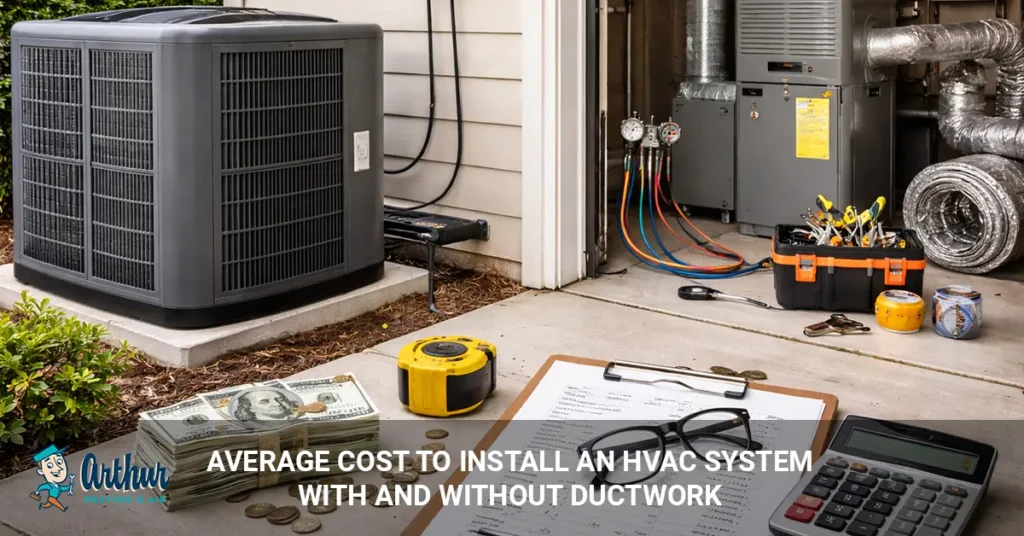
The average cost to install a new HVAC system typically ranges from $5,000 to $12,000 for many homes, while a complete installation with new ductwork can cost $10,000 to $20,000 or more. The final price depends on the HVAC system type, equipment size, efficiency rating, labor, ductwork, electrical requirements, permits, and the condition of the home.
Replacing an existing HVAC system is usually less expensive because the home already has ductwork, electrical connections, refrigerant lines, and other infrastructure in place. Installing HVAC equipment in a home without existing ductwork is more involved and can require extensive construction.
In this guide, you’ll learn how much HVAC installation costs with and without ductwork, prices by system type and home size, the factors that affect installation costs, additional expenses to expect, and ways to reduce your total project cost.
How Much Does It Cost to Install an HVAC System?
Installing a new HVAC system typically costs $5,000 to $12,000 when existing ductwork can be reused, while a complete installation with new ductwork can cost $10,000 to $20,000 or more. Larger homes, high-efficiency equipment, difficult installation conditions, and extensive ductwork can push the total cost higher.
| HVAC Installation | Average Installed Cost |
| Central AC + Furnace | $5,000–$12,000 |
| Heat Pump System | $5,500–$13,000 |
| AC + Air Handler | $5,000–$11,000 |
| Ductless Mini-Split | $3,000–$10,000 |
| High-Efficiency HVAC System | $7,000–$15,000+ |
| HVAC With New Ductwork | $10,000–$20,000+ |
These ranges are general estimates. Local labor rates, equipment brands, system size, efficiency, and installation requirements can significantly affect the final price.
A typical HVAC installation may include:
- Heating and cooling equipment
- Professional installation labor
- Refrigerant connections
- Electrical connections
- Condensate drainage
- Thermostat installation
- Basic startup and system testing
- Removal of the old equipment, depending on the contractor
However, additional work may increase the project cost. For example, an older home may need electrical upgrades, new refrigerant lines, duct repairs, or additional return-air capacity.
The biggest cost difference is usually whether your home already has usable ductwork. If the existing ducts are properly sized and in good condition, the HVAC contractor may be able to reuse them. If the home has no ductwork, installing a complete distribution system can add thousands of dollars to the project.
It’s also important to avoid choosing an HVAC system based only on the home’s square footage. A professional should consider insulation, windows, climate, ceiling height, orientation, and other factors when determining the appropriate system size. An incorrectly sized system can increase energy costs and reduce comfort.
HVAC Installation Cost With Existing Ductwork
Installing a new HVAC system with usable existing ductwork generally costs less than installing a complete system with new ducts. When the existing ductwork is correctly sized, properly sealed, and in good condition, an HVAC contractor can often connect the new equipment to the existing distribution system.
A typical replacement with existing ductwork may cost around $5,000 to $12,000, although high-efficiency systems, larger homes, and complex installations can cost more.
When Can Existing Ductwork Be Reused?
Existing ductwork can usually be reused when it is structurally sound, properly sized, and compatible with the new HVAC system. A contractor should inspect the ducts before installation rather than automatically replacing them.
Good candidates for reuse generally have:
- No major air leaks
- Adequate insulation
- Correct duct sizing
- No significant corrosion
- Proper supply and return-air capacity
- No major damage or crushed sections
Reusing good ductwork can save thousands of dollars compared with installing an entirely new distribution system.
Cost to Repair or Modify Existing Ductwork
Minor ductwork repairs or modifications may add several hundred to a few thousand dollars to an HVAC installation. The cost depends on how much work is required.
Common modifications include:
- Replacing damaged duct sections
- Sealing air leaks
- Adding insulation
- Modifying supply registers
- Adding or enlarging return-air ducts
- Reconfiguring connections for the new HVAC equipment
If only a few sections need attention, repairing the existing system is usually more economical than replacing all the ductwork.
Cost to Seal and Insulate Ductwork
Duct sealing and insulation can improve airflow and reduce energy loss when existing ducts are leaking or poorly insulated. Learn more about the benefits of duct sealing and when your ductwork may need professional sealing. The cost varies based on the size and accessibility of the duct system.
Ductwork located in attics, crawl spaces, and other unconditioned areas may benefit particularly from proper insulation and air sealing. If your ductwork also needs cleaning, see our guide to air duct cleaning cost to understand the potential expense.
Before replacing ductwork, ask the HVAC contractor to explain exactly what’s wrong with the existing system. Not every older duct system needs complete replacement. A professional inspection can help determine whether repair, sealing, modification, or full replacement makes the most financial sense.
HVAC Installation Cost Without Ductwork
Installing an HVAC system without existing ductwork typically costs $10,000 to $20,000 or more because the project includes both the heating and cooling equipment and the duct distribution system. New ductwork requires additional materials, labor, design, and access to walls, ceilings, attics, crawl spaces, or other areas of the home.
The cost can be higher when ductwork must be installed in a finished home because contractors may need to open and repair walls or ceilings.
Cost to Install New Ductwork
New ductwork can add roughly $4,000 to $10,000 or more to a complete HVAC installation. The actual price depends on the home’s size, number of rooms, duct layout, accessibility, insulation requirements, and type of ductwork.
The project may include:
- Supply air ducts
- Return air ducts
- Registers and grilles
- Duct insulation
- Dampers
- Trunk lines
- Branch ducts
- Air sealing
- Installation labor
Larger homes generally require more ductwork, while compact homes may need less material and labor.
Cost to Install Ductwork in an Existing Home
Installing new ductwork in an existing home is usually more expensive and disruptive than installing it during new construction. Contractors have to work around existing walls, ceilings, plumbing, electrical wiring, insulation, and structural components.
Installation costs can increase when:
- Walls or ceilings need to be opened
- The attic has limited access
- The crawl space is difficult to access
- Long duct runs are required
- Additional return-air ducts are needed
- Existing structures must be modified
- Finished surfaces need to be repaired afterward
In some cases, a ductless mini-split system can be a more practical alternative for a home without existing ductwork.
Cost to Install Ductwork in New Construction
Installing ductwork during new construction is generally easier and less expensive than retrofitting ducts into an existing finished home. Contractors can install ducts before walls and ceilings are closed, providing easier access to the entire structure.
New construction also allows the duct system to be designed around the home’s layout from the beginning. Proper planning can improve airflow, reduce unnecessary duct runs, and make the HVAC system more efficient.
Is New Ductwork Always Necessary?
No, a home without existing ductwork doesn’t necessarily need a traditional central HVAC system. Homeowners can also consider ductless mini-splits, which use individual indoor air handlers connected to an outdoor unit.
Ductless systems can be particularly useful for:
- Older homes without ductwork
- Home additions
- Converted garages
- Individual rooms
- Homes where installing ducts would require major remodeling
The best option depends on the home’s layout, heating and cooling requirements, budget, and long-term plans. A qualified HVAC contractor can compare the cost of new ductwork with ductless alternatives before installation begins.
HVAC Installation Cost by System Type
The type of HVAC system you choose can significantly affect the total installation cost. Central air systems, heat pumps, ductless mini-splits, packaged systems, and geothermal systems have different equipment, labor, and installation requirements.
Central Air Conditioner and Furnace
A central AC and furnace combination typically costs $5,000 to $12,000 installed when existing ductwork is usable. For a more detailed breakdown, see our guide to furnace installation cost. This is one of the most common HVAC configurations for homes that need both heating and cooling.
Installation may include:
- Central air conditioner
- Gas, electric, or oil furnace
- Indoor evaporator coil
- Outdoor condenser
- Thermostat
- Refrigerant lines
- Electrical connections
- Existing ductwork connections
If you’re installing or replacing the cooling portion of the system, see our guide to AC installation cost for more information about equipment and installation pricing. High-efficiency equipment and difficult installations can increase the total cost.
Heat Pump System
A heat pump installation typically costs $5,500 to $13,000, depending on the system type and installation requirements. See our guide to heat pump installation cost for a detailed price breakdown. Heat pumps provide both heating and cooling from the same system, making them an alternative to separate AC and furnace equipment.
Installation costs can increase if the home requires:
- Electrical upgrades
- New refrigerant lines
- Backup heat
- Duct modifications
- New ductwork
Heat pumps can be particularly attractive for homeowners looking for an all-in-one heating and cooling system.
Ductless Mini-Split System
A ductless mini-split system typically costs $3,000 to $10,000 to install, depending on the number of indoor units. Our guide to mini-split installation cost explains the factors that affect the total price. Because mini-splits don’t require traditional ductwork, they can be a practical option for homes where installing ducts would be expensive or disruptive.
The total price depends on:
- Number of indoor air handlers
- System capacity
- Number of zones
- Electrical requirements
- Installation location
A single-zone system costs less than a multi-zone system serving several rooms.
Packaged HVAC System
A packaged HVAC system typically costs $6,000 to $12,000 installed. Unlike split systems, packaged units contain most or all heating and cooling components in one outdoor cabinet.
They’re commonly installed on:
- Roofs
- Ground-level concrete pads
- Homes with limited indoor equipment space
Installation can be simpler when an existing packaged system is being replaced with a compatible unit.
Geothermal HVAC System
Geothermal HVAC installation can cost roughly $12,000 to $30,000 or more. These systems use underground loops to transfer heat between the home and the ground, requiring substantially more installation work than conventional HVAC equipment.
The high upfront cost is largely due to:
- Ground loop installation
- Excavation or drilling
- Specialized equipment
- Electrical work
- Professional installation
Although geothermal systems have a higher initial price, their long-term operating costs can be lower in suitable homes.
Which HVAC System Is Right for Your Home?
The best HVAC system depends on your home’s heating and cooling needs, existing infrastructure, climate, budget, and available space. A central system may be the simplest choice when good ductwork already exists, while a ductless mini-split can make more sense when installing ducts would require extensive remodeling.
A professional load calculation and home assessment can help determine the appropriate system size and configuration before you commit to an installation.
What Affects HVAC Installation Cost?
Several factors can change the final cost of an HVAC installation, even when two homes have similar-sized systems. Equipment type is important, but labor, ductwork, efficiency, electrical requirements, installation location, and permits can all add to the total price.
System Size
Larger HVAC systems generally cost more to purchase and install. However, bigger isn’t always better. An oversized system can cycle too frequently, while an undersized system may struggle to maintain comfortable temperatures.
An HVAC contractor should perform a proper load calculation to determine the appropriate system capacity for your home.
SEER2 Efficiency Rating
Higher-efficiency air conditioners and heat pumps usually cost more upfront. SEER2 measures cooling efficiency, so a higher-rated system can potentially use less electricity during operation.
The right choice depends on your climate, expected usage, budget, and how long you plan to stay in the home.
Heating System Type
The type of heating equipment affects both equipment and installation costs. Gas furnaces, electric furnaces, heat pumps, and dual-fuel systems have different installation requirements.
For example, converting from electric heating to gas may require new gas lines and venting, increasing the project cost.
Home Size
Larger homes generally require more HVAC capacity and may need larger or more extensive ductwork. However, square footage alone shouldn’t determine the system size.
Factors such as insulation, windows, ceiling height, home orientation, and local climate also affect heating and cooling requirements.
Ductwork Condition
Existing ductwork can significantly affect the installation price. Good-quality ducts may be reused, while leaking, damaged, undersized, or poorly insulated ducts may need repairs or replacement.
A contractor should inspect the duct system before connecting new HVAC equipment.
Installation Location
Difficult-to-access equipment locations increase labor costs. Installing an HVAC system in an easily accessible utility room is generally simpler than working in a cramped attic, crawl space, or rooftop location.
Additional labor may be necessary when equipment has to be moved through tight spaces or installed in hard-to-reach areas.
Electrical Upgrades
Some HVAC installations require electrical upgrades before the new equipment can operate safely. Older homes may need new wiring, breakers, disconnects, or even an electrical panel upgrade.
Heat pumps and other high-efficiency systems can have specific electrical requirements that should be evaluated before installation.
Refrigerant Lines
Replacing or modifying refrigerant lines can add to the installation cost. If the existing lines are damaged, incorrectly sized, contaminated, or incompatible with the new equipment, the contractor may recommend replacing them.
Permits and Inspections
Local permits and inspections can add to the total HVAC installation cost. Requirements vary by city and state and may cover mechanical, electrical, gas, or structural work.
Your contractor should explain which permits are required and whether they’re included in the estimate.
Labor Costs
Labor rates vary significantly by location and installation complexity. A straightforward replacement can require considerably less labor than installing a completely new HVAC system with ductwork.
Emergency installations, difficult access, extensive modifications, and after-hours work can also increase labor costs.
Removal and Disposal of the Old System
Removing an existing furnace, air conditioner, or heat pump may add to the project cost if disposal isn’t included in the installation quote. Ask the contractor whether equipment removal, refrigerant recovery, hauling, and disposal are included.
Before accepting an estimate, ask for the equipment, labor, ductwork, permits, removal, and additional modifications to be listed separately. This makes it easier to compare quotes and understand exactly what you’re paying for.
HVAC Installation Cost by Home Size
The cost of installing an HVAC system generally increases as home size increases, but square footage alone doesn’t determine the correct system size or installation price. Insulation, windows, ceiling height, climate, home layout, and ductwork also affect the equipment and labor required.
Here are general installation ranges when existing ductwork is usable:
| Home Size | Typical HVAC Installation Cost |
| 1,000 sq. ft. | $4,500–$8,000 |
| 1,500 sq. ft. | $5,000–$9,000 |
| 2,000 sq. ft. | $5,500–$11,000 |
| 2,500 sq. ft. | $6,500–$13,000 |
| 3,000 sq. ft. | $7,500–$15,000+ |
These figures are broad estimates rather than fixed prices. A smaller home can sometimes cost more than a larger one if it requires difficult access, extensive duct modifications, electrical upgrades, or high-efficiency equipment.
1,000-Square-Foot Home
A 1,000-square-foot home may require a smaller HVAC system, which can help keep equipment costs lower. However, proper sizing still requires a load calculation rather than relying solely on square footage.
1,500-Square-Foot Home
A 1,500-square-foot home typically falls into the mid-range for residential HVAC installation costs. Existing ductwork in good condition can help keep the project relatively affordable.
2,000-Square-Foot Home
A 2,000-square-foot home often requires more heating and cooling capacity and may have a larger duct system. Installation costs can increase if the existing ductwork needs modifications or if the home has multiple floors.
2,500-Square-Foot Home
A 2,500-square-foot home generally requires a larger HVAC system and more extensive airflow distribution. Multiple zones or additional return-air capacity may also increase the installation price.
3,000-Square-Foot Home
A 3,000-square-foot home may require a larger or multi-zone HVAC system, increasing both equipment and installation costs. Large homes can also have more complex duct layouts and greater differences in heating and cooling demand between rooms.
Why Square Footage Isn’t Enough
HVAC sizing should be based on a professional load calculation rather than a simple square-footage formula. Two homes with the same floor area can require different HVAC capacities because of differences in:
- Insulation
- Window size and type
- Ceiling height
- Number of floors
- Home orientation
- Air leakage
- Local climate
- Number of occupants
- Existing ductwork
Installing an oversized system may cause frequent cycling, while an undersized system may run excessively and struggle to maintain comfortable temperatures. Proper sizing can improve comfort, efficiency, and equipment lifespan.
HVAC Replacement Cost vs. New HVAC Installation
Replacing an existing HVAC system is usually less expensive than installing a completely new HVAC system because the home may already have usable ductwork, electrical connections, refrigerant lines, and other infrastructure. A new installation can require additional construction and utility work, especially in homes without existing ductwork.
| Project | Typical Cost |
| Replace Existing HVAC System | $5,000–$12,000 |
| Replace HVAC + Modify Ductwork | $6,000–$15,000+ |
| Install HVAC With New Ductwork | $10,000–$20,000+ |
| New HVAC Installation in New Construction | $8,000–$18,000+ |
Replacing an Existing HVAC System
A standard HVAC replacement is usually the simplest installation. If the existing ductwork, electrical connections, refrigerant lines, and drainage are in good condition, much of the home’s existing infrastructure can be reused.
A typical replacement may include:
- Removing the old equipment
- Installing the new furnace and AC or heat pump
- Reconnecting existing ductwork
- Connecting electrical components
- Connecting refrigerant lines
- Installing or reconnecting the thermostat
- Testing system performance
This is why replacing an aging system in the same location is generally less expensive than installing HVAC equipment in a home that has never had central heating and cooling.
Replacing HVAC and Modifying Ductwork
HVAC replacement costs increase when existing ducts need repairs, resizing, sealing, or additional return-air capacity. The equipment itself may not change much, but additional labor and materials increase the project price.
Common duct modifications include:
- Sealing leaks
- Replacing damaged sections
- Adding return ducts
- Insulating exposed ductwork
- Modifying supply connections
- Rebalancing airflow
Repairing good-quality ductwork is often more economical than replacing the entire system.
Installing HVAC With New Ductwork
A complete HVAC installation with new ductwork costs more because contractors must design and install the entire air distribution system. This can involve installing supply and return ducts throughout the home and working around existing walls, ceilings, plumbing, and electrical wiring.
In an existing home, additional construction may be required to conceal the ductwork.
New HVAC Installation in New Construction
HVAC installation is generally easier during new construction because contractors can install ductwork before walls and ceilings are finished. The system can also be designed around the home’s layout from the beginning.
Although new construction still requires significant equipment, ductwork, labor, and electrical work, easier access can reduce installation complexity compared with retrofitting a finished home.
Which Option Is More Cost-Effective?
Replacing an existing HVAC system is usually the most affordable option when the current infrastructure is in good condition. If the ductwork is severely damaged, undersized, or poorly designed, however, replacing or redesigning it during the HVAC installation may provide better long-term performance.
Before making a decision, ask the contractor to inspect the complete system rather than assuming all existing components need replacement. A detailed estimate can show whether you’re paying for equipment only or also for ductwork, electrical upgrades, permits, and other installation work.
Not Sure if Your Ductwork Can Be Reused?
Schedule a professional inspection and avoid costly mistakes.
 Book a Ductwork Inspection
Additional HVAC Installation Costs to Consider
The equipment price isn’t the only expense when installing a new HVAC system. Additional materials, upgrades, permits, ductwork, and labor can increase the final cost, so it’s important to understand what’s included in your estimate before approving the installation.
Thermostat
A new thermostat can add to the installation cost if your existing model isn’t compatible with the new HVAC system. Basic programmable thermostats generally cost less than smart thermostats with features such as Wi-Fi connectivity, zoning control, and remote temperature monitoring.
Electrical Panel Upgrades
An electrical panel upgrade may be necessary if your existing panel can’t safely handle the new HVAC equipment. This is more common in older homes and certain heat pump or electric heating installations.
Potential electrical work includes:
- New circuit breakers
- Dedicated circuits
- Updated wiring
- Disconnect installation
- Electrical panel replacement
Condensate Drain
Air conditioners, heat pumps, and high-efficiency furnaces may require condensate drainage. If the existing drain is damaged, incorrectly installed, or unavailable, additional plumbing work may be necessary.
Refrigerant Line Replacement
New refrigerant lines may be needed when the existing lines are damaged, contaminated, incorrectly sized, or incompatible with the new equipment. Replacing them adds both material and labor costs.
Duct Repairs
Damaged or leaking ductwork can increase HVAC installation costs. Contractors may need to repair disconnected sections, seal leaks, replace damaged insulation, or modify duct connections before connecting the new system.
Duct Insulation
Poorly insulated ducts can waste energy, particularly when they run through attics, crawl spaces, or other unconditioned areas. Adding insulation during an HVAC installation can improve efficiency and help maintain more consistent indoor temperatures.
Concrete Pad
Outdoor condensers typically need a stable base or pad. If the existing pad is cracked, unstable, or incorrectly sized, it may need to be replaced before the new outdoor unit is installed.
Equipment Platform
Indoor equipment installed in attics or other elevated locations may require a suitable platform. Building or modifying an equipment platform can increase labor and material costs, particularly when the existing structure doesn’t meet current requirements.
Permit Fees
Local permits may be required for HVAC installation. Permit requirements and fees vary by location and may apply to mechanical, electrical, gas, or structural work.
Ask your contractor whether permit costs are included in the quoted installation price.
Old Equipment Removal
Removing and disposing of the existing furnace, air conditioner, or heat pump may be charged separately. Some contractors include equipment removal and disposal in their installation price, while others list it as an additional service.
Difficult Access
Hard-to-reach installation locations can increase labor costs. Attics, crawl spaces, rooftops, narrow mechanical rooms, and multi-story homes may require additional time, equipment, or workers.
Before signing an HVAC installation contract, ask for a detailed breakdown of equipment, labor, ductwork, electrical work, permits, removal, and other additional costs. A clear estimate makes it easier to compare contractors and avoid unexpected charges.
How Long Does HVAC Installation Take?
A standard HVAC replacement usually takes 1 to 3 days, while installing a new HVAC system with ductwork can take several days to a week or longer. The exact timeline depends on the type of system, ductwork requirements, accessibility, electrical work, permits, and the condition of the home.
| HVAC Project | Typical Installation Time |
| Standard HVAC Replacement | 1–2 days |
| HVAC Replacement With Duct Modifications | 1–3 days |
| New HVAC With Ductwork | 3–7+ days |
| Ductless Mini-Split Installation | 1–2 days |
| Complex or Large HVAC Installation | Several days to 1+ week |
Standard HVAC Replacement
Replacing an existing central HVAC system can often be completed within one to two days. When the new equipment is compatible with the existing ductwork and utility connections, there is usually less preparation and construction involved.
The work may include:
- Removing the old equipment
- Installing the new indoor and outdoor units
- Connecting refrigerant lines
- Connecting electrical components
- Connecting ductwork
- Installing the thermostat
- Testing and commissioning the system
HVAC Replacement With Duct Modifications
Replacing an HVAC system while repairing or modifying ductwork can take one to three days. The timeline depends on how much ductwork needs to be changed.
Simple sealing or connection repairs may add only a few hours, while extensive duct modifications can require additional days.
New HVAC Installation With Ductwork
Installing HVAC equipment and completely new ductwork usually takes several days because contractors must build the entire air distribution system. In an existing home, accessing walls, ceilings, attics, and crawl spaces can make the project more complicated.
The installation may involve:
- Designing the duct layout
- Installing supply and return ducts
- Installing HVAC equipment
- Connecting electrical and refrigerant lines
- Installing registers and grilles
- Sealing and insulating ducts
- Testing and balancing airflow
Ductless Mini-Split Installation
A ductless mini-split installation can often be completed in one to two days. Because the system doesn’t require traditional ductwork, installation is generally less disruptive than installing a central HVAC system with new ducts.
The timeline increases when multiple indoor units or additional electrical work are required.
What Can Increase Installation Time?
Several factors can extend the project timeline, including:
- New ductwork installation
- Difficult attic or crawl-space access
- Electrical panel upgrades
- New refrigerant lines
- Gas line modifications
- Structural modifications
- Permit inspections
- Multiple HVAC zones
- Large or multi-story homes
- Unexpected problems discovered during installation
A reputable HVAC contractor should provide an estimated completion timeline before work begins. If the project involves new ductwork or significant home modifications, ask what construction and repair work is included so you know what to expect.
How to Save Money on HVAC Installation
You can reduce HVAC installation costs by comparing estimates, choosing the right system size, reusing suitable ductwork, and planning the replacement before an emergency occurs. However, cutting costs shouldn’t mean choosing undersized equipment or skipping necessary installation work.
Compare Multiple HVAC Estimates
Get at least two or three detailed estimates from qualified HVAC contractors. Don’t compare only the total price. Ask each contractor to break down:
- HVAC equipment
- Labor
- Ductwork
- Electrical work
- Refrigerant lines
- Thermostat
- Permits
- Old equipment removal
- Warranty coverage
A detailed estimate makes it easier to identify differences between contractors.
Choose the Correct System Size
Installing the correctly sized HVAC system can reduce both upfront and long-term costs. An oversized system may cycle frequently, while an undersized system can run excessively and struggle to maintain comfortable temperatures.
Ask the contractor to perform a proper load calculation rather than sizing the system based only on square footage.
Reuse Good Existing Ductwork
Keeping existing ductwork can save thousands of dollars when the ducts are properly sized and in good condition. However, don’t reuse damaged, leaking, or severely undersized ducts simply to reduce the installation price.
Have the ductwork inspected before deciding whether replacement is necessary.
Ask About Rebates and Incentives
Energy-efficient HVAC equipment may qualify for utility rebates or other incentives depending on your location and equipment. Ask your contractor or local utility provider whether your selected system qualifies before purchasing.
Replace the System Before an Emergency
Planning an HVAC replacement before your system fails completely can help you avoid emergency installation costs. You’ll have more time to compare equipment, contractors, financing options, and installation dates.
An aging system showing frequent breakdowns, rising energy costs, or declining performance may be worth evaluating before a complete failure.
Consider Long-Term Operating Costs
The cheapest HVAC system isn’t always the least expensive option over its lifetime. A more efficient system may cost more upfront but use less energy during years of operation.
When comparing systems, consider:
- Purchase price
- Installation cost
- Efficiency
- Expected lifespan
- Maintenance requirements
- Energy costs
- Warranty coverage
Don’t Skip Necessary Ductwork or Electrical Repairs
Avoiding required installation work can create more expensive problems later. Poor ductwork, inadequate electrical capacity, incorrect refrigerant lines, or improper drainage can reduce system performance and potentially damage new equipment.
The goal should be the best overall value, not simply the lowest installation quote. A properly sized HVAC system installed with compatible ductwork and correctly completed electrical, drainage, and refrigerant connections can provide better comfort, efficiency, and reliability for years.
Is It Cheaper to Replace HVAC or Install a New System?
Replacing an existing HVAC system is usually cheaper than installing a completely new system, especially when the home’s ductwork and utility connections can be reused. A new installation costs more because it may require new ductwork, electrical connections, refrigerant lines, drainage, and other infrastructure.
When HVAC Replacement Makes More Sense
Replacing the existing system is often the better option when the current ductwork and supporting infrastructure are in good condition. This is particularly true when:
- The HVAC system is reaching the end of its lifespan.
- Repair costs are increasing.
- The system frequently breaks down.
- Energy bills are rising.
- The existing ductwork is properly sized.
- The new equipment can use existing electrical and refrigerant connections.
A straightforward replacement can often be completed faster and with less construction than a complete new installation.
When a Complete New Installation Makes More Sense
A complete HVAC installation may be worthwhile when the home has no existing ductwork or the current system is poorly designed or severely damaged.
You may benefit from a new system and ductwork when:
- Existing ducts have extensive leaks.
- Ducts are severely undersized.
- The home has inadequate return-air capacity.
- The existing duct layout creates major comfort problems.
- You’re adding a significant amount of living space.
- The home has never had central HVAC.
- Major remodeling provides an opportunity to install new ducts.
Although the initial investment is higher, a properly designed system can improve airflow and comfort throughout the home.
What If the HVAC System Is Old but the Ductwork Is Good?
You don’t necessarily need to replace the ductwork just because the HVAC equipment is old. If the ducts are properly sized, sealed, insulated, and structurally sound, they may work well with the new equipment.
Ask an HVAC contractor to evaluate the duct system before agreeing to a complete replacement.
What If the Ductwork Is Old?
Older ductwork can often be repaired instead of completely replaced. Sealing leaks, replacing damaged sections, improving insulation, or modifying return ducts may solve performance problems at a lower cost than installing an entirely new duct system.
However, full replacement may make more sense when the existing ductwork has widespread damage or poor design.
Which Option Has Better Long-Term Value?
The best choice depends on the condition of your existing HVAC infrastructure, not simply the age of the equipment. A low-cost replacement that leaves major ductwork problems unresolved may provide disappointing results.
Before deciding, ask the contractor to inspect:
- HVAC equipment
- Supply ducts
- Return ducts
- Insulation
- Electrical connections
- Refrigerant lines
- Drainage
- Thermostat
- Overall system airflow
A detailed inspection can help you determine whether you need a simple HVAC replacement, HVAC replacement with duct modifications, or a complete new installation.
How to Choose the Right HVAC System
The right HVAC system depends on your home’s size, climate, existing ductwork, heating and cooling needs, energy goals, and budget. Choosing equipment based only on the lowest purchase price can lead to poor comfort, higher energy bills, and premature equipment problems.
Consider Your Home’s Size
HVAC equipment should be sized based on a professional heating and cooling load calculation. Square footage provides a starting point, but insulation, windows, ceiling height, air leakage, and home orientation also affect the required capacity.
Avoid automatically choosing a larger system because you think it will heat or cool your home faster. An oversized system can cycle too frequently and provide less consistent comfort.
Evaluate Your Existing Ductwork
If your home already has ductwork, have it inspected before choosing new equipment. The ducts need to provide adequate airflow for the new HVAC system.
A contractor should check for:
- Leaks
- Poor insulation
- Undersized sections
- Damaged connections
- Inadequate return air
- Restricted airflow
If the ductwork is in good condition, reusing it can reduce installation costs.
Consider Your Climate
Your local climate should influence the type and efficiency of HVAC system you choose. Homes in areas with long, hot summers may benefit from highly efficient cooling equipment, while homes with significant winter heating demand may need a system designed for colder conditions.
A qualified HVAC professional can recommend equipment based on your area’s typical heating and cooling demands.
Compare Energy Efficiency
Higher-efficiency equipment can reduce energy consumption but usually costs more upfront. When comparing systems, look at the equipment’s applicable efficiency ratings and estimated operating costs rather than focusing only on the purchase price.
Consider how long you expect to live in the home and how frequently you’ll use the system.
Consider Heating and Cooling Needs
A central AC and furnace is a common choice for homes with existing ductwork, while heat pumps can provide both heating and cooling from one system. Ductless mini-splits can be useful when a home doesn’t have ducts or when individual rooms need independent temperature control.
Your home’s existing infrastructure can make one option considerably more practical than another.
Think About Long-Term Maintenance
Every HVAC system requires routine maintenance to operate efficiently and reliably. Regular HVAC maintenance can also help protect your investment and keep the system operating properly. Before choosing a system, consider filter requirements, professional maintenance, parts availability, and expected service needs.
A system that is inexpensive to install but difficult or expensive to maintain may cost more over its lifetime.
Consider Your Budget
Set a total installation budget rather than looking only at equipment prices. Your budget should account for:
- Equipment
- Installation labor
- Ductwork
- Electrical work
- Thermostat
- Permits
- Refrigerant lines
- Drainage
- Equipment removal
If you’re comparing multiple options, ask contractors to provide complete installed prices so you’re comparing similar scopes of work.
Get a Professional Load Calculation
A professional load calculation is one of the most important steps before purchasing a new HVAC system. It helps determine the appropriate heating and cooling capacity for your home instead of relying on a basic rule based on square footage.
Proper sizing can improve comfort, reduce unnecessary cycling, control energy costs, and help the equipment reach its expected service life.
Ultimately, the best HVAC system isn’t necessarily the cheapest or most powerful option. It’s the system that is correctly sized, compatible with your home, properly installed, and suited to your long-term heating and cooling needs.
Frequently Asked Questions
How much does it cost to install a complete HVAC system?
A complete HVAC installation typically costs $5,000 to $12,000 when usable ductwork already exists. A new HVAC system with new ductwork can cost around $10,000 to $20,000 or more, depending on home size, equipment type, labor, and installation complexity.
How much does HVAC installation cost without ductwork?
Installing an HVAC system without existing ductwork can cost $10,000 to $20,000 or more. The additional expense comes from designing and installing supply and return ducts throughout the home.
How much does new ductwork cost?
New residential ductwork can add roughly $4,000 to $10,000 or more to an HVAC project. The final price depends on home size, duct layout, accessibility, insulation, materials, and whether walls or ceilings need to be opened.
Can existing ductwork be reused with a new HVAC system?
Yes, existing ductwork can often be reused if it’s properly sized, sealed, insulated, and in good condition. A contractor should inspect the duct system before installation to determine whether repairs or modifications are necessary.
How long does HVAC installation take?
A standard HVAC replacement usually takes one to two days. Installing a new HVAC system with ductwork can take three to seven days or longer, particularly when the project involves extensive construction or difficult access.
How long does a new HVAC system last?
Most properly maintained HVAC systems can provide reliable service for roughly 10 to 20 years, depending on the equipment type, installation quality, maintenance, and operating conditions. Regular professional maintenance can help maximize equipment life.
Does HVAC installation include ductwork?
Not always. Some HVAC installation quotes cover only the heating and cooling equipment and standard connections. New ductwork, duct repairs, insulation, and modifications may be separate charges, so always check what the estimate includes.
Is it cheaper to install a heat pump or central AC?
The answer depends on the complete system configuration. A heat pump can provide both heating and cooling, potentially eliminating the need for separate heating and cooling equipment. However, installation costs vary based on the home, existing ductwork, electrical requirements, and whether backup heat is needed.
How much should HVAC labor cost?
HVAC labor varies widely based on location and project complexity. A straightforward replacement requires significantly less labor than installing new ductwork, upgrading electrical components, or modifying a finished home. Ask for labor to be listed separately on your estimate.
Do I need a permit to install a new HVAC system?
Many locations require permits for HVAC installation, but requirements vary by jurisdiction. Mechanical, electrical, gas, and structural permits may apply depending on the project. Your HVAC contractor should explain which permits are required and whether their cost is included in the estimate.
Final Thoughts
The average cost to install an HVAC system depends heavily on whether your home already has usable ductwork. A standard replacement with existing ducts may cost around $5,000 to $12,000, while a complete HVAC installation with new ductwork can reach $10,000 to $20,000 or more.
Before choosing a system, have the home’s heating and cooling requirements professionally evaluated. Make sure the estimate clearly separates equipment, labor, ductwork, electrical work, permits, removal, and other additional costs.
The lowest quote isn’t necessarily the best value. A properly sized HVAC system with well-designed ductwork and professional installation can provide better comfort, efficiency, and reliability over its service life.
Ready to Install Your HVAC System?
Get a fast, no-pressure quote and expert guidance for your home.
 Schedule My Free Estimate