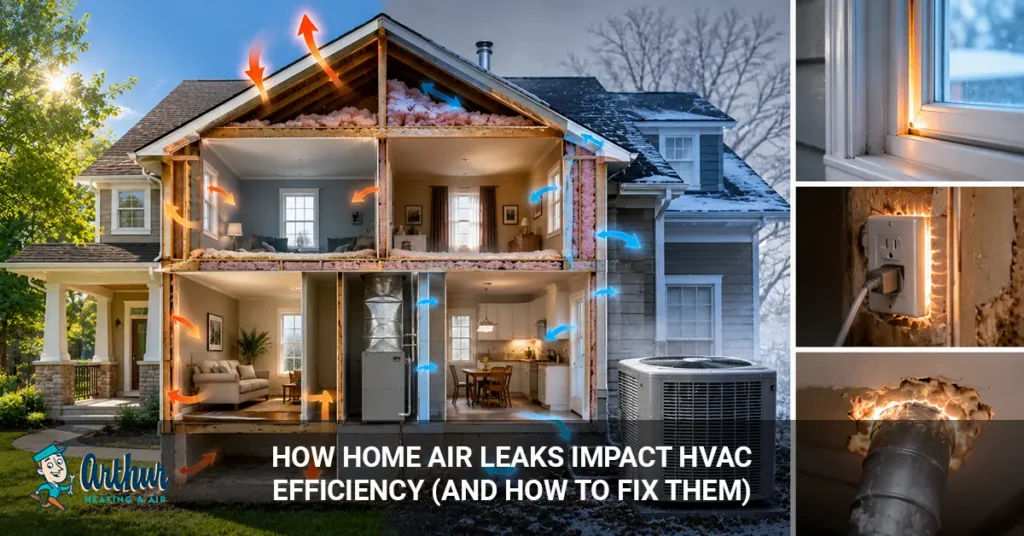
Home air leaks can reduce HVAC efficiency by allowing heated and cooled air to escape from the house. Small gaps and cracks around the home force heating and cooling systems to work harder to maintain comfortable indoor temperatures.
Many homeowners do not realize how much energy is being wasted through air leaks until they notice higher utility bills or uneven indoor temperatures. Air leaks can also make rooms feel drafty, increase indoor humidity problems, and place extra strain on HVAC equipment.
Sealing air leaks is one of the most effective ways to improve energy efficiency, lower heating and cooling costs, and create a more comfortable indoor environment.
What Are Home Air Leaks?
Home air leaks are openings that allow air to move between the inside and outside of a house. These gaps let conditioned indoor air escape while allowing outdoor air to enter the home.
Air leaks commonly develop around windows, doors, attics, ductwork, plumbing openings, and electrical penetrations. Even small leaks can waste a large amount of energy over time and reduce overall HVAC performance.
When air leaks are not sealed properly, heating and cooling systems must run longer and more often to maintain stable indoor temperatures.
How Air Leaks Affect HVAC Efficiency
Air leaks reduce HVAC efficiency by increasing the amount of heating and cooling needed to keep the home comfortable. When conditioned air escapes, the HVAC system must continue replacing lost air temperatures throughout the day.
This extra workload increases energy use and places more strain on heating and cooling equipment. Homeowners can also learn how insulation affects HVAC performance and energy use to better understand overall home efficiency.
Over time, air leaks can lead to higher utility bills, uneven indoor temperatures, and reduced HVAC system lifespan.
Increased HVAC Runtime
Air leaks cause HVAC systems to run longer because heated or cooled air escapes from the home too quickly. As indoor temperatures change, the system must continue operating to maintain the thermostat setting.
Longer HVAC runtime increases energy use and places extra stress on heating and cooling equipment. Over time, this can reduce system efficiency and increase wear on important HVAC components.
Higher Energy Bills
Air leaks increase heating and cooling costs because the HVAC system uses more energy to replace lost indoor air. Even small gaps around windows, doors, and attic openings can lead to noticeable energy waste over time.
Homes with significant air leakage often experience higher utility bills throughout the year because the HVAC system works harder to maintain comfortable temperatures.
Uneven Indoor Temperatures
Air leaks can create uneven indoor temperatures and make certain rooms feel too hot or too cold. Outdoor air enters the home more easily through unsealed areas, which affects temperature balance throughout the house.
Rooms near attics, windows, crawl spaces, and exterior walls are usually affected the most because these areas often experience greater heat loss or heat gain.
Reduced HVAC Lifespan
Air leaks can shorten HVAC system lifespan by forcing heating and cooling equipment to work harder than necessary. Systems that constantly run to compensate for energy loss experience more wear and tear over time.
This added strain can increase the risk of breakdowns and reduce overall system performance. Sealing air leaks helps reduce unnecessary HVAC workload and supports longer equipment life.
Poor Indoor Humidity Control
Air leaks can make indoor humidity harder to control by allowing humid outdoor air to enter the home. During summer, this extra moisture can make indoor spaces feel damp and uncomfortable.
Proper air sealing helps maintain more balanced humidity levels and allows HVAC systems to control indoor comfort more effectively throughout the year.
Common Areas Where Air Leaks Occur
Air leaks commonly develop in areas where building materials connect or where openings allow wiring, plumbing, or airflow to pass through the home. These gaps can let outdoor air enter and conditioned indoor air escape, reducing HVAC efficiency and indoor comfort.
Windows and Window Frames
Windows and window frames are common sources of air leaks, especially in older homes. Small gaps around window edges and worn seals can allow drafts to enter and heated or cooled air to escape.
Poorly sealed windows can increase energy loss and make indoor temperatures harder to maintain.
Doors and Door Frames
Doors and door frames often develop air leaks because of worn weatherstripping or small gaps around the frame. These leaks can make rooms feel drafty and force the HVAC system to work harder.
Replacing damaged seals and improving door sealing can help reduce energy waste and improve comfort.
Attic Openings
Attic openings are one of the biggest sources of air leakage in many homes. Gaps around attic hatches, recessed lights, vents, and ceiling penetrations can allow large amounts of air to escape.
Because heat naturally rises, attic air leaks can significantly increase heating and cooling costs throughout the year.
Plumbing and Electrical Penetrations
Small openings around plumbing pipes, electrical wiring, and utility penetrations can allow outside air to enter hidden areas of the home. These leaks are often difficult to detect without professional testing.
Sealing these small gaps can help improve overall energy efficiency and reduce unwanted airflow.
Crawl Spaces and Basements
Crawl spaces and basements can allow outdoor air and moisture to enter the home if they are not properly sealed and insulated. Air leaks in these lower areas often contribute to cold floors, humidity problems, and higher HVAC workload.
Improving sealing and insulation in crawl spaces and basements can help improve comfort and reduce energy loss.
HVAC Ductwork
Leaky ductwork can waste a large amount of heated or cooled air before it reaches different rooms in the home. Air leaks inside ducts force HVAC systems to run longer and reduce overall airflow efficiency.
Sealing ductwork helps improve air distribution, lower energy waste, and support better HVAC performance.
Signs Your Home Has Air Leaks
Drafts, rising energy bills, and uneven indoor temperatures are some of the most common signs of air leaks in a home. Many homeowners notice comfort problems before realizing that air leakage is reducing HVAC efficiency.
Air leaks allow heated and cooled air to escape while letting outdoor air enter the home. This makes it harder for the HVAC system to maintain stable indoor temperatures.
Common warning signs of air leaks include drafts around windows and doors, higher utility bills, rooms that feel too hot or too cold, HVAC systems running constantly, excess indoor dust, and indoor humidity problems.
These issues often point to poor sealing, insulation gaps, or hidden airflow problems that increase energy waste and reduce overall home comfort.
How to Find Air Leaks in Your Home
Finding air leaks early can help homeowners reduce energy waste and improve HVAC efficiency before utility costs become worse. Many air leaks are easy to identify once you know where to look.
Visual Inspection
A visual inspection can help identify obvious air leaks around the home. Gaps, cracks, damaged weatherstripping, and worn seals around windows, doors, and attic openings are common signs of air leakage.
Checking these areas regularly can help prevent unnecessary energy loss.
Feeling for Drafts
Drafts are often noticeable near windows, doors, and electrical openings during cold or windy weather. Homeowners can slowly move their hands around these areas to feel for unwanted airflow.
Drafty areas usually indicate poor sealing or insulation gaps.
Smoke or Incense Testing
Smoke testing helps reveal hidden air leaks by showing how air moves around gaps and cracks. Slowly moving incense smoke near windows, doors, and openings can help identify airflow problems.
If the smoke moves noticeably, air may be leaking through that area.
Professional Blower Door Testing
Blower door testing is one of the most accurate ways to locate hidden air leaks. During the test, a powerful fan pulls air from the home to measure how much outside air enters through gaps and cracks.
This process helps identify problem areas that may not be visible during a standard inspection. Many homeowners schedule what is an energy audit to locate hidden energy loss throughout the home.
Thermal Imaging Inspections
Thermal imaging inspections use infrared cameras to detect temperature differences inside walls, ceilings, and floors. These temperature changes may indicate hidden air leaks or missing insulation.
Thermal imaging helps professionals identify energy loss areas more accurately.
How to Fix Air Leaks Around the Home
Fixing air leaks helps improve HVAC efficiency, reduce energy costs, and create a more comfortable indoor environment. Sealing gaps and improving insulation can significantly reduce unwanted airflow throughout the home.
Seal Windows and Doors
Weatherstripping and caulking help seal gaps around windows and doors. Replacing worn seals can reduce drafts, improve comfort, and lower energy loss.
Properly sealed windows and doors also help HVAC systems maintain more stable indoor temperatures.
Improve Attic Air Sealing
Attic air sealing helps prevent heated or cooled air from escaping through the roof area. Sealing gaps around attic hatches, recessed lighting, vents, and ceiling penetrations can reduce major sources of energy loss.
Improving attic sealing also helps reduce HVAC workload throughout the year.
Seal Plumbing and Electrical Gaps
Small gaps around plumbing pipes, electrical wiring, and utility penetrations can allow outside air to enter hidden parts of the home. Foam sealants and caulking are commonly used to close these openings.
Sealing these areas can improve overall home efficiency and reduce airflow problems.
Insulate Crawl Spaces and Basements
Sealing and insulating crawl spaces and basements helps reduce air infiltration, moisture problems, and heat loss. These lower-level areas often contribute to drafts and uneven indoor temperatures.
Improving insulation in these spaces can increase comfort and reduce HVAC strain.
Seal HVAC Ductwork
Professional duct sealing helps prevent heated and cooled air from escaping inside attics, crawl spaces, and wall cavities. Leaky ducts can waste a large amount of energy before air reaches living spaces.
Proper duct sealing improves airflow efficiency, reduces energy waste, and supports better HVAC performance. Homeowners can also explore the benefits of duct sealing for long-term energy savings.
Why Air Sealing Improves HVAC Efficiency
Air sealing improves HVAC efficiency by preventing heated and cooled air from escaping the home. When less air leaks out, heating and cooling systems can maintain comfortable indoor temperatures with less effort.
Homes with proper air sealing often use less energy because the HVAC system does not need to run as long or as often throughout the day. This helps lower utility bills and reduces unnecessary strain on heating and cooling equipment.
Air sealing also improves indoor comfort by reducing drafts, stabilizing room temperatures, and helping control indoor humidity levels more effectively. Many homeowners notice more consistent temperatures and better airflow after sealing major air leaks.
Reducing air leakage can also help extend HVAC system lifespan by lowering overall system workload and reducing wear on important components.
Air Sealing vs Insulation
Air sealing and insulation both improve energy efficiency, but they work in different ways. Air sealing stops unwanted airflow from entering or escaping the home, while insulation slows down heat transfer through walls, ceilings, and floors.
A home can still lose energy if it has insulation but poor air sealing. Small gaps and cracks allow outdoor air to enter and conditioned air to escape, which reduces HVAC efficiency.
Homes with both proper insulation and effective air sealing usually experience better indoor comfort, lower energy bills, and improved HVAC performance throughout the year.
DIY Air Sealing vs Professional Air Sealing
Homeowners can handle simple air sealing tasks such as caulking windows, replacing weatherstripping, and sealing small gaps around doors and openings. These small improvements can help reduce drafts and improve energy efficiency.
Professional air sealing services provide more detailed inspections and more accurate leak detection using specialized equipment. Professionals can identify hidden air leakage problems inside walls, attics, crawl spaces, and ductwork that may not be visible during a basic inspection.
For homes with major airflow issues or high energy bills, professional air sealing often delivers more complete long-term results.
When Should Homeowners Address Air Leaks?
Homeowners should address air leaks as soon as they notice rising energy bills, uneven temperatures, drafts, or indoor comfort problems. Fixing air leaks early helps prevent unnecessary energy waste and reduces strain on HVAC systems.
Air sealing is especially important before replacing HVAC equipment because untreated air leaks can reduce the efficiency of even high-performance systems.
Air leak repairs are also beneficial during home renovations, insulation upgrades, and energy-efficiency improvements. Older homes often benefit the most because aging materials and outdated construction methods usually allow more air leakage.
Final Thoughts
Home air leaks can lower HVAC efficiency, increase utility bills, and make indoor temperatures less comfortable throughout the year. Even small gaps and cracks can force heating and cooling systems to work harder than necessary.
Sealing air leaks and improving insulation can reduce energy waste, improve indoor comfort, and help HVAC systems operate more efficiently. These upgrades also help homeowners lower heating and cooling bills over the long term.
In many homes, air sealing is one of the most effective upgrades for improving long-term energy performance and reducing heating and cooling costs.