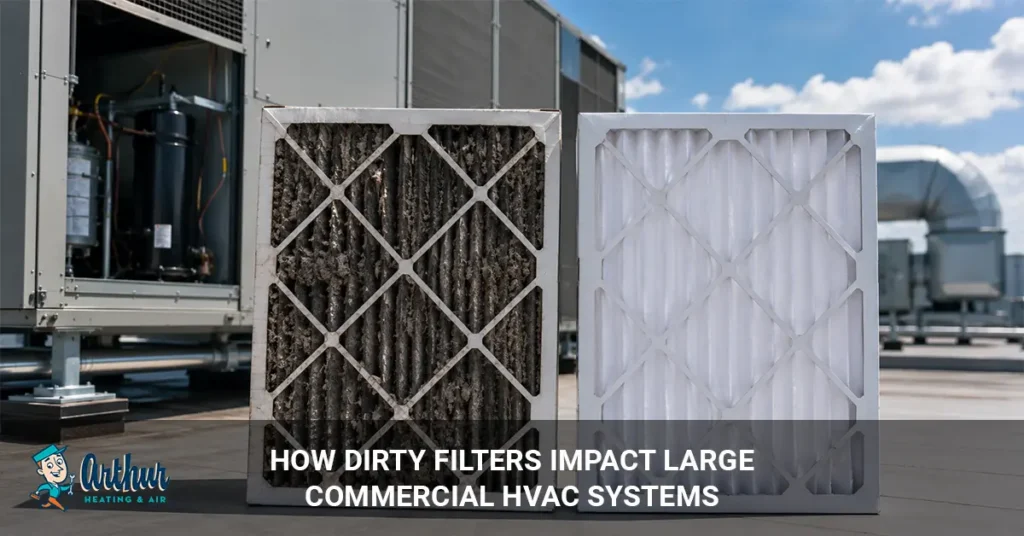
Dirty HVAC filters reduce airflow, increase energy costs, and can damage your system.
In large commercial buildings, HVAC systems run for long hours and handle heavy use every day. When filters get clogged with dust and debris, air cannot move properly. This forces the system to work harder to keep the building comfortable.
As a result, energy use goes up, performance drops, and problems become more frequent. Over time, this can lead to costly repairs and shorter system life.
Knowing how dirty filters affect your system helps you prevent these issues and keep your building running efficiently.
What Happens When HVAC Filters Get Dirty?
Dirty HVAC filters block airflow and make your system work harder.
As dust and debris build up, air cannot pass through the filter easily. This slows down airflow and reduces how well the system can heat or cool the building.
Because of this restriction, the system runs longer to reach the set temperature. Over time, this extra workload increases energy use and puts more strain on key components, leading to performance issues and wear.
How Dirty Filters Affect HVAC Performance
Dirty filters reduce HVAC performance by restricting airflow and disrupting temperature control.
When airflow is limited, the system cannot push air evenly through the building. This causes hot and cold spots and makes the space less comfortable.
Because the system struggles to move air, it runs longer to reach the set temperature. This lowers efficiency and puts extra strain on internal parts, which can lead to more problems over time.
Impact on Energy Efficiency and Costs
Dirty filters increase energy use, raise operating costs, and reduce overall HVAC energy efficiency.
When airflow is blocked, the system has to work harder to keep the building at the set temperature. This extra effort uses more energy and pushes your utility bills higher.
Even a small buildup of dirt can reduce efficiency. Over time, this makes the system more expensive to run and less cost-effective for your business.
Risk of System Damage and Breakdowns
Dirty filters can damage your HVAC system and increase the risk of breakdowns.
When airflow is restricted, the system can overheat or develop frozen coils. These issues put stress on key components and reduce system reliability.
Over time, this constant strain shortens the lifespan of the equipment. What starts as a small problem with a dirty filter can turn into a major repair or full system failure if ignored.
Effects on Indoor Air Quality
Dirty filters lower indoor air quality and make the space less comfortable.
When filters are clogged, they stop trapping dust and pollutants effectively. These particles then circulate through the building instead of being removed.
This can lead to stale air, more dust, and discomfort for employees and customers while negatively affecting indoor air quality. Over time, it may also contribute to allergies and breathing issues.
Signs Your Commercial HVAC Filters Are Dirty
Dirty HVAC filters show clear signs like weak airflow, higher energy bills, and more dust in your building.
When filters are clogged, air does not move properly through the system. This leads to reduced airflow and uneven comfort.
You may also notice the system running longer without improving temperature. If these signs appear, the filters are likely dirty and need to be cleaned or replaced.
How Often Should You Replace HVAC Filters in Commercial Buildings?
You should replace commercial HVAC filters every 1 to 3 months, similar to recommended schedules for replacing HVAC air filters.
In most buildings, it’s best to check filters at least once a month. If the space has heavy use, high dust levels, or poor air conditions, filters may need to be replaced more often.
Regular replacement keeps airflow strong and helps the system run efficiently. It also prevents strain on the equipment and reduces the risk of costly problems.
Best Practices for Maintaining Clean HVAC Filters
Keep HVAC filters clean by inspecting them regularly, using the right type, and replacing them on time.
Check filters monthly so you can spot dirt buildup early. Choose filters that match your system and airflow needs, not just the highest rating. Replace filters before they get clogged, especially in high-use or dusty buildings.
Work with an HVAC professional and follow regular commercial HVAC maintenance schedules to keep your system running efficiently.
Consistent care keeps airflow strong, protects equipment, and maintains reliable performance.
Cost of Ignoring Dirty Filters
Ignoring dirty filters increases costs and reduces system performance.
When filters are clogged, the HVAC system uses more energy to push air through. This leads to higher utility bills month after month.
The extra strain also causes more frequent repairs and faster wear on components. Over time, this can shorten the system’s lifespan and lead to expensive breakdowns or early replacement.
Taking care of filters is a simple and low-cost way to avoid these problems and keep your system running efficiently.
How Clean Filters Improve System Performance
Clean air filters improve HVAC performance by allowing smooth airflow and reducing system strain.
When air moves freely, the system does not have to work as hard to heat or cool the building. This lowers energy use and helps keep temperatures steady throughout the space.
Clean filters also trap dust and pollutants more effectively, which improves indoor air quality. At the same time, they reduce wear on system components, helping your HVAC system last longer and run more efficiently.
Final Thoughts
Dirty HVAC filters can lower efficiency, raise costs, and damage your system if you ignore them.
Regular filter maintenance is simple and makes a real difference. It keeps airflow strong, reduces strain on the system, and helps everything run smoothly.
When you keep filters clean, your HVAC system lasts longer, performs better, and keeps your building comfortable while controlling energy costs.