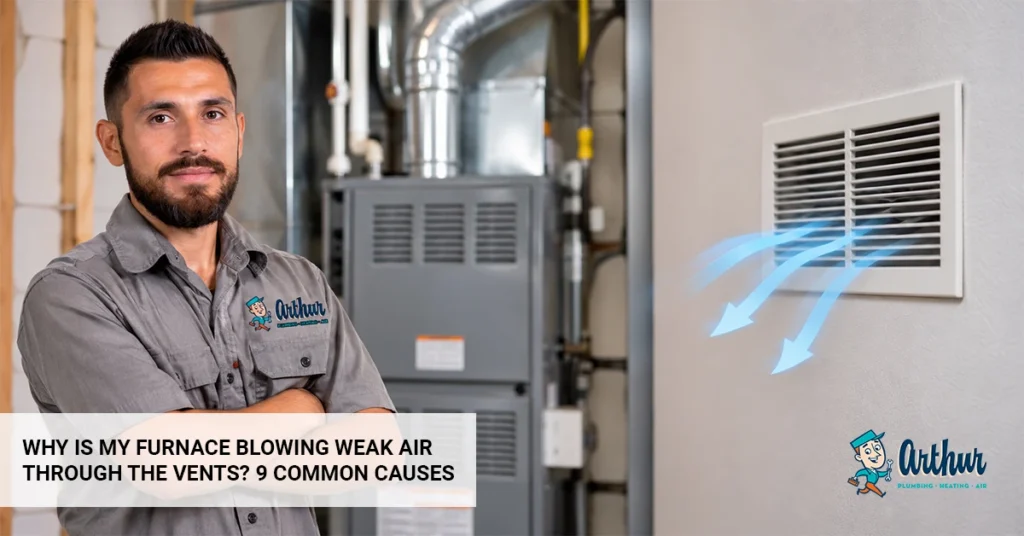
When your furnace runs but barely pushes warm air through the vents, your home may take much longer to heat up. You might notice that some rooms feel comfortable while others stay cold. This often happens when something blocks airflow or prevents the furnace fan from moving enough air through the ductwork.
A dirty air filter is one of the most common reasons for weak furnace airflow. However, blocked vents, damaged ductwork, a dirty blower wheel, or a failing blower motor can also cause the problem. Some issues are easy to fix, while others need help from an HVAC technician.
The good news is that you can check a few things yourself before calling for repairs. Let’s look at what causes weak airflow, how to improve it, and when to have your furnace inspected.
Why Is My Furnace Blowing Weak Air Through the Vents?
Your furnace may blow weak air through the vents when something blocks airflow or prevents the blower fan from moving enough air. A dirty air filter, blocked vents, damaged ductwork, or a failing blower motor are some of the most common causes.
Your furnace needs proper airflow to heat your home. First, it pulls cool air through the return vents. Then, the air passes through the furnace, where the heat exchanger warms it. Finally, the blower fan pushes the heated air through the supply ducts and into your rooms.
However, even a small airflow restriction can affect this process. For example, a clogged filter can make it harder for the furnace to pull in air. Similarly, blocked vents or damaged ducts can prevent warm air from reaching certain rooms.
Pay attention to where you notice the problem. If airflow feels weak throughout your home, check the air filter and main return vents first. The furnace blower or main ductwork could also be responsible. On the other hand, if only a few rooms receive weak airflow, look for blocked registers, closed dampers, or damaged duct connections.
Identifying where the airflow problem occurs can help you narrow down the cause and decide whether you need a simple fix or professional furnace repair.
9 Common Reasons Your Furnace Is Blowing Weak Air
Several things can stop your furnace from pushing enough warm air through the vents. Some problems are simple, such as a dirty air filter or blocked vent. Others involve internal furnace parts or damaged ductwork. Here are nine common causes and what you can do about them.
1. Dirty or Clogged Furnace Air Filter
A dirty furnace air filter can restrict airflow and make your furnace blow less warm air through the vents. The filter traps dust, pet hair, pollen, and other airborne particles before they enter the heating system.
Over time, these particles build up and clog the filter. As a result, less air can pass through it. Learn more about how dirty air filters affect your heater and why regular filter replacement matters. Your furnace blower may struggle to pull in enough air, which can reduce airflow throughout your home.
You may notice these signs:
- Weak airflow from several vents.
- Some rooms taking longer to heat up.
- Furnace running longer than usual.
- More dust collecting around your home.
- Furnace overheating or shutting off unexpectedly.
How to fix it:
Start by checking your furnace air filter. If it looks dirty or clogged, replace it with a new one that matches your furnace manufacturer’s recommended size and specifications.
Most standard 1-inch filters need replacement every one to three months. Not sure when to change yours? Check our guide on how often to replace your HVAC air filter for recommended replacement intervals. However, your filter may need changing sooner if you have pets, smoke indoors, or use your heating system frequently. Always follow the filter manufacturer’s replacement instructions.
After replacing the filter, check whether airflow improves. If your furnace still blows weak air, the problem may be related to blocked vents, dirty blower components, or another part of the heating system.
2. Blocked or Closed Air Vents
Blocked or closed air vents can prevent warm air from reaching your rooms. Your furnace may be working properly, but furniture, rugs, curtains, or other objects can stop heated air from flowing freely through the supply vents.
For example, a sofa placed over a floor vent can reduce airflow in your living room. Similarly, curtains hanging over wall registers can keep warm air from spreading throughout the space.
Check your home for these common problems:
- Sofas, beds, or cabinets covering floor vents.
- Curtains blocking wall-mounted registers.
- Rugs or carpets covering floor vents.
- Dust and debris collecting inside vent openings.
- Supply registers that are accidentally closed.
How to fix it:
Start by checking every supply vent in your home. Open any closed registers and move furniture, rugs, or curtains away from the openings. You can also remove visible dust from the vent covers using a vacuum or soft brush.
Keep the vents clear so warm air can move freely into each room. However, avoid closing multiple supply vents to control room temperatures, as this can affect your heating system’s airflow balance.
If the airflow remains weak after clearing the vents, the problem may be inside the ductwork or furnace. In that case, ask an HVAC technician to inspect the system.
3. Blocked Return Air Vents
Blocked return air vents can reduce the amount of air your furnace pulls into the heating system. These vents bring cooler air from your rooms back to the furnace, where it gets heated and sent through the supply ducts again.
When something blocks the return vents, your furnace may struggle to pull in enough air. As a result, you may notice weak airflow from multiple supply vents or uneven heating throughout your home.
Here are some common reasons return vents get blocked:
- Furniture placed directly in front of return grilles.
- Dust and debris building up inside vent openings.
- Curtains or other household items covering return vents.
- Dirty return grilles or filters.
- Blockages inside the return ductwork.
How to fix it:
First, locate the return air vents throughout your home. Move furniture, curtains, and other objects away from the grilles so air can flow freely. You can also remove visible dust from the grille using a vacuum or soft brush.
However, if the return vents look clear but your furnace still has weak airflow, there may be a blockage deeper inside the ductwork. Ask an HVAC technician to inspect the return air system.
Keep in mind that supply and return vents work together. Supply vents deliver warm air into your rooms, while return vents carry cooler air back to the furnace. Both need clear airflow to keep your heating system running properly.
4. Leaking, Damaged, or Disconnected Ductwork
Leaking or damaged ductwork can cause weak airflow by allowing warm air to escape before it reaches your rooms. Your furnace may produce enough heat, but damaged ducts can prevent that air from reaching the right places.
This problem often occurs in ducts running through attics, crawl spaces, basements, and other areas outside your main living spaces. Over time, loose connections, small gaps, or damaged duct sections can reduce heating performance.
You may notice these warning signs:
- Weak airflow from vents in certain rooms.
- Some rooms staying colder than others.
- More dust collecting around your home.
- Higher heating bills without better comfort.
- Warm air escaping from accessible duct connections.
How to fix it:
Start by checking any accessible ductwork for visible gaps, loose connections, or damaged insulation. Pay attention to joints and connections where duct sections meet. However, avoid entering unsafe or hard-to-reach areas to inspect the ducts yourself.
If you find visible damage or suspect a hidden leak, contact an HVAC technician. They can inspect the duct system, locate air leaks, and recommend the right repairs or sealing methods.
Properly sealed and connected ducts help your furnace deliver more warm air to each room. They can also reduce wasted heated air and improve overall heating performance.
5. Dirty Furnace Blower Wheel
A dirty furnace blower wheel can reduce airflow by making it harder for the fan to move air through your heating system. The blower wheel has several curved blades that spin to pull air into the furnace and push it through the ductwork.
Over time, dust, dirt, and other debris can collect on these blades. This buildup can affect the wheel’s performance and prevent it from moving enough air through your home.
You may notice these warning signs:
- Weak airflow from several vents.
- Rattling, humming, or unusual noises near the furnace.
- More dust collecting around the furnace.
- Reduced heating performance.
- Longer heating cycles.
How to fix it:
Have an HVAC technician inspect the blower wheel to see whether dirt buildup is restricting airflow. If the wheel is dirty, professional cleaning may help restore proper air circulation.
The technician should also check for damaged or unbalanced blades, as these problems may require additional repairs.
Avoid reaching inside the furnace or trying to remove the blower wheel yourself. It contains moving parts and electrical components that can cause injuries. Leave internal cleaning and repairs to a qualified professional.
6. Failing Furnace Blower Motor
A failing furnace blower motor can cause weak airflow because it powers the fan that pushes warm air through your home’s ductwork. For more information, read our guide on furnace blower motor problems and the warning signs that indicate your blower motor needs attention. If the motor becomes worn or stops working properly, the fan may not move enough air to keep your rooms comfortable.
Blower motor problems can develop over time due to normal wear, overheating, electrical issues, or damaged internal components. In some cases, the motor may still run but struggle to maintain the airflow your furnace needs.
Watch for these common warning signs:
- Weak airflow from most or all vents.
- Humming, grinding, or unusual noises near the furnace.
- Furnace running without enough air coming through the vents.
- Blower fan starting and stopping unexpectedly.
- Burning smells or repeated furnace shutdowns.
How to fix it:
If you suspect a blower motor problem, have an HVAC technician inspect the motor and its related components. They may check the electrical connections, capacitor (if your system uses one), motor condition, and blower controls.
Depending on what they find, the technician may recommend repairing an electrical component or replacing the blower motor.
Avoid opening the furnace or testing electrical components yourself. These parts can carry dangerous voltage, even when the furnace is not running. Professional diagnosis is the safest way to find the problem and restore proper airflow.
7. Dirty or Clogged Evaporator Coil
A dirty or clogged evaporator coil can restrict airflow and make your furnace blow less warm air through the vents. This can happen in homes where the furnace and central air conditioner share the same ductwork.
The evaporator coil is usually installed above or near the furnace. It removes heat from indoor air during the cooling season. However, when your furnace runs, warm air also passes through this coil on its way into the ductwork.
Over time, dust and debris can collect on the coil’s surface. This buildup makes it harder for air to pass through, which can reduce airflow throughout your home.
You may notice these warning signs:
- Weak airflow from multiple vents.
- Poor heating and cooling performance.
- Rooms taking longer to reach the desired temperature.
- Uneven temperatures throughout your home.
- Ice forming on the evaporator coil during air conditioning operation.
How to fix it:
Have an HVAC technician inspect the evaporator coil to check for dirt buildup or other airflow restrictions. If the coil is dirty, professional cleaning can help restore proper airflow.
If you notice ice on the coil, turn off the cooling system and contact an HVAC technician. The ice may point to restricted airflow or another cooling system problem. The technician should identify the cause before restarting the system.
Regular HVAC maintenance also helps keep the evaporator coil clean and allows your heating and cooling systems to operate more efficiently.
8. Incorrect Furnace Filter Size or Type
Using the wrong furnace filter size or type can restrict airflow and make your heating system work harder. Even a new filter can cause problems if it does not match your furnace’s requirements.
For example, a filter that is too small may leave gaps around the edges, allowing unfiltered air to bypass it. On the other hand, a filter that is too restrictive may make it harder for air to pass through the system.
This can happen when homeowners choose filters with higher MERV ratings without checking whether their furnace can handle them. MERV ratings measure how effectively a filter captures airborne particles. A higher rating generally means better filtration, but it does not always mean better airflow.
How to fix it:
Before buying a replacement filter, check your furnace owner’s manual or the specifications printed on your existing filter.
Pay attention to these details:
- Correct filter size: Match the length, width, and thickness required by your furnace.
- MERV rating: Choose a rating recommended by the manufacturer.
- Filter thickness: Make sure the filter fits properly in its housing.
- Airflow direction: Follow the arrow printed on the filter frame.
- Manufacturer recommendations: Check which filter types work with your heating system.
Never force a filter into the furnace if it does not fit correctly. If you are unsure which filter to use, ask an HVAC technician to recommend the right option.
Choosing the correct filter helps protect your furnace while allowing enough air to move through the system.
9. Incorrect Blower Fan Speed or Furnace Settings
Incorrect blower fan speed or furnace settings can reduce the amount of warm air reaching your rooms. Your furnace blower needs the right settings to move enough air through the heat exchanger and ductwork.
Some furnaces use different blower speeds for heating and cooling. If the heating speed is set too low, your system may not deliver enough warm air. Incorrect settings can also affect heating performance and cause the furnace to overheat.
How to fix it:
Start by checking your thermostat. Make sure the system is set to HEAT, and the fan is set to AUTO, unless your HVAC technician recommends another setting.
If the airflow still feels weak, have an HVAC technician inspect the blower motor settings, control board, and overall airflow. They can check whether the blower speed matches your furnace manufacturer’s specifications.
Avoid changing internal wiring, control board settings, or blower speed switches yourself. Incorrect adjustments can damage furnace components or create additional airflow problems. A qualified technician can make the necessary changes safely.
How to Tell Whether Your Furnace Has an Airflow Problem
You may have a furnace airflow problem if warm air barely comes through the vents, some rooms stay cold, or your heating system runs longer than usual. These signs often mean something is preventing air from moving properly through your furnace or ductwork.
Pay attention to these common warning signs:
1. Weak airflow from multiple vents: If several rooms receive very little warm air, check the furnace air filter first. A clogged filter, failing blower motor, or restricted main duct can also reduce airflow throughout your home.
2. Uneven temperatures between rooms: If one room feels warm while another stays cold, you may have blocked vents, closed dampers, damaged ductwork, or an air leak. If you’re experiencing uneven airflow, read our guide on weak airflow in certain rooms to understand the possible causes and solutions. These problems can prevent warm air from reaching certain areas.
3. Furnace runs longer than usual: A furnace may run longer when poor airflow prevents enough warm air from reaching your living spaces. As a result, your home may take more time to reach the thermostat’s target temperature.
4. Furnace repeatedly turns on and off: Restricted airflow can cause the furnace to overheat. When this happens, the high-limit switch may shut off the burners to protect the system. Repeated shutdowns can interrupt normal heating and point to an airflow problem.
5. Unusual noises from the furnace: Rattling, grinding, or humming sounds may indicate a loose blower component, a worn motor, or another internal problem. Don’t ignore these noises, especially when they occur alongside weak airflow.
6. Higher heating bills: Poor airflow can make your furnace work harder or run longer to maintain your desired indoor temperature. This may increase energy use without making your home more comfortable.
If you notice several of these signs, have an HVAC technician inspect your heating system. Finding the cause early can help prevent further damage and restore proper airflow.
How to Fix Weak Airflow From Furnace Vents
You can often improve weak furnace airflow by replacing a dirty air filter, opening blocked vents, clearing return grilles, and checking your thermostat settings. These simple steps can help you find common problems before scheduling a furnace repair.
Try the following checks in order.
1. Check and Replace the Air Filter
Start by checking your furnace air filter. A dirty or clogged filter can restrict airflow and make it harder for your furnace to circulate warm air.
Turn off the furnace before removing the filter. Check for dust and debris. If the filter looks dirty, replace it with a new one that matches the manufacturer’s recommended size and type.
Make sure the airflow arrow on the filter points in the correct direction. A properly installed, clean filter allows air to move through the system more freely.
2. Open All Supply Air Vents
Check every supply vent in your home to make sure it is open and unobstructed.
Move furniture, rugs, curtains, and other objects away from the registers. Also, remove visible dust from the vent covers.
When warm air has a clear path into each room, your furnace can distribute heat more evenly. Avoid closing multiple vents to control room temperatures, as this can affect your system’s airflow balance.
3. Clear Blocked Return Air Grilles
Return air grilles need enough space to pull cooler air back toward your furnace. If furniture or household items block these openings, your heating system may struggle to circulate air.
Locate the return grilles and move anything covering them. You can also clean visible dust from the grille using a vacuum or soft brush.
However, avoid pushing debris deeper into the ductwork. If you suspect a blockage inside the return ducts, ask an HVAC technician to inspect them.
4. Check Accessible Ductwork for Visible Damage
Damaged or disconnected ducts can allow warm air to escape before it reaches your rooms.
Check accessible ductwork in your basement, utility room, or other safe areas. Look for loose connections, visible gaps, or damaged insulation.
If you notice any damage, contact an HVAC professional. They can inspect the duct system, locate leaks, and recommend the right repairs.
Avoid entering unsafe attics, crawl spaces, or other hard-to-reach areas to check the ducts yourself.
5. Check Your Thermostat Settings
Sometimes, the problem is related to your thermostat rather than the furnace itself.
Make sure your thermostat is set to HEAT, and the target temperature is higher than the current room temperature. Also, check the fan setting.
The AUTO setting runs the blower when the heating system calls for heat. The ON setting keeps the blower running continuously, even between heating cycles. Choose the setting that suits your comfort needs and system recommendations.
If these checks do not improve airflow, the problem may involve the blower motor, evaporator coil, or another internal component. At that point, schedule a professional furnace inspection instead of repeatedly restarting the system.
Can Weak Furnace Airflow Cause Bigger Problems?
Yes. Weak furnace airflow can lead to overheating, repeated system shutdowns, uneven heating, and extra wear on furnace components. If you ignore the problem, your heating system may become less reliable and require more expensive repairs.
Here are some problems that can develop when restricted airflow goes untreated.
- Furnace overheating: When not enough air moves through the furnace, heat can build up inside the system. This can push internal temperatures above their normal operating range and trigger safety controls.
- High-limit switch activation: The furnace high-limit switch monitors internal temperatures and protects the system from overheating. If the temperature gets too high, the switch shuts off the burners. The blower may continue running to help cool the furnace.
- Frequent short cycling: Restricted airflow can cause the furnace to overheat and shut off before completing a normal heating cycle. Learn more about furnace short cycling and the common reasons your heating system repeatedly turns on and off. Once the system cools down, it may start again. This repeated starting and stopping can affect heating performance and put extra strain on components.
- Uneven indoor temperatures: When warm air cannot move freely through the ductwork, some rooms may receive less heat than others. As a result, your home may feel uncomfortable even when the furnace is running.
- Increased equipment wear: Restricted airflow can force the furnace to operate under abnormal conditions. Over time, this added strain may contribute to problems with the blower motor, heat exchanger, and other components.
- Higher energy bills: Poor airflow can make it harder to maintain your desired indoor temperature. Your furnace may run longer or operate less efficiently, which can increase energy use.
Don’t ignore weak airflow, especially if your furnace overheats or shuts down repeatedly. Fixing the problem early can help protect your heating system, reduce unnecessary repairs, and keep your home comfortable.
When Should You Call an HVAC Technician for Weak Furnace Airflow?
Call an HVAC technician when replacing the air filter, clearing blocked vents, and checking your thermostat do not improve airflow. Persistent airflow problems may point to a failing blower motor, damaged ductwork, a dirty evaporator coil, or another internal furnace issue.
You should schedule professional furnace service if you notice any of these signs:
- Weak airflow continues: Replacing the air filter does not restore normal airflow.
- Most rooms stay cold: Your furnace runs, but very little warm air reaches your living spaces.
- Frequent furnace shutdowns: The system repeatedly turns off or struggles to complete a heating cycle.
- Unusual blower noises: You hear grinding, rattling, or humming sounds coming from the furnace.
- Burning smells: You notice a burning odor while the furnace is running. Turn off the system if safe and arrange a professional inspection.
- Furnace error codes: The control board displays an error code or warning light.
- Damaged ductwork: You suspect loose connections, disconnected ducts, or hidden air leaks.
- Poor heating performance: Your furnace struggles to maintain the temperature set on the thermostat.
What will an HVAC technician check?
During a furnace inspection, the technician will look for the cause of the airflow restriction. Depending on your system and symptoms, they may inspect:
- Air filter and return air system.
- Blower motor and blower wheel.
- Evaporator coil.
- Supply and return ductwork.
- Electrical connections and blower controls.
- Furnace temperature and safety controls.
- System static pressure and airflow measurements.
These checks help the technician find out whether the problem comes from a blocked component, a mechanical failure, or restricted ductwork. This also helps prevent unnecessary part replacements.
Important safety tip: If you smell gas, leave your home immediately and contact your gas utility or emergency services from a safe location. Do not operate electrical switches, use open flames, or try to troubleshoot the furnace yourself.
Getting professional help at the right time can prevent further damage and help restore proper airflow before the problem becomes more expensive to fix.
Frequently Asked Questions
Why Is My Furnace Blowing Weak Air but Still Heating?
Your furnace can still produce warm air even when something restricts airflow. A dirty air filter, blocked return vent, dirty blower wheel, or damaged ductwork can reduce the amount of heated air reaching your rooms. Check the filter and vents first. If airflow remains weak, have an HVAC technician inspect the system.
Why Is My Furnace Airflow Weak in Some Rooms but Not Others?
Weak airflow in certain rooms usually points to a problem with the ductwork or vents serving those areas. Blocked registers, closed dampers, disconnected ducts, or air leaks can prevent enough warm air from reaching those rooms. An HVAC technician can inspect the affected ducts and find the restriction.
Can a Dirty Furnace Filter Cause Weak Airflow?
Yes. A dirty furnace filter can restrict the amount of air entering your heating system. As dust and debris build up, less air passes through the filter. This can reduce airflow from your vents and may cause the furnace to overheat. Replacing the filter with the correct size and type can help restore proper airflow.
How Do I Increase Airflow From My Furnace Vents?
You can improve furnace airflow by replacing a dirty air filter, opening supply vents, and clearing blocked return grilles. Also, check accessible ductwork for visible damage or loose connections. If these steps don’t help, ask an HVAC technician to inspect the blower motor, evaporator coil, and duct system.
Can a Bad Blower Motor Cause Weak Airflow?
Yes. A bad blower motor can cause weak airflow because it powers the fan that moves air through your furnace and ductwork. If the motor becomes worn or develops an electrical problem, it may not move enough air to heat your home properly. An HVAC technician can test the motor and determine whether it needs repair or replacement.
Should All Furnace Vents Be Open?
Yes, in most homes, supply vents should remain open and unobstructed. Closing too many vents can disrupt airflow balance and increase pressure inside the duct system. Keep furniture and other objects away from the registers unless your HVAC technician recommends a specific adjustment.
Can Blocked Return Vents Affect Furnace Airflow?
Yes. Blocked return vents can reduce the amount of air your furnace pulls in for heating. Furniture, curtains, dust, and other obstructions can restrict airflow through the return grilles. Keep these openings clear so your heating system can circulate air properly.
How Much Does It Cost to Fix Weak Furnace Airflow?
The cost of fixing weak furnace airflow depends on what is causing the problem. Replacing a dirty air filter is inexpensive, while ductwork repairs, evaporator coil cleaning, or blower motor replacement can cost considerably more. Have an HVAC technician inspect your system and provide an estimate before approving any repairs.
Restore Proper Airflow With Professional Furnace Service
Weak furnace airflow can leave some rooms cold and make your heating system work harder than necessary. A dirty air filter, blocked vents, damaged ductwork, or a failing blower motor could be the reason your furnace isn’t pushing enough warm air through the vents.
Start by checking the air filter, opening supply vents, and clearing blocked return grilles. These simple steps may solve minor airflow problems. However, if your furnace still blows weak air, contact a qualified HVAC technician for an inspection. If the problem requires professional attention, our team provides reliable furnace repair services to identify airflow issues and help restore your home’s heating performance.
Don’t ignore persistent airflow problems. Fixing them early can help your furnace heat your home more effectively, reduce unnecessary wear on its components, and keep your family comfortable throughout the heating season.