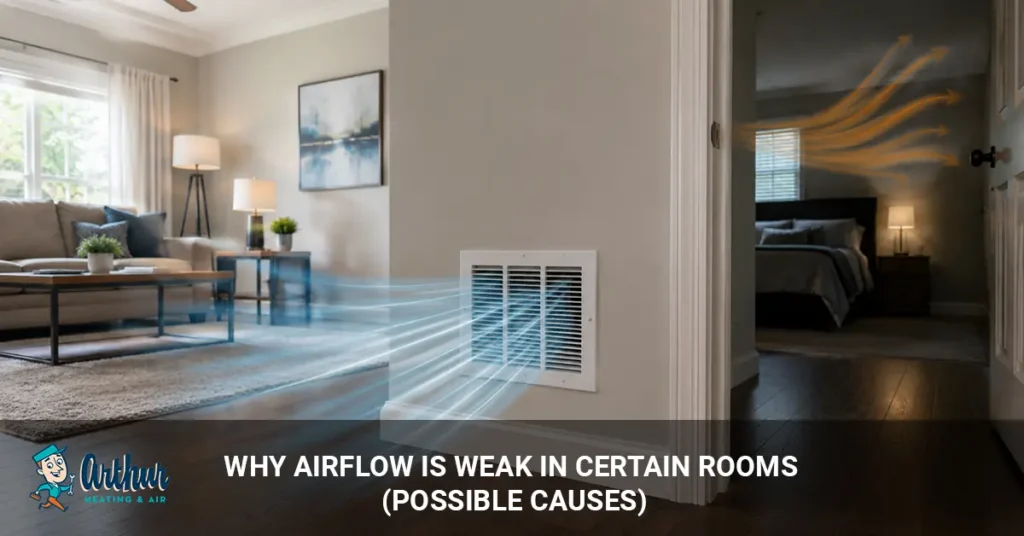
Weak airflow in certain rooms usually means air is not moving properly through the HVAC system. Some rooms may feel stuffy, hotter, or colder because not enough heated or cooled air is reaching the vents.
This is one of the most common HVAC problems homeowners deal with. In many homes, airflow problems happen in upstairs bedrooms, rooms farthest from the HVAC system, or areas with longer duct runs.
Weak airflow is often caused by dirty air filters, blocked vents, duct leaks, frozen evaporator coils, blower motor problems, or airflow balancing issues. Some airflow problems are simple and easy to fix. Others may point to larger HVAC issues that need professional repair.
Ignoring weak airflow can increase energy bills, reduce indoor comfort, and place extra strain on heating and cooling equipment over time.
The good news is that many airflow problems can be improved early before they lead to larger HVAC repairs.
This guide explains the most common causes of weak airflow in certain rooms, warning signs to watch for, simple troubleshooting steps, and when it is time to call an HVAC professional.
Why Is Airflow Weak in Certain Rooms?
Weak airflow in certain rooms usually means conditioned air is not moving properly through the HVAC system. When airflow becomes restricted or unbalanced, some rooms receive less heated or cooled air than others.
Weak Airflow Usually Means Air Is Not Moving Properly Through the HVAC System
Your HVAC system depends on proper airflow to distribute heated or cooled air evenly throughout the home.
If airflow becomes blocked, restricted, or uneven, some rooms may:
- Feel hotter or colder than other rooms
- Receive very little airflow from vents
- Take longer to heat or cool
- Feel stuffy or uncomfortable
The problem may affect only one room or several areas of the home, depending on what is causing the airflow restriction.
Common Signs of Poor Airflow
Homeowners often notice:
- Weak air coming from vents
- Hot and cold spots throughout the house
- Stuffy rooms
- HVAC system running longer than normal
- Uneven room temperatures
In many homes, airflow problems develop gradually over time as filters, ductwork, or HVAC components become dirty or worn down.
Why Airflow Problems Should Not Be Ignored
Weak airflow can eventually lead to:
- Reduced indoor comfort
- Higher energy bills
- Increased HVAC strain
- Poor heating and cooling performance
- Extra wear on HVAC components
The longer airflow problems continue, the harder the HVAC system must work to maintain comfortable temperatures throughout the home.
Dirty Air Filters Restrict Airflow
Dirty air filters are one of the most common reasons airflow becomes weak in certain rooms. When the filter becomes clogged, the HVAC system cannot move air through the ductwork as efficiently as it should.
How Clogged Filters Block Airflow
HVAC air filters trap dust, dirt, pet hair, and other airborne debris to help keep indoor air cleaner.
Over time, the filter becomes packed with buildup and restricts airflow throughout the system.
When airflow becomes blocked:
- Less air reaches the vents
- HVAC efficiency decreases
- Some rooms receive weaker airflow
- System strain increases
Restricted airflow can also lead to overheating or frozen evaporator coils if the problem continues too long.
Signs Your Filter May Be the Problem
A dirty air filter may cause:
- Weak airflow from vents
- Dust buildup around vents
- Uneven room temperatures
- HVAC overheating
- Higher energy bills
Rooms farthest from the HVAC unit are often the first areas where homeowners notice airflow becoming weaker.
How Often HVAC Filters Should Be Replaced
Most HVAC filters should be replaced every 1 to 3 months, depending on:
- Pets in the home
- Indoor air quality
- HVAC usage
- Allergy concerns
- Filter type
Regular filter replacement helps maintain steady airflow, improve HVAC performance, and reduce unnecessary strain on the system.
Following recommendations for how often to replace HVAC air filters can help prevent many common airflow problems before they start.
Blocked or Closed Air Vents
Blocked or closed air vents are a common reason airflow becomes weak in certain rooms. When vents cannot move air freely, heated or cooled air struggles to circulate properly throughout the home.
Furniture or Curtains Blocking Vents
Furniture, rugs, curtains, and other household items can block airflow coming from HVAC vents.
When vents become blocked:
- Airflow into the room decreases
- Temperatures become uneven
- Rooms may feel stuffy
- Overall comfort drops
Even partial vent blockage can reduce how much conditioned air reaches the room.
Checking vents regularly helps improve airflow and temperature balance throughout the house.
Closed Vents Reducing Airflow Balance
Many homeowners close vents in unused rooms hoping to save energy. In most HVAC systems, this actually creates airflow problems instead of improving efficiency.
Closing vents may:
- Increase air pressure inside ducts
- Reduce airflow to other rooms
- Increase HVAC strain
- Create uneven temperatures
Keeping vents open usually helps air circulate more evenly throughout the home and reduces unnecessary stress on the HVAC system.
Dust Buildup Inside Vents
Dust and debris can slowly build up inside vents and reduce airflow over time.
Dirty vents may:
- Restrict airflow
- Lower HVAC efficiency
- Increase dust circulation
- Reduce room comfort
This problem is especially common in older homes where vents and duct openings have not been cleaned regularly.
Leaky or Damaged Ductwork
Leaky or damaged ductwork can prevent heated or cooled air from reaching certain rooms properly. When air escapes through leaks or damaged ducts, airflow becomes weaker and some rooms may never feel comfortable.
How Duct Leaks Reduce Airflow
Ductwork carries conditioned air from the HVAC system to vents throughout the home.
If ducts develop:
- Leaks
- Cracks
- Loose connections
- Small gaps
conditioned air may escape before it reaches the room.
This reduces airflow from vents and forces the HVAC system to work harder to maintain indoor temperatures.
Over time, airflow loss can also increase energy bills and reduce HVAC efficiency.
Rooms Farthest From the HVAC System Often Affected Most
Rooms located farther from the HVAC unit are usually affected most by duct leaks because airflow pressure naturally becomes weaker over longer duct runs.
Upstairs rooms are also more vulnerable to airflow problems, especially in homes with:
- Long attic duct runs
- Older duct systems
- Poor insulation
- Weak airflow balancing
In some homes, certain rooms may barely receive airflow at all if the duct leak is severe enough.
Signs of Ductwork Problems
Common signs of duct leaks or damaged ductwork include:
- Weak airflow in certain rooms
- Dusty rooms
- Uneven temperatures
- Higher utility bills
- HVAC system running constantly
Duct leaks can significantly reduce HVAC efficiency if ignored for too long. Understanding the benefits of duct sealing can help homeowners improve airflow, increase comfort, and reduce energy loss throughout the home.
Blower Motor Problems
Blower motor problems can reduce airflow throughout the entire HVAC system. When the blower motor cannot move air properly, some rooms may receive very little heating or cooling.
What the Blower Motor Does
The blower motor is responsible for pushing heated or cooled air through the ductwork and into the vents around the home.
Without proper blower operation:
- Airflow weakens throughout the house
- Rooms heat or cool unevenly
- HVAC efficiency decreases
- System strain increases
The blower motor plays a major role in maintaining steady airflow and indoor comfort.
Weak or Failing Blower Motors
Blower motors can weaken over time because of:
- Age
- Dirt buildup
- Electrical problems
- Worn bearings
- Overheating
As the motor loses strength, it struggles to circulate enough air through the duct system.
This often causes:
- Weak airflow from vents
- Uneven room temperatures
- Longer HVAC run times
- Reduced comfort throughout the home
Signs of Blower Motor Problems
Common warning signs include:
- Weak airflow throughout the house
- Strange noises from the HVAC system
- HVAC overheating
- Inconsistent airflow
- HVAC short cycling
Blower motor problems should be repaired early before the motor fails completely or causes additional damage to other HVAC components.
If your system is repeatedly turning on and off while experiencing airflow issues, it may be suffering from HVAC short cycling, which often occurs alongside blower motor and airflow problems.
Airflow Balancing Problems
Airflow balancing problems can cause some rooms to receive too much air while others get very little. When airflow is not distributed evenly, certain parts of the home may feel uncomfortable no matter how long the HVAC system runs.
Why Some Rooms Get More Airflow Than Others
Every HVAC system must balance airflow properly to heat and cool the home evenly.
If airflow balance becomes uneven, some vents may blow strong airflow while others remain weak.
This often happens because of:
- Improper duct design
- Damper adjustment problems
- Long duct runs
- Poor HVAC zoning
In many homes, rooms closest to the HVAC system receive stronger airflow while distant rooms receive less.
Damper Adjustment Problems
Dampers inside ductwork help control how much air flows to different parts of the house.
If dampers are:
- Closed too much
- Misadjusted
- Stuck
- Installed incorrectly
airflow may become uneven throughout the home.
Improper damper settings can create:
- Weak airflow in certain rooms
- Hot and cold spots
- Poor temperature balance
Adjusting dampers correctly often helps improve airflow distribution.
HVAC Zoning Issues
Homes with HVAC zoning systems may develop airflow problems if zone dampers, thermostats, or control panels stop working properly.
When zoning systems malfunction:
- Certain rooms may receive too much airflow
- Other areas may receive very little airflow
- The temperature balance becomes inconsistent
Zoning problems are often more noticeable in multi-story homes where airflow balance is already more difficult to maintain.
Dirty or Blocked Ducts
Dirty or blocked ductwork can reduce airflow into certain rooms and make it harder for the HVAC system to distribute air evenly throughout the home.
Dust and Debris Restricting Airflow
Over time, dust, dirt, and debris can collect inside HVAC ducts and partially block airflow.
As buildup increases:
- Vent airflow becomes weaker
- HVAC strain increases
- System efficiency drops
- Some rooms may feel stuffy or uncomfortable
Homes with older duct systems or poor indoor air quality are often more vulnerable to duct buildup problems.
Pest or Rodent Blockages
In some homes, rodents or pests may build nests inside ductwork and obstruct airflow.
This problem may cause:
- Weak airflow
- Strange smells from vents
- Noise inside ducts
- Uneven temperatures
Pest-related duct blockages can also create indoor air quality concerns if left untreated.
Collapsed or Damaged Ducts
Older duct systems may collapse, disconnect, or become crushed over time.
Damaged ducts can:
- Severely reduce airflow into certain rooms
- Increase HVAC energy loss
- Create uneven heating and cooling
- Force the HVAC system to work harder
Professional duct inspection is often needed to locate hidden duct damage inside attics, crawl spaces, or walls.
Frozen Evaporator Coils
Frozen evaporator coils can block airflow and reduce cooling performance throughout the home. When ice forms on the coils, the HVAC system struggles to move air properly through the ductwork.
How Frozen Coils Reduce Airflow
When evaporator coils freeze, ice buildup blocks airflow inside the HVAC system.
This often causes:
- Weak airflow from vents
- Warm or stuffy rooms
- Poor cooling performance
- Uneven temperatures throughout the home
As airflow becomes more restricted, the HVAC system must work harder to cool the house.
Low Refrigerant and Airflow Restrictions
Frozen evaporator coils are commonly caused by:
- Low refrigerant levels
- Dirty air filters
- Blocked airflow
- Blower motor problems
Low airflow allows the coil temperature to drop too low, causing moisture on the coils to freeze into ice.
As ice continues building up, airflow problems usually become worse.
Signs of Frozen Evaporator Coils
Common warning signs include:
- Ice buildup on refrigerant lines
- Weak cooling performance
- Water leaks around the indoor unit
- HVAC short cycling
Frozen coils should be inspected quickly before the problem damages the compressor or creates larger HVAC repairs.
Homeowners can also learn more about AC freezes up and how to fix it to better understand why airflow restrictions often lead to coil freezing.
HVAC System Size Problems
Incorrect HVAC sizing can affect airflow throughout the home and make certain rooms feel uncomfortable. When the system is too small or too large, airflow may become uneven and heating or cooling performance may suffer.
Undersized HVAC Systems Struggling to Move Air
Undersized HVAC systems may struggle to push enough air throughout larger homes or homes with high heating and cooling demands.
When the system is too small:
- Some rooms may receive weak airflow
- Temperatures may stay uneven
- The HVAC system may run constantly
- Comfort levels may drop during extreme weather
Rooms farthest from the HVAC system are often affected most when airflow capacity is too low.
Oversized Systems Causing Uneven Airflow
Oversized HVAC systems may short cycle and shut off too quickly before air has enough time to circulate evenly throughout the house.
This often creates:
- Uneven room temperatures
- Inconsistent airflow
- Hot and cold spots
- Poor humidity control
Oversized systems may cool or heat the home quickly near the thermostat while distant rooms still feel uncomfortable.
Why Proper HVAC Sizing Matters
Correct HVAC sizing depends on several important factors, including:
- Home size
- Insulation levels
- Climate conditions
- Duct design
- Airflow requirements
Proper HVAC sizing helps improve:
- Airflow balance
- Indoor comfort
- Energy efficiency
- Heating and cooling performance
Professional load calculations are usually needed to determine the correct HVAC size for a home.
Why Upstairs Rooms Often Have Weak Airflow
Upstairs rooms often have weaker airflow and more temperature problems than downstairs areas. In many homes, upper floors feel hotter during summer and harder to cool because airflow and heat balance become more difficult upstairs.
Heat Naturally Rises
Warm air naturally rises through the home, which makes upstairs rooms warmer during hot weather.
As heat collects on upper floors:
- Cooling demand increases
- Upstairs rooms stay hotter longer
- The HVAC system must work harder to maintain comfort
This is one of the main reasons upstairs bedrooms often feel uncomfortable during the summer months.
Long Duct Runs Reducing Airflow
Upstairs vents usually depend on longer duct runs to move air from the HVAC system to the upper floor.
As air travels farther through the ductwork:
- Airflow pressure weakens
- Less conditioned air reaches upstairs rooms
- Cooling performance may drop
Long duct runs can make airflow problems more noticeable in larger homes.
Poor Attic Insulation
Poor attic insulation allows extra heat to enter upstairs rooms and increases the cooling load on the HVAC system.
During hot weather, attic temperatures can become extremely high and transfer heat into upper-floor ceilings and walls.
This often causes:
- Hot upstairs rooms
- Uneven temperatures
- Longer HVAC run times
- Higher energy bills
Improving attic insulation can help reduce heat transfer and improve comfort upstairs.
Air Balancing Issues Upstairs
Some HVAC systems are not properly balanced to deliver enough airflow to upper floors.
If airflow balancing is poor:
- Downstairs rooms may receive too much airflow
- Upstairs rooms may receive too little airflow
- Temperature differences become more noticeable
HVAC zoning systems and professional airflow balancing can often improve airflow control and comfort on upper floors.
If certain rooms stay consistently hotter or colder than others, these uneven heating and cooling issues may help identify additional airflow and comfort problems affecting your home.
What You Can Do to Improve HVAC Airflow
Several simple HVAC maintenance steps can help improve airflow in certain rooms and reduce uneven temperatures throughout the home. Some airflow problems are easy to fix, while others may require professional repair.
Step 1: Replace the Air Filter
Dirty air filters are one of the most common causes of weak airflow. Replacing a clogged filter often improves airflow quickly and helps the HVAC system operate more efficiently.
Clean filters help:
- Improve vent airflow
- Reduce HVAC strain
- Improve heating and cooling performance
- Prevent frozen evaporator coils
Most HVAC filters should be checked regularly and replaced when dirty.
Step 2: Open and Clean Vents
Make sure vents are fully open and not blocked by:
- Furniture
- Rugs
- Curtains
- Dust buildup
Cleaning vents regularly helps air move more freely throughout the room and improves airflow balance across the home.
Step 3: Check for Blocked Airflow
Inspect return vents, duct openings, and airflow throughout the house.
Look for:
- Closed vents
- Dust buildup
- Obstructed return vents
- Poor airflow between rooms
Good airflow circulation helps the HVAC system distribute conditioned air more evenly.
Step 4: Inspect Visible Ductwork
Check visible ductwork in:
- Attics
- Basements
- Crawl spaces
Look for:
- Disconnected ducts
- Crushed duct sections
- Visible leaks
- Loose connections
Damaged ductwork can reduce airflow significantly before air reaches certain rooms.
Step 5: Schedule HVAC Inspection
Persistent airflow problems usually require professional HVAC inspection and airflow testing.
An HVAC technician can identify:
- Duct leaks
- Blower motor problems
- Frozen evaporator coils
- Airflow balancing issues
- HVAC sizing problems
Professional airflow testing is often the fastest way to find hidden HVAC airflow problems and restore balanced airflow throughout the home.
During an inspection, technicians often uncover many of the common problems found during HVAC inspections, including duct leaks, airflow restrictions, and equipment issues.
When to Call an HVAC Professional
Some airflow problems require professional HVAC diagnosis and repair. If airflow stays weak even after basic troubleshooting, there may be a larger issue inside the HVAC system or ductwork.
Call an HVAC technician if you notice:
- Persistent weak airflow
- Weak airflow in multiple rooms
- Frozen evaporator coils
- Strange HVAC noises
- Rising energy bills
- Uneven temperatures throughout the home
- HVAC system running constantly
- Poor heating or cooling performance
These symptoms often point to hidden problems that homeowners cannot easily diagnose on their own.
Professional HVAC inspections can identify:
- Duct leaks
- Airflow balancing problems
- Refrigerant issues
- Blower motor failure
- Frozen evaporator coils
- Improper HVAC sizing
Fixing airflow problems early can help improve comfort, lower energy bills, and reduce unnecessary strain on HVAC equipment before larger repairs become necessary.
How to Prevent HVAC Airflow Problems
Regular HVAC maintenance helps prevent many common airflow problems and keeps heated and cooled air moving evenly throughout the home. Small maintenance steps can improve comfort, lower energy bills, and reduce strain on HVAC equipment.
Replace Air Filters Regularly
Clean air filters help maintain steady airflow throughout the HVAC system.
Dirty filters can:
- Restrict airflow
- Reduce HVAC efficiency
- Increase system strain
- Cause uneven room temperatures
Most HVAC filters should be replaced every 1 to 3 months depending on the home and filter type.
Keep Vents Open and Clean
Open vents help maintain proper airflow balance throughout the house.
Make sure vents are:
- Fully open
- Free from furniture blockage
- Clean from dust buildup
- Not covered by rugs or curtains
Good airflow circulation helps every room receive more consistent heating and cooling.
Schedule Annual HVAC Maintenance
Professional HVAC tune-ups help identify airflow problems before they become larger repairs.
During maintenance visits, technicians often inspect:
- Airflow performance
- Blower motors
- Evaporator coils
- Ductwork condition
- Air filters
Regular maintenance helps improve HVAC efficiency and system lifespan.
Seal Duct Leaks Early
Leaky ducts allow conditioned air to escape before it reaches the rooms.
Proper duct sealing can help:
- Improve airflow
- Reduce energy loss
- Improve indoor comfort
- Lower utility bills
Fixing duct leaks early also reduces unnecessary strain on the HVAC system.
Monitor Airflow Changes Quickly
Small airflow problems often become larger HVAC repairs if ignored for too long.
Pay attention to:
- Weak vent airflow
- Uneven temperatures
- Stuffy rooms
- Longer HVAC run times
Catching airflow problems early usually makes repairs easier and less expensive.
Frequently Asked Questions
Why is the airflow weak in one room?
Weak airflow in one room is often caused by blocked vents, duct leaks, airflow imbalance, dirty air filters, or long duct runs that reduce airflow pressure before air reaches the room.
Can dirty air filters reduce airflow?
Yes. Dirty air filters restrict airflow throughout the HVAC system and can reduce the amount of air reaching vents in certain rooms.
Why is airflow weaker upstairs?
Upstairs airflow problems usually happen because heat naturally rises, duct runs are longer, attic heat increases cooling demand, or airflow balancing is poor.
Can duct leaks affect airflow?
Yes. Leaky ducts allow heated or cooled air to escape before it reaches the vents, which reduces airflow and makes some rooms harder to heat or cool.
Should vents stay open in unused rooms?
In most homes, yes. Closing vents can disrupt airflow balance, increase duct pressure, and place extra strain on the HVAC system.
How do HVAC technicians test airflow?
HVAC technicians use airflow testing equipment to measure:
- Airflow pressure
- Duct performance
- Vent airflow
- System balance
These tests help identify hidden airflow restrictions, duct leaks, and HVAC performance problems throughout the home.
Final Thoughts
Weak airflow in certain rooms is usually a sign that something inside the HVAC system needs attention. In many homes, the problem is caused by dirty air filters, blocked vents, duct leaks, frozen evaporator coils, blower motor problems, or poor airflow balance.
While some airflow problems are simple to fix, ignoring them can eventually lead to:
- Reduced indoor comfort
- Higher energy bills
- Uneven temperatures
- Increased HVAC strain
- More expensive repairs later
The good news is that many airflow issues can be improved with regular HVAC maintenance, clean air filters, proper airflow balancing, and early repairs.
If certain rooms continue to have weak airflow even after basic troubleshooting, scheduling a professional HVAC inspection is often the best way to identify the problem and restore balanced airflow throughout the home.