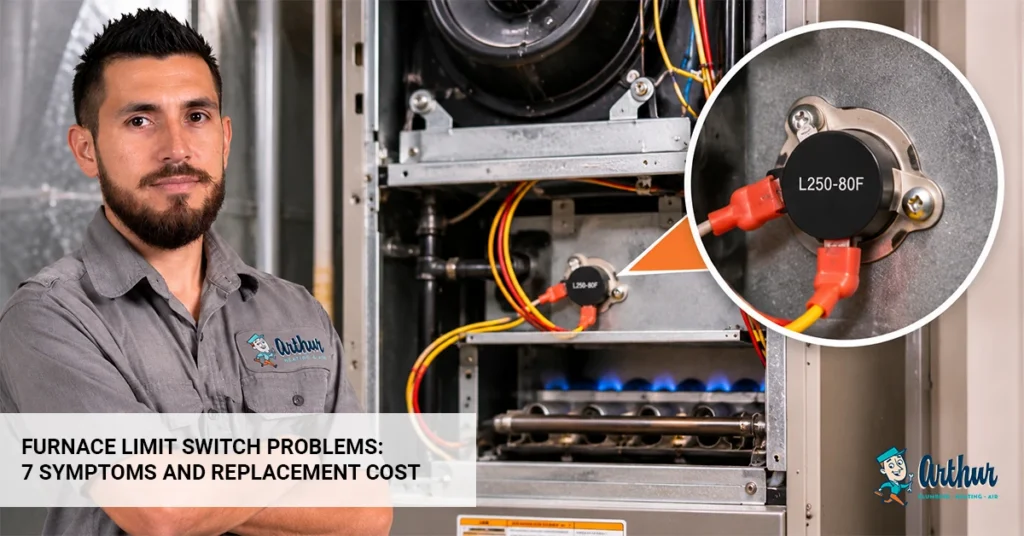
A furnace limit switch problem can cause your heating system to shut down, blow cold air, or keep the blower running. The limit switch is a safety device that monitors the temperature inside your furnace. If the temperature gets too high, it shuts off the burners to prevent overheating.
However, a faulty limit switch isn’t always the real problem. A dirty air filter, blocked vents, or a failing blower motor can also restrict airflow and cause the switch to trip.
So, before replacing the switch, it’s important to find out what’s causing the problem. Otherwise, you could replace a working part and still have the same heating issue.
In this guide, we’ll cover seven common symptoms of a bad furnace limit switch, explain what causes them, and share safe troubleshooting steps. You’ll also learn how much a replacement may cost and when to call an HVAC technician.
What Does a Furnace Limit Switch Do?
A furnace limit switch monitors the temperature inside your furnace and protects the system from overheating. It sits near the heat exchanger and senses how hot the furnace gets while it runs.
When the temperature rises above a safe level, the switch opens the burner safety circuit. This tells the furnace to shut off the burners and stop producing more heat. However, the blower may keep running to cool the heat exchanger and circulate the remaining warm air through your home.
Once the temperature drops back to a safe range, an automatic-reset limit switch can close again. The furnace can then resume its normal heating cycle if there are no other problems.
Most modern furnaces use a high-limit switch as part of their safety system. Some older systems also have a separate fan-limit control. Although both monitor temperature, they perform different jobs.
Here’s how they differ:
- High-limit switch: Protects the furnace from overheating. It shuts off the burners when the temperature gets too high.
- Fan-limit switch: Controls when the blower starts and stops based on the temperature inside the furnace.
In short, the high-limit switch protects your furnace, while the fan-limit control manages blower operation. Both help keep your heating system running safely and properly.
What Are the Symptoms of a Bad Furnace Limit Switch?
A bad furnace limit switch can cause your furnace to shut down repeatedly, keep the blower running, or struggle to heat your home. However, these problems don’t always mean the switch has failed. Restricted airflow, a dirty filter, or a faulty blower motor can cause similar symptoms.
Here are seven common signs to watch for.
1. Furnace Turns On and Off Frequently
If your furnace starts and stops every few minutes, it may be overheating and triggering the high-limit switch. This safety feature shuts off the burners when the temperature inside the furnace gets too high.
A dirty air filter is one common cause. It restricts airflow, which can prevent enough cool air from moving across the heat exchanger. As a result, the furnace gets too hot and shuts off the burners. Once it cools down, the heating cycle may start again.
A limit switch is one possible reason for repeated shutdowns. Learn about other common causes of furnace short cycling and what may be causing the problem.
Common signs include:
- Furnace starts and stops every few minutes.
- Rooms take longer than usual to reach the set temperature.
- Heating cycles end before your home feels warm.
- The furnace runs more often than normal but provides less heat.
How to fix it:
First, check your furnace air filter. If it’s dirty or clogged, replace it with the correct size and filter rating.
Next, make sure your supply and return vents aren’t blocked by furniture, rugs, or other items. Proper airflow helps prevent overheating.
If the furnace still short cycles after these checks, contact an HVAC technician. They can inspect the limit switch, blower motor, and other airflow components to find the actual cause.
2. Furnace Blower Runs Continuously
If your furnace blower keeps running after the heating cycle ends, you may have a limit switch, thermostat, or control board problem. Sometimes, the blower continues running because the furnace is trying to cool down after overheating.
Normally, the blower runs for a short time after the burners shut off. This helps remove leftover heat from the heat exchanger. However, if the fan keeps running long after the furnace has cooled, a control problem may be preventing it from turning off.
Common signs include:
- Blower runs even when the thermostat isn’t calling for heat.
- Air continues coming through the vents between heating cycles.
- Furnace fan never shuts off, even after the room reaches the set temperature.
- Electricity bills increase because the blower runs longer than necessary.
How to fix it:
First, check your thermostat’s fan setting. If it’s set to ON, the blower will run continuously, even when the furnace isn’t heating. Change the setting to AUTO so the fan runs only when needed.
If the blower keeps running with the fan set to AUTO, the problem may involve a stuck limit switch, faulty fan relay, or damaged control board.
At this point, have an HVAC technician inspect the system. They can test the electrical components and identify why the blower won’t shut off.
3. Furnace Shuts Down Before Reaching the Set Temperature
If your furnace shuts off before your home reaches the temperature set on the thermostat, the high-limit switch may be interrupting the heating cycle. This usually happens when the furnace overheats before completing a normal cycle.
Restricted airflow is one of the most common reasons. For example, a clogged air filter, blocked vents, or a weak blower motor can reduce airflow across the heat exchanger. As a result, the furnace gets too hot and the limit switch shuts off the burners to protect the system.
Common signs include:
- Furnace stops before the room reaches the desired temperature.
- Thermostat shows a lower temperature than the set point.
- Heating cycles end unexpectedly.
- Furnace starts heating again after a short cooling period.
How to fix it:
Start by checking the furnace air filter. Replace it if it’s dirty or clogged. Then, make sure furniture, rugs, and other objects aren’t blocking the supply or return vents.
If the furnace still shuts down before reaching the set temperature, call an HVAC technician. They can check the furnace’s operating temperature, blower performance, and limit switch to identify the actual cause.
4. Furnace Blows Cold or Lukewarm Air
If your furnace blows cold or lukewarm air during a heating cycle, the high-limit switch may be shutting off the burners because the system is overheating. The blower can continue running even after the burners stop producing heat.
Here’s why this happens: When the furnace gets too hot, the limit switch shuts off the burners to protect the heat exchanger. However, the blower may keep moving air through the system to help it cool down. As a result, you may feel cool or lukewarm air coming from the vents.
A limit switch isn’t the only possible cause of this issue. Read more about why a furnace runs but doesn’t produce heat and what other problems may affect heating performance.
Common signs include:
- Warm air suddenly turns cool during a heating cycle.
- Furnace runs, but your home doesn’t get warm enough.
- Rooms stay cold even though the blower is running.
- Furnace repeatedly starts and stops while heating.
How to fix it:
First, check your thermostat settings and furnace air filter. Make sure the thermostat is set to HEAT, and the fan is set to AUTO. Replace the filter if it’s dirty or clogged.
If the furnace continues blowing cool air, contact an HVAC technician. They can inspect the high-limit switch, blower motor, and airflow system to find the cause.
Keep in mind that the limit switch may be working correctly. It could be shutting off the burners because another problem is causing the furnace to overheat.
5. Furnace Overheats Frequently
If your furnace overheats again and again, it may have an airflow problem, a failing blower motor, or another mechanical issue. The high-limit switch detects excessive heat and shuts off the burners to protect the furnace from damage.
Restricted airflow is one of the most common causes. When enough air can’t move across the heat exchanger, the furnace struggles to release heat. As a result, the temperature inside the system rises and triggers the limit switch.
Common causes include:
- Dirty or clogged furnace air filter.
- Blocked supply or return vents.
- Dust buildup on the blower wheel.
- Weak or failing blower motor.
- Restricted or damaged ductwork.
- Incorrect blower speed or airflow settings.
How to fix it:
Start by checking the air filter. Replace it if it’s dirty or clogged. Next, make sure your supply and return vents are open and free from furniture, rugs, or other obstructions.
If the furnace continues to overheat, schedule a professional inspection. An HVAC technician can measure airflow and operating temperatures, inspect the blower motor, and check the ductwork for restrictions.
Never bypass the high-limit switch to keep your furnace running. It’s an important safety device that protects the heat exchanger and other components from excessive heat. If it keeps shutting off the burners, find and fix the underlying problem instead.
6. Furnace Takes Longer to Heat Your Home
If your furnace takes longer than usual to warm your home, restricted airflow or repeated limit switch trips may be interrupting the heating cycle. When the high-limit switch shuts off the burners because of overheating, the furnace temporarily stops producing heat. As a result, your rooms may take longer to reach the thermostat setting.
This problem can become more noticeable during colder weather when your home needs more heat to stay comfortable.
Common signs include:
- Rooms take longer than usual to warm up.
- Furnace runs through several short heating cycles.
- Some rooms feel warmer than others.
- The heating system struggles to maintain the set temperature during cold weather.
How to fix it:
First, check your furnace air filter and replace it if it’s dirty. Then, make sure all supply and return vents are open and unobstructed. Also, check that your thermostat is set to HEAT and has the correct temperature setting.
If your home still takes too long to warm up, schedule an HVAC inspection. A technician can check the limit switch, blower motor, ductwork, and overall airflow to find what’s slowing down your heating system.
7. Furnace Limit Switch Keeps Tripping
If your furnace limit switch keeps tripping, the system may be overheating because of restricted airflow or a failing component. However, the switch itself may still be working properly. Its job is to shut off the burners when the furnace reaches an unsafe temperature.
For example, a clogged air filter can reduce airflow across the heat exchanger. This causes heat to build up inside the furnace, triggering the limit switch and interrupting the heating cycle.
Repeated shutdowns can have several causes beyond a faulty limit switch. Learn why your heater keeps shutting off and what to check when your heating system stops unexpectedly.
Common reasons include:
- Dirty or clogged furnace air filter.
- Dirty or damaged blower wheel.
- Weak or failing blower motor.
- Blocked return air vents.
- Restricted or damaged ductwork.
- Faulty high-limit switch.
- Incorrect furnace airflow or blower speed settings.
How to fix it:
First, check your furnace air filter and replace it if it’s dirty. Then, make sure the supply and return vents are open and free from obstructions.
If the limit switch keeps tripping, don’t keep resetting or restarting the furnace. Repeated shutdowns may indicate an ongoing overheating problem that needs attention.
Instead, schedule an HVAC inspection. A technician can measure the furnace’s operating temperature, inspect the blower assembly, check airflow, and test the limit switch. This helps identify whether the switch has failed or is responding to another problem in the heating system.
Important: Never bypass the limit switch. It’s a safety device that helps protect your furnace from overheating and potential damage.
What Causes Furnace Limit Switch Problems?
Furnace limit switch problems often happen because of restricted airflow, overheating, electrical faults, or a damaged switch. In many cases, the switch isn’t actually faulty. It’s simply responding to excessive heat inside the furnace.
Finding the real cause can help you avoid replacing a working switch and spending money on unnecessary repairs.
Here are seven common causes to check.
1. Dirty or Clogged Furnace Air Filter
A dirty furnace air filter is one of the most common reasons a high-limit switch keeps tripping. Dust and debris build up on the filter over time, making it harder for air to move through the furnace.
When airflow drops, the heat exchanger can’t release heat properly. As a result, the furnace temperature rises and may trigger the high-limit switch to shut off the burners.
A clogged filter can affect your heating system in several ways. Learn how dirty air filters affect your heater and why replacing them regularly matters.
How to fix it:
Check your furnace air filter regularly. If it looks dirty or clogged, replace it with the correct size and filter rating recommended by the manufacturer.
Also, follow the manufacturer’s filter replacement schedule. Some filters need changing more often than others, depending on your home, pets, and furnace usage.
If the limit switch keeps tripping after you replace the filter, have an HVAC technician inspect the blower, ductwork, and other airflow components.
2. Dirty Furnace Blower or Blower Motor Problems
A dirty blower wheel or failing blower motor can reduce airflow through your furnace. When the blower can’t move enough air across the heat exchanger, heat builds up inside the system. This can cause the high-limit switch to shut off the burners.
Over time, dust and debris can collect on the blower wheel and reduce its ability to move air. A worn motor, damaged bearings, or other mechanical problems can also affect blower performance.
How to fix it:
Have an HVAC technician inspect the blower assembly. They can clean the blower wheel, test the motor, and check for worn or damaged parts.
If the motor is failing, it may need repair or replacement. Restoring proper airflow can help prevent repeated limit switch trips and improve your furnace’s heating performance.
3. Blocked Supply or Return Air Vents
Blocked supply or return air vents can reduce airflow and cause your furnace to overheat. Supply vents deliver warm air to your rooms, while return vents pull air back into the furnace to be heated again.
When furniture, rugs, curtains, or other objects cover these vents, air can’t move freely through the system. This can increase the furnace temperature and cause the high-limit switch to shut off the burners.
How to fix it:
Walk through your home and check all supply and return vents. Move furniture, rugs, curtains, and other objects that block airflow. Also, make sure the vent registers are fully open.
If airflow remains weak after clearing the vents, the problem may be inside the ductwork or furnace. In that case, ask an HVAC technician to inspect the system and find the restriction.
4. Faulty Furnace Limit Switch
A faulty furnace limit switch may send incorrect temperature signals or fail to open and close at the proper temperatures. As a result, the burners may shut off unexpectedly, or the furnace may struggle to complete a normal heating cycle.
Like other electrical components, a limit switch can wear out over time. Its contacts may become damaged, or the switch may stop responding correctly to temperature changes.
How to fix it:
An HVAC technician can test the limit switch with the proper electrical testing equipment. They’ll compare its readings and operation with the manufacturer’s specifications.
If the switch is defective, the technician can replace it with the correct part for your furnace model.
However, it’s important to check for overheating before installing a new switch. If poor airflow or another problem is causing the furnace to overheat, the new switch may keep tripping too.
5. Dirty Furnace Components
Dust and debris inside your furnace can reduce airflow and affect heating performance. Over time, dirt can collect on the blower wheel and other components, making it harder for the system to circulate air properly.
When airflow drops, heat can build up inside the furnace. This may cause the high-limit switch to shut off the burners to prevent overheating.
How to fix it:
Schedule professional furnace cleaning and maintenance. An HVAC technician can inspect the blower assembly, clean accessible components, and check for airflow restrictions.
You can also help prevent dust buildup by replacing your furnace air filter regularly. Use the filter size and rating recommended by the manufacturer.
6. Improper Furnace Installation or Airflow Problems
Incorrect furnace installation or poor airflow settings can cause the high-limit switch to trip repeatedly. If the furnace doesn’t receive enough air, its internal temperature can rise above the safe operating range.
Several installation and airflow issues can contribute to this problem. For example, undersized ductwork may restrict airflow, while incorrect blower speed settings can prevent the system from moving enough air across the heat exchanger.
How to fix it:
Have an HVAC technician inspect the furnace installation, ductwork, and blower settings. They can measure airflow and check whether the system is properly matched to your home’s heating needs.
If the ductwork is undersized, damaged, or restricted, adjustments or repairs may be necessary. Correcting these problems can improve airflow and help prevent repeated limit switch trips.
7. Faulty Blower Control or Furnace Control Board
A faulty furnace control board or blower control can prevent the blower from operating properly. If the blower starts too late, runs at the wrong speed, or fails to start, the furnace may not get enough airflow.
As a result, heat can build up inside the system and trigger the high-limit switch. In some cases, a damaged control board may also cause irregular blower operation or unexpected furnace shutdowns.
How to fix it:
Ask a qualified HVAC technician to inspect the control board, blower controls, and electrical connections. They can test the signals sent to the blower motor and check whether the components are operating according to the manufacturer’s specifications.
If the control board or another electrical component has failed, it may need replacement. The technician should also check the blower motor and overall airflow to make sure the original problem doesn’t continue after the repair.
How to Troubleshoot a Furnace Limit Switch Problem
You can start troubleshooting a furnace limit switch problem by checking the air filter, thermostat, and accessible vents. These simple checks can help you find common airflow problems before calling an HVAC technician.
However, don’t try to test, bypass, or replace the limit switch yourself. It’s part of your furnace’s safety system and involves electrical components.
Follow these steps to check for common problems safely.
Step 1: Check the Furnace Air Filter
A dirty or clogged air filter can restrict airflow and cause your furnace to overheat. When not enough air moves across the heat exchanger, the high-limit switch may shut off the burners to protect the system.
Before checking the filter, turn off the furnace using its normal power switch. Locate the filter compartment and carefully remove the filter.
Check for visible dust, dirt, and debris. If the filter looks clogged, replace it with a new one that matches your furnace’s required size and specifications.
Also, check the airflow arrow printed on the filter. Make sure it points in the direction shown in your furnace manufacturer’s instructions.
Once you’ve installed the new filter, close the compartment properly and restore power to the furnace. If the limit switch continues tripping, the system may have another airflow or mechanical problem that needs professional attention.
Step 2: Check Supply and Return Air Vents
Blocked supply or return vents can restrict airflow and cause your furnace to overheat. Checking these vents is a simple way to rule out common airflow problems.
Walk through your home and inspect the supply and return vents. Move furniture, rugs, curtains, and other objects that may be blocking them.
Also, make sure the vents are open. Keep them clear unless your HVAC system is specifically designed with adjustable zoning controls.
If airflow still feels weak after clearing the vents, the problem may be inside the ductwork or furnace. An HVAC technician can inspect the system and find the restriction.
Step 3: Check the Thermostat Settings
Incorrect thermostat settings can cause heating problems that look similar to a faulty limit switch. Before checking other furnace components, make sure your thermostat is set correctly.
Check these settings:
- Heating mode: Set the thermostat to HEAT.
- Temperature: Set it higher than the current room temperature.
- Fan setting: Choose AUTO for normal heating operation.
- Schedule: Check the programmed schedule for incorrect temperature settings.
- Batteries: Replace them if your thermostat uses batteries and the power is low.
After checking the settings, give the furnace a few minutes to respond. If it continues shutting down before reaching the set temperature or the blower runs continuously, the problem may involve the limit switch, blower controls, or furnace control board.
In that case, have an HVAC technician inspect the system.
Step 4: Check for Signs of Furnace Overheating
Watch how your furnace behaves during a heating cycle. Repeated shutdowns, weak airflow, unusual noises, or a blower that keeps running after the burners stop may indicate an overheating problem.
Pay attention to these warning signs:
- Furnace starts and stops every few minutes.
- Warm air suddenly turns cool.
- Airflow from the vents feels weak.
- Blower continues running after the burners shut off.
- Furnace struggles to heat your home.
If you suspect your furnace is overheating, turn it off using its normal controls and arrange a professional inspection. Don’t keep restarting it to force another heating cycle.
Also, avoid removing internal furnace panels or testing the limit switch yourself. These components involve electrical connections and safety controls.
Step 5: Schedule a Professional Limit Switch Inspection
If the basic checks don’t solve the problem, contact a qualified HVAC technician. A professional inspection can help determine whether the limit switch has failed or is responding to another furnace problem.
During the inspection, the technician may:
- Measure the furnace’s operating temperature.
- Test the limit switch’s electrical operation.
- Check whether the switch opens and closes at the correct temperatures.
- Inspect the blower motor and blower wheel.
- Check the air filter, ductwork, and overall airflow.
- Examine the furnace control board and electrical connections.
These checks help identify the actual cause of the problem. For example, the technician may find that the switch works correctly but keeps tripping because of restricted airflow.
Once the inspection is complete, the technician can recommend the right repair. This may involve replacing the limit switch, repairing the blower, cleaning furnace components, or correcting an airflow problem.
How Much Does a Furnace Limit Switch Replacement Cost?
Furnace limit switch replacement typically costs between $150 and $400, including parts and labor. However, the final price depends on your furnace model, switch type, local labor rates, and the amount of work required.
The switch itself usually costs less than the complete repair. Diagnostic fees and labor can make up a large part of the total bill, especially if the technician needs to inspect other furnace components.
Here’s a general cost breakdown:
| Cost component | Estimated cost (USD) |
| Furnace limit switch | $20–$100 |
| HVAC diagnostic fee | $75–$150 |
| Labor | $75–$200 |
| Total replacement estimate | $150–$400 |
These are general U.S. budgeting estimates, not guaranteed prices. Actual costs vary by location, furnace model, part availability, and HVAC contractor.
Before approving the repair, ask the technician for an itemized estimate. This helps you understand the parts, labor, and diagnostic charges included in the final price.
Also, make sure the technician checks why the original switch failed or kept tripping. If restricted airflow or overheating caused the problem, replacing the switch alone may not solve it.
What Factors Affect Furnace Limit Switch Replacement Cost?
Several factors can affect the total cost of replacing a furnace limit switch. The furnace model, switch type, labor time, and any additional repairs can all change the final price.
Here are five factors that may affect your repair bill.
1. Furnace Make and Model
Different furnace brands and models use different limit switches. The replacement part must match the original switch’s specifications, temperature rating, and electrical requirements. Some models may also require specialty parts that cost more.
2. Switch Type
The type of limit switch can affect the replacement price. For example, some furnaces use standard automatic-reset switches, while others use manual-reset or specialty switches. The correct replacement depends on your furnace’s design and manufacturer specifications.
3. Labor Charges
Labor costs depend on how much time the repair takes. Some furnaces provide easy access to the limit switch, while others require more work to reach, test, and replace the component.
4. Diagnostic and Service Fees
Many HVAC companies charge a service or diagnostic fee to inspect the furnace and identify the problem. This fee may be separate from the replacement cost or included in the final repair estimate.
5. Additional Furnace Repairs
Sometimes, the limit switch keeps tripping because another component isn’t working properly. For example, a dirty blower wheel, failing motor, or restricted ductwork can cause overheating.
If the technician finds these problems, additional cleaning or repairs may increase the total cost. That’s why it’s important to identify the underlying cause before replacing the switch.
Is It Worth Replacing a Furnace Limit Switch?
Yes, replacing a defective furnace limit switch is usually worth the cost because it protects your heating system from overheating. However, make sure an HVAC technician confirms that the switch has actually failed before replacing it.
Sometimes, the switch is working properly but keeps shutting off the burners because another furnace component is causing overheating.
For example, a clogged air filter, dirty blower wheel, or failing blower motor can restrict airflow. Even after installing a new limit switch, these problems can cause the furnace to overheat and shut down again.
Before approving the repair, ask your HVAC technician to explain:
- Why the original limit switch failed.
- Which replacement part your furnace requires.
- Whether the repair includes labor and diagnostic fees.
- Whether the replacement part comes with a warranty.
- Whether any additional repairs are needed.
Replacing a faulty switch can restore normal furnace operation. However, fixing the underlying problem is just as important to prevent repeated shutdowns and future repair costs.
Can You Reset a Furnace Limit Switch?
Some furnace limit switches reset automatically when the temperature drops, while others require manual resetting. However, resetting the switch won’t solve the problem if your furnace keeps overheating.
There are two common types of limit switches:
Automatic-reset limit switch: This switch opens when the furnace temperature gets too high and shuts off the burners. Once the temperature drops to a safe level, the switch closes again and allows normal heating operation to resume.
Manual-reset limit switch: This type stays open after reaching its safety limit and requires manual resetting. Some furnaces use these switches as an additional safety measure.
If your furnace has a manual-reset limit switch, contact an HVAC technician before attempting to reset it. The technician should first inspect the system and find out why the switch activated.
Repeatedly resetting the switch without fixing the underlying problem can allow the furnace to keep overheating.
Important: Never bypass the limit switch, hold it closed, or replace it with one that has a higher temperature rating. It’s a critical safety component that protects your furnace from excessive heat and potential damage.
When Should You Call an HVAC Professional?
You should call an HVAC professional if your furnace limit switch keeps tripping, the system overheats repeatedly, or the blower stops working properly. These problems may point to a faulty safety switch, restricted airflow, or another internal furnace issue.
You can handle simple tasks like checking the thermostat and replacing a dirty air filter. However, testing or replacing internal furnace components requires proper training and equipment.
Contact an HVAC technician if you notice any of these problems:
- Furnace shuts down repeatedly during heating cycles.
- Blower runs continuously and won’t turn off.
- Furnace blows cold air while heating.
- Limit switch trips repeatedly.
- Weak airflow continues after replacing the air filter.
- Unusual electrical noises or burning smells.
- Suspected failure of the limit switch, blower motor, or control board.
A qualified technician can inspect the furnace, test the limit switch, measure operating temperatures, and check the blower and airflow system. This helps identify the actual cause instead of replacing parts unnecessarily.
If your furnace keeps overheating or the limit switch trips repeatedly, schedule professional furnace repair to identify the problem and restore reliable heating.
Know when to seek emergency help: If you see smoke or signs of an electrical fire, leave the area and contact emergency services. If you suspect a gas leak or carbon monoxide exposure, leave the home immediately and seek emergency assistance from a safe location.
Getting professional help early can prevent further furnace damage and help restore safe, reliable heating.
How to Prevent Furnace Limit Switch Problems
Regular furnace maintenance can help prevent overheating and reduce the risk of repeated limit switch problems. The most important steps are keeping the system clean, maintaining proper airflow, and fixing small issues before they become bigger repairs.
Here are seven ways to keep your furnace in good working condition.
1. Replace Furnace Air Filters Regularly
Dirty air filters restrict airflow and can cause your furnace to overheat. Check your filter regularly and replace it according to the manufacturer’s recommendations. If you have pets or heavy dust in your home, you may need to change it more often.
Not sure when to change your filter? Here’s a guide explaining how often you should replace your HVAC air filter based on your system and household conditions.
2. Schedule Annual Furnace Maintenance
Have an HVAC technician inspect your furnace at least once a year. Regular maintenance helps identify airflow restrictions, worn components, and electrical problems before they cause a breakdown.
3. Keep Supply and Return Vents Clear
Make sure furniture, rugs, curtains, and other objects don’t block your vents. Clear vents allow air to move freely through your heating system and help maintain normal operating temperatures.
4. Maintain the Blower Motor
A dirty blower wheel or weak blower motor can reduce airflow and contribute to furnace overheating. Ask your HVAC technician to inspect the blower assembly during routine maintenance.
5. Keep Furnace Components Clean
Dust and debris can collect inside your furnace and affect its performance. Professional cleaning helps keep the blower assembly and other important components free from buildup.
6. Address Unusual Furnace Behavior Early
Don’t ignore repeated shutdowns, weak airflow, unusual noises, or a blower that runs continuously. These symptoms may point to an airflow problem or a failing furnace component. Arrange an inspection before the issue gets worse.
7. Fix Airflow Problems Promptly
Blocked ductwork, restricted return vents, and incorrect blower settings can all affect airflow. If you notice uneven heating or weak airflow, have an HVAC technician inspect the system and correct the problem.
With regular maintenance and timely repairs, you can help your furnace operate safely, reduce unnecessary wear, and lower the risk of repeated limit switch shutdowns.
Frequently Asked Questions
1. How Do I Know If My Furnace Limit Switch Is Bad?
Common signs of a bad furnace limit switch include repeated furnace shutdowns, continuous blower operation, inconsistent heating, and frequent limit switch trips. However, these symptoms can also point to restricted airflow or overheating. An HVAC technician can test the switch and confirm whether it needs replacement.
2. What Causes a Furnace Limit Switch to Trip?
A furnace limit switch usually trips when the temperature inside the furnace gets too high. Common causes include dirty air filters, blocked vents, weak blower motors, dirty blower wheels, and restricted ductwork. A faulty switch can also cause incorrect operation.
3. Can a Bad Limit Switch Cause a Furnace to Stop Working?
Yes, a faulty high-limit switch can interrupt burner operation and prevent your furnace from heating properly. If the switch detects excessive heat or fails to operate correctly, the furnace may stop producing heat until the problem is resolved.
4. Can I Reset My Furnace Limit Switch Myself?
Some furnace limit switches reset automatically after the system cools down, while others require manual resetting. However, you shouldn’t repeatedly reset a switch that keeps tripping. Have an HVAC technician inspect the furnace to find and fix the underlying problem.
5. How Long Does a Furnace Limit Switch Last?
A furnace limit switch can last for many years, but its lifespan depends on the furnace’s operating conditions and maintenance. Frequent overheating can put extra stress on the switch and cause it to fail sooner.
6. How Much Does It Cost to Replace a Furnace Limit Switch?
Furnace limit switch replacement generally costs around $150 to $400, including parts and labor in the U.S. The actual price depends on your furnace model, switch type, local labor rates, and any additional repairs required.
7. Why Does My Furnace Limit Switch Keep Tripping?
Your furnace limit switch may keep tripping because the system is overheating. A dirty air filter, blocked vents, failing blower motor, or restricted ductwork can reduce airflow and raise furnace temperatures. Have an HVAC technician identify the underlying problem before replacing the switch.
8. Can a Dirty Air Filter Cause a Furnace Limit Switch to Trip?
Yes, a dirty air filter can restrict airflow and cause your furnace to overheat. When the temperature reaches the switch’s safety limit, it shuts off the burners. Replacing a clogged filter may solve the problem, but repeated trips require further inspection.
9. Should I Replace or Repair a Furnace Limit Switch?
A defective furnace limit switch is usually replaced rather than repaired. However, an HVAC technician should first confirm that the switch has failed instead of simply responding to overheating. Fixing the underlying airflow or blower problem is just as important to prevent another shutdown.
Final Thoughts
Furnace limit switch problems can cause repeated shutdowns, continuous blower operation, and uneven heating. In many cases, the underlying cause is a dirty air filter, restricted airflow, a failing blower motor, or a defective limit switch.
If your furnace keeps shutting down or the limit switch trips repeatedly, start by checking the air filter and clearing any blocked vents. These simple steps may help identify common airflow problems.
However, don’t assume the limit switch is faulty just because it keeps tripping. It may be working correctly and protecting your furnace from overheating.
If the problem continues, contact a qualified HVAC technician. They can test the switch, inspect the blower assembly, and find the actual cause. If the switch has failed, replacing it with the correct part can help restore normal furnace operation.
Finally, schedule regular furnace maintenance and address heating problems early. Proper care can reduce overheating, protect important components, and keep your home comfortable throughout the heating season.