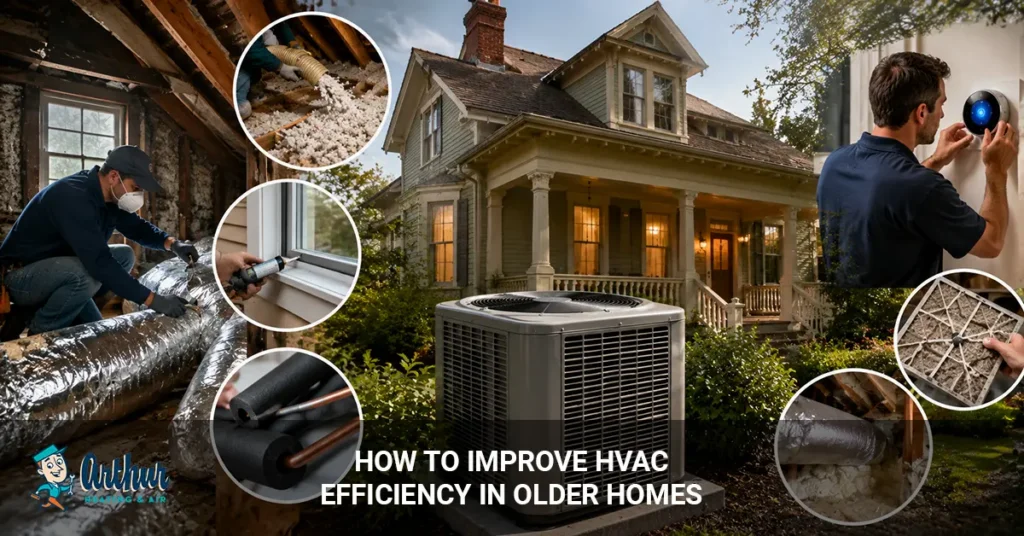
Older homes often struggle with HVAC efficiency because they were built before modern energy standards existed. Poor insulation, air leaks, aging ductwork, and older heating and cooling systems can all make it harder to keep the home comfortable.
When heated or cooled air escapes through walls, attics, windows, crawl spaces, or duct systems, the HVAC system has to work longer to maintain the indoor temperature. This increases energy bills and puts extra strain on the equipment.
Many older homes lose a large amount of energy before the air even reaches the living space. Even a well-maintained HVAC system may perform poorly if the home itself is not energy efficient.
Improving HVAC efficiency in an older home can lower utility costs, improve indoor comfort, reduce system wear, and help heating and cooling equipment last longer.
Why Older Homes Often Have HVAC Efficiency Problems
Older homes often have HVAC efficiency problems because they were built before modern energy-efficiency standards existed. Poor insulation, air leaks, outdated HVAC equipment, and aging construction materials can all make heating and cooling systems work harder than necessary.
As homes age, insulation settles, seals weaken, ductwork develops leaks, and HVAC systems become less efficient. These problems increase energy use, raise utility bills, and make indoor temperatures harder to control.
Aging Construction Materials
Older construction materials often allow more heat transfer and air leakage than modern materials. Over time, cracks, gaps, and worn seals can develop around walls, floors, windows, and ceilings.
These openings let heated and cooled air escape, which forces the HVAC system to run longer to maintain indoor comfort.
Poor Insulation
Many older homes have little insulation or outdated insulation that no longer performs well. Poor insulation allows heat to enter during summer and escape during winter.
This increases the workload on the HVAC system and leads to higher heating and cooling costs.
Air Leaks and Drafts
Air leaks are common in older homes because windows, doors, attic openings, and wall penetrations weaken over time. These leaks allow conditioned indoor air to escape while outside air enters the home.
Even small drafts can reduce HVAC efficiency and create uneven indoor temperatures.
Outdated HVAC Equipment
Older HVAC systems are usually less efficient than modern heating and cooling equipment. Aging systems may struggle with airflow, humidity control, and maintaining consistent temperatures.
Older units also tend to consume more energy and require more frequent repairs.
Leaky or Poorly Designed Ductwork
Older duct systems often lose energy because of leaks, weak insulation, or outdated airflow designs. Leaky ducts can allow heated and cooled air to escape before it reaches the living areas.
This reduces HVAC performance and forces the system to work harder to keep the home comfortable.
Signs Your Older Home Has HVAC Efficiency Issues
Older homes usually show clear signs when the HVAC system is losing efficiency. Rising energy bills, uneven temperatures, and constant system operation often indicate the home is losing heated or cooled air.
Many homeowners notice comfort problems before realizing the issue is related to insulation, air leaks, ductwork, or aging HVAC equipment.
Common warning signs include:
- Rising energy bills
- Uneven indoor temperatures
- HVAC systems running constantly
- Drafts around windows and doors
- Excess indoor humidity
- Weak airflow in certain rooms
These problems can reduce comfort, increase energy use, and put extra strain on the HVAC system.
Improve Home Insulation
Improving insulation is one of the best ways to increase HVAC efficiency in an older home. Proper insulation helps keep indoor temperatures stable by reducing heat loss during winter and heat gain during summer.
When the home holds conditioned air more effectively, the HVAC system does not need to run as often. This guide explains how insulation affects HVAC performance and energy use and why insulation upgrades improve efficiency.
Best Areas to Upgrade Insulation
Some parts of older homes lose more energy than others. Upgrading insulation in these areas can improve comfort and lower heating and cooling costs.
Important areas include:
- Attics
- Exterior walls
- Crawl spaces
- Basements
- Floors
Attic insulation is especially important because heat naturally rises and escapes through the roof.
Common Insulation Options
Several insulation materials work well in older homes. The best choice depends on the home’s structure, budget, and energy goals.
Common insulation options include:
- Fiberglass insulation
- Spray foam insulation
- Cellulose insulation
Each option helps reduce energy loss and improve HVAC performance.
Seal Air Leaks Around the Home
Sealing air leaks helps prevent heated and cooled air from escaping through gaps and cracks. Many older homes lose a large amount of energy because of hidden air leaks around doors, windows, and utility openings.
Reducing air leakage improves indoor comfort and helps the HVAC system operate more efficiently. Homeowners can also learn how home air leaks impact HVAC efficiency and increase energy waste.
Common Areas to Seal
Air leaks often develop in areas where building materials shift or wear down over time.
Common areas include:
- Windows
- Doors
- Attic openings
- Plumbing penetrations
- Electrical openings
Sealing these gaps can reduce drafts and lower energy waste.
Air Sealing Methods
Simple sealing materials can make a noticeable difference in HVAC efficiency.
Common air sealing methods include:
- Weatherstripping
- Caulking
- Foam sealants
These materials help block unwanted airflow and improve temperature control inside the home.
Upgrade or Maintain HVAC Equipment
Older HVAC equipment often loses efficiency as components wear down over time. Systems older than 10 to 15 years may struggle to maintain comfort while using more energy.
Modern high-efficiency HVAC systems provide better airflow, improved humidity control, and lower energy consumption.
Regular HVAC maintenance can also improve efficiency by keeping the system clean and operating properly. Replacing dirty filters, cleaning coils, and checking airflow can help older systems perform better and last longer.
Benefits of High-Efficiency HVAC Systems
High-efficiency HVAC systems use less energy while providing better indoor comfort. Upgrading to a modern system can lower utility bills, improve airflow, and help maintain more consistent indoor temperatures.
Older HVAC systems often work harder to heat and cool the home, especially in older houses with insulation or airflow problems. Newer systems are designed to operate more efficiently and handle temperature control more effectively.
Benefits of high-efficiency HVAC systems include:
- Lower energy use
- Better indoor comfort
- Improved humidity control
- Quieter operation
- More stable indoor temperatures
Modern HVAC systems also reduce strain on equipment components, which can help lower repair costs and extend system lifespan.
Importance of HVAC Maintenance
Routine HVAC maintenance helps heating and cooling systems run more efficiently and reduces the risk of unexpected breakdowns. Regular service keeps the system clean, improves airflow, and helps prevent small problems from becoming expensive repairs.
When HVAC equipment is not maintained properly, it often uses more energy and struggles to keep indoor temperatures consistent.
Important maintenance tasks include:
- Replacing air filters
- Cleaning coils
- Inspecting ductwork
- Checking airflow
- Testing thermostat performance
Regular maintenance also helps extend the life of the HVAC system and supports better long-term energy efficiency.
Improve Ductwork Efficiency
Ductwork problems can greatly reduce HVAC efficiency in older homes. Leaky, damaged, or poorly insulated ducts allow heated and cooled air to escape before it reaches the living areas.
When air is lost inside walls, attics, or crawl spaces, the HVAC system has to work harder to maintain comfortable indoor temperatures. This increases energy use and reduces overall system performance.
Improving ductwork efficiency helps the HVAC system distribute air more evenly throughout the home. Properly sealed and insulated ducts can improve airflow, lower energy costs, and increase indoor comfort.
Ductwork Upgrades That Improve Efficiency
Upgrading ductwork can improve HVAC efficiency by reducing air loss and improving airflow throughout the home. Older duct systems often develop leaks, poor insulation, or airflow problems that make heating and cooling less effective.
Improving the duct system helps conditioned air reach each room more efficiently and reduces unnecessary strain on the HVAC equipment.
Helpful ductwork improvements include:
- Duct sealing
- Duct insulation
- Airflow balancing
- Replacing damaged ducts
These upgrades can lower energy waste, improve indoor comfort, and help the HVAC system perform more consistently.
Install a Smart Thermostat
Smart thermostats improve HVAC efficiency by automatically adjusting temperatures based on schedules, occupancy, and daily usage patterns. They help reduce unnecessary HVAC runtime while keeping the home comfortable.
In older homes, smart thermostats can help control energy use more efficiently without requiring constant manual adjustments.
Benefits of Smart Thermostats
Smart thermostats can help homeowners:
- Lower energy bills
- Improve temperature control
- Reduce HVAC runtime
- Improve overall efficiency
Many homeowners notice lower heating and cooling costs shortly after installation.
Upgrade Windows and Doors
Older windows and doors often allow heat transfer and air leakage that reduce HVAC efficiency. Upgrading these areas helps keep indoor temperatures more stable and reduces strain on the heating and cooling system.
Modern energy-efficient windows and doors also help reduce drafts and improve overall comfort.
Energy-Efficient Window Upgrades
Modern window upgrades help reduce energy loss and improve insulation.
Popular improvements include:
- Double-pane windows
- Low-E glass
- Improved window frames
These upgrades help reduce heat loss during winter and limit heat gain during summer.
Benefits of Better Doors and Seals
Well-sealed doors help prevent drafts and reduce energy waste. Replacing worn weatherstripping and improving door insulation can improve HVAC performance and indoor comfort.
Improve Indoor Airflow
Good airflow helps HVAC systems heat and cool older homes more effectively. Poor airflow can create uneven temperatures, increase system strain, and reduce comfort throughout the home.
Simple airflow improvements can help the HVAC system operate more efficiently.
Ways to Improve Airflow
Helpful airflow improvements include:
- Replacing dirty air filters
- Keeping vents open
- Using ceiling fans
- Removing airflow obstructions
Better airflow helps conditioned air move evenly throughout the home.
Consider Zoning Systems or Mini-Splits
Zoning systems and ductless mini-splits improve efficiency by heating or cooling specific areas separately. This reduces wasted energy in unused rooms and improves temperature control.
These systems work especially well in older homes with inconsistent temperatures or outdated ductwork.
Benefits of Ductless Mini-Split Systems
Mini-split systems can provide:
- Improved efficiency
- Better temperature control
- Reduced energy waste
- Flexible installation options
They are often a good solution for older homes without modern duct systems.
Schedule a Professional Energy Audit
A professional energy audit helps identify hidden efficiency problems in older homes. These inspections often reveal issues with insulation, air leaks, ductwork, and HVAC performance.
Energy audits help homeowners focus on upgrades that provide the biggest improvement in efficiency. This guide explains what is an energy audit and how audits identify hidden energy loss.
What an Energy Audit Checks
Energy audits commonly inspect:
- Insulation problems
- Air leaks
- HVAC efficiency
- Duct leakage
- Indoor airflow
These evaluations help locate the main sources of energy loss.
Tips to Maintain HVAC Efficiency Long-Term
Maintaining HVAC efficiency requires regular upkeep and early attention to small problems. Consistent maintenance helps heating and cooling systems perform better over time.
Helpful long-term maintenance tips include:
- Replacing air filters regularly
- Scheduling annual HVAC maintenance
- Monitoring utility bills
- Sealing new air leaks quickly
- Maintaining balanced indoor humidity
Regular maintenance also helps reduce unnecessary wear on HVAC equipment.
When to Call an HVAC Professional
Homeowners should contact an HVAC professional if they notice weak airflow, uneven temperatures, rising energy bills, indoor humidity issues, or frequent system breakdowns.
Professional inspections can identify hidden performance problems and recommend the best solutions for improving HVAC efficiency.
Early repairs and upgrades often help prevent larger problems and higher energy costs later.
Final Thoughts
Older homes can improve HVAC efficiency by upgrading insulation, sealing air leaks, improving airflow, and maintaining HVAC equipment properly. In many cases, energy loss throughout the home is a bigger problem than the HVAC system itself.
Addressing insulation, ductwork, and airflow problems can lead to major improvements in comfort, efficiency, and utility costs.
With the right upgrades and regular maintenance, older homes can achieve better HVAC performance and more stable indoor temperatures year-round.