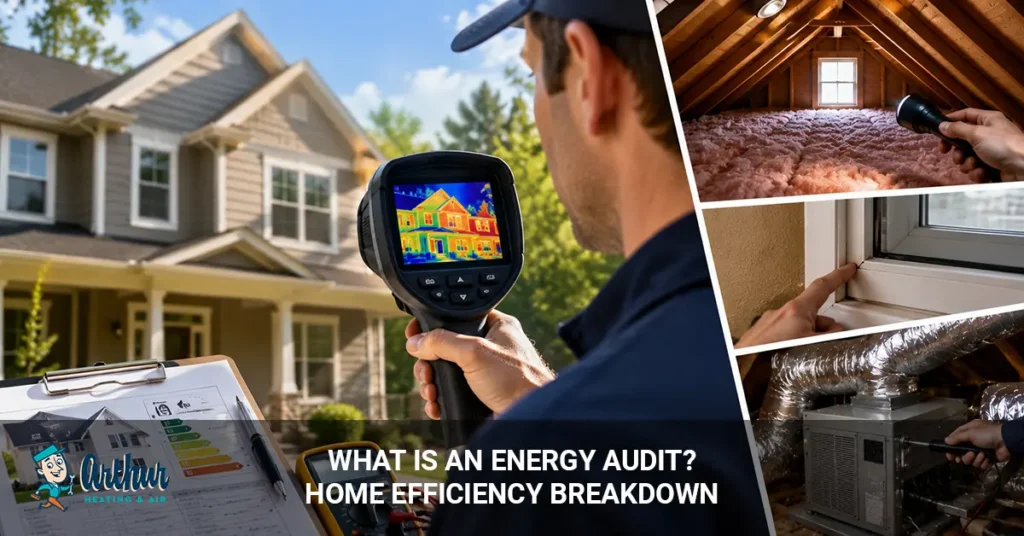
An energy audit is a professional home inspection that shows how efficiently your home uses energy. It helps identify areas where energy is being wasted and explains why heating and cooling costs may be higher than normal.
Many homeowners schedule energy audits to find problems such as air leaks, poor insulation, inefficient HVAC systems, or ductwork issues. These problems can make the home less comfortable and force heating and cooling systems to work harder than necessary.
An energy audit helps homeowners understand how their home performs and which upgrades can improve comfort, reduce energy use, and lower utility bills.
What Is an Energy Audit?
An energy audit is a detailed inspection that evaluates a home’s overall energy efficiency. It checks how well the home keeps heated or cooled air inside and identifies areas where energy may be escaping.
During the inspection, professionals evaluate insulation, airflow, HVAC performance, windows, doors, and ductwork. The goal is to find problems that increase energy waste and reduce indoor comfort.
An energy audit can also help homeowners make better decisions before replacing HVAC equipment or investing in major home improvements.
What Does an Energy Audit Check?
An energy audit checks the main areas of the home that affect energy efficiency and HVAC performance. The inspection focuses on finding heat loss, air leaks, airflow problems, and inefficient system operation.
During an audit, professionals commonly inspect insulation levels, air leaks around windows and doors, HVAC system efficiency, ductwork condition, ventilation, airflow, and indoor humidity issues.
These inspections help explain why a home may have high energy bills, uneven temperatures, poor airflow, or excessive HVAC runtime.
Why Energy Audits Matter
Energy audits help homeowners reduce energy waste and improve overall home efficiency. They identify hidden problems that may be increasing utility bills and making heating and cooling systems work harder than necessary.
By finding issues such as air leaks, poor insulation, or inefficient HVAC performance, energy audits help homeowners focus on upgrades that can deliver the biggest improvement in comfort and energy savings.
After completing recommended improvements, many homeowners notice lower utility bills, better airflow, more stable indoor temperatures, improved comfort, and less strain on HVAC equipment. Energy-efficient homes also tend to place less wear on heating and cooling systems, which can help extend equipment lifespan.
Signs Your Home May Need an Energy Audit
High energy bills and uneven indoor temperatures are some of the most common signs that a home may need an energy audit. Many homes lose energy every day without homeowners realizing it.
Other warning signs include HVAC systems running constantly, drafts around windows and doors, rooms that feel too hot or too cold, excess indoor humidity, and weak airflow in certain parts of the home.
These problems often point to insulation gaps, air leaks, ductwork issues, or HVAC inefficiencies that reduce overall energy performance and indoor comfort.
What Happens During a Home Energy Audit?
A home energy audit involves a series of inspections and tests that evaluate how efficiently your home uses energy. The process helps identify hidden areas where energy is being lost and explains why heating and cooling costs may be higher than expected.
Most professional energy audits include inspections of insulation, airflow, HVAC performance, ductwork, and air leaks. Auditors use specialized equipment to detect problems that are difficult to see during a normal home inspection.
Initial Home Inspection
A home energy audit usually begins with a general inspection of the property. The auditor checks for visible signs of energy loss, insulation problems, moisture issues, and airflow concerns throughout the home.
This first step helps identify areas that may require more detailed testing later in the audit process.
Blower Door Testing
Blower door testing helps identify air leaks throughout the home. During the test, a powerful fan removes air from the house to measure how much outside air enters through gaps and cracks.
This process helps locate hidden air leaks around windows, doors, attics, electrical openings, and plumbing penetrations. Finding and sealing these leaks can improve HVAC efficiency and reduce energy waste.
Thermal Imaging Inspection
Thermal imaging inspections help detect hidden heat loss inside walls, ceilings, and floors. Infrared cameras show temperature differences that may indicate missing insulation, air leakage, or moisture problems.
This technology allows auditors to identify energy issues that are not visible during a standard inspection. It also helps homeowners understand where the home may be losing heated or cooled air.
HVAC System Evaluation
An HVAC system evaluation checks how efficiently your heating and cooling system operates. During the inspection, auditors examine airflow, equipment condition, air filters, thermostat performance, and overall system efficiency.
Older or poorly maintained HVAC systems often use more energy and struggle to maintain consistent indoor temperatures. Identifying these issues can help homeowners improve system performance and reduce unnecessary energy use.
Ductwork Inspection
A ductwork inspection checks for air leaks, poor insulation, and airflow restrictions inside the HVAC system. Damaged or leaky ducts can waste a large amount of heated or cooled air before it reaches different rooms in the home.
Improving ductwork efficiency helps reduce energy loss, improve airflow, and maintain more consistent indoor comfort throughout the house. Homeowners can also learn about the benefits of duct sealing for improving HVAC performance.
Insulation Assessment
An insulation assessment checks whether the home has enough insulation to maintain efficient indoor temperatures. Auditors inspect areas such as attics, walls, crawl spaces, and basements where energy loss commonly occurs.
Poor insulation allows heat to enter and escape more easily, which increases HVAC workload and energy costs. This guide explains how insulation affects HVAC performance and energy use and why insulation upgrades improve efficiency. The audit helps determine whether insulation upgrades may improve home efficiency and comfort.
Common Problems Found During Energy Audits
Energy audits often uncover problems that reduce HVAC efficiency and increase utility bills. Many of these issues develop slowly over time and may not be obvious to homeowners.
Common problems found during energy audits include poor insulation, air leaks, leaky ductwork, outdated HVAC equipment, poor ventilation, and uneven airflow.
Fixing these issues can improve indoor comfort, reduce energy waste, and help heating and cooling systems operate more efficiently.
How Energy Audits Improve HVAC Efficiency
Energy audits improve HVAC efficiency by identifying the areas where the home loses the most energy. Once these problems are corrected, heating and cooling systems can maintain comfortable indoor temperatures using less energy.
Reducing air leaks and improving insulation lowers the workload placed on HVAC equipment. This helps systems run more efficiently and reduces unnecessary strain on important components.
Homes that complete energy-efficiency improvements often experience better airflow, lower HVAC runtime, improved humidity control, more stable indoor temperatures, and better overall comfort.
DIY Energy Audit vs Professional Energy Audit
Homeowners can perform simple energy checks themselves, but professional energy audits provide more accurate results and detailed recommendations. Basic DIY inspections may help identify drafts, dirty HVAC filters, visible insulation problems, and uneven room temperatures.
Professional auditors use specialized tools such as blower door systems and thermal imaging cameras to detect hidden air leaks and insulation gaps more accurately.
A professional audit also provides a detailed plan for improving home efficiency, reducing energy waste, and lowering long-term utility costs.
Energy Audit Recommendations That Save Energy
Energy audits often recommend upgrades that improve HVAC performance and reduce overall energy use. The goal is to help homeowners improve comfort while lowering heating and cooling costs.
Common recommendations include upgrading insulation, sealing air leaks, improving ductwork efficiency, replacing outdated HVAC systems, and installing smart thermostats.
Many homeowners also explore top energy-efficient HVAC upgrades for your home to improve long-term efficiency. These improvements can help reduce energy waste and support better long-term HVAC performance.
How Much Does a Home Energy Audit Cost?
The cost of a home energy audit depends on factors such as home size, testing methods, and HVAC system complexity. More advanced audits that include thermal imaging and blower door testing may cost more because they provide a more detailed analysis of energy loss.
Many homeowners find that the long-term savings from recommended efficiency upgrades outweigh the initial cost of the audit.
When Should Homeowners Schedule an Energy Audit?
Homeowners should schedule an energy audit when they notice rising energy bills, uneven indoor temperatures, or ongoing comfort problems. An audit can help identify hidden issues that may be reducing HVAC efficiency.
Energy audits are especially helpful before replacing HVAC equipment, after unusually high utility bills, before major home renovations, or in older homes with outdated insulation and airflow problems.
Finding energy loss early can help homeowners avoid unnecessary HVAC expenses and improve home efficiency more effectively. Many homeowners schedule audits to help lower heating and cooling bills and reduce ongoing energy waste.
Final Thoughts
An energy audit helps homeowners understand how efficiently their home uses energy and where energy loss may be occurring. It identifies issues with insulation, airflow, HVAC systems, and ductwork that can affect comfort and increase utility costs.
Fixing the problems found during an energy audit can improve indoor comfort, lower energy bills, and reduce strain on heating and cooling equipment.
Before investing in major HVAC upgrades, homeowners should consider an energy audit to identify the most effective ways to improve home efficiency and long-term HVAC performance.