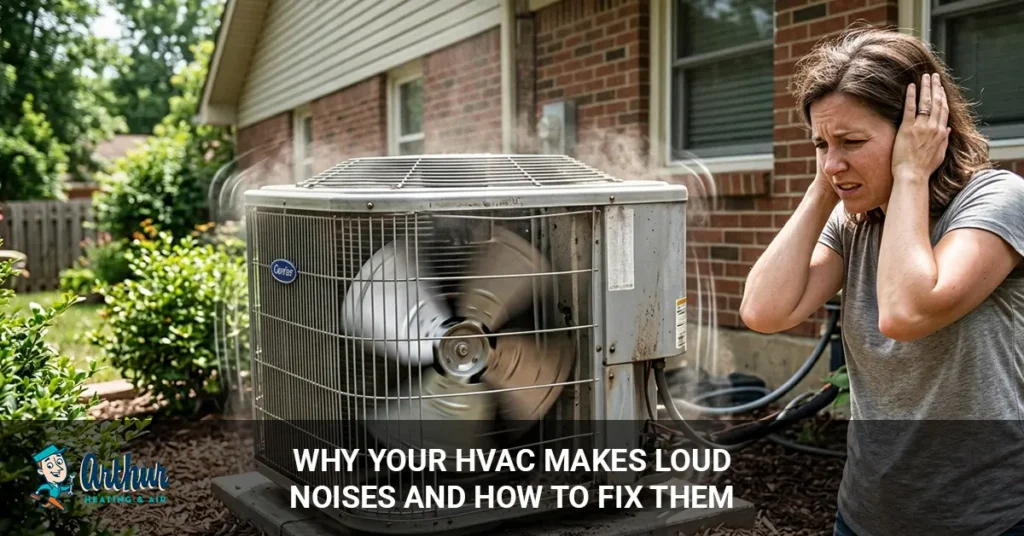
Loud noises from your HVAC system usually mean something inside the unit needs attention. While some sounds are normal when the system starts or shuts down, noises like banging, buzzing, grinding, squealing, or rattling often point to airflow problems, loose parts, worn components, or electrical issues.
Many homeowners ignore strange HVAC noises at first because the system still heats or cools the home. But unusual sounds rarely fix themselves. In many cases, the noise gets worse over time and leads to more expensive repairs if the problem is ignored.
Some HVAC noises are minor and easy to fix, like a dirty air filter or loose vent cover. Others can signal serious problems such as failing motors, damaged blower parts, refrigerant issues, or electrical failures that may shut the system down completely.
This guide explains the most common HVAC noises, what causes them, how to fix them, and when it is time to call an HVAC technician before the damage becomes more serious.
Is It Normal for an HVAC System to Make Noise?
Yes, some HVAC noise is completely normal, but loud or unusual sounds often mean there is a problem inside the system. The key is paying attention to sounds that suddenly appear, get louder, or happen along with other warning signs.
Some HVAC Sounds Are Normal
Most heating and cooling systems make small noises during normal operation. Common harmless HVAC sounds include:
- Light airflow through vents
- Soft clicking during startup or shutdown
- A low humming sound while running
- Mild popping from duct expansion
These sounds are usually quiet, short, and consistent. They should not become extremely loud or disruptive.
Loud or Sudden Noises Usually Signal a Problem
Loud HVAC noises often happen when parts inside the system become loose, worn out, blocked, or damaged. Common causes include:
- Restricted airflow
- Loose ductwork
- Electrical problems
- Failing motors
- Broken internal components
Ignoring these sounds can lead to bigger HVAC repairs later. Small issues often become more expensive when the system continues running under stress.
Signs the Noise May Be Serious
Some HVAC noises should never be ignored. Call an HVAC technician if:
- The noise gets louder over time
- Burning smells appear
- Airflow becomes weak
- The system shuts off unexpectedly
- Circuit breakers start tripping
- Grinding or banging sounds occur
These warning signs may point to overheating parts, electrical issues, or serious mechanical failure inside the HVAC system.
Banging Noises From the HVAC System
Banging noises from an HVAC system usually mean a loose, broken, or damaged part is moving inside the unit. In some cases, the sound may also come from ductwork or delayed furnace ignition.
What a Banging Sound Usually Means
A loud banging noise often points to a mechanical problem inside the HVAC system. Common causes include:
- Loose blower components
- Broken internal parts
- Expanding or shifting ductwork
- Delayed furnace ignition
The noise may happen when the system starts, shuts down, or while it is running. Some homeowners describe it as a loud pop, boom, or metal banging sound.
Furnace Banging Noises
Gas furnaces sometimes make banging noises because of delayed ignition. This happens when gas builds up inside the furnace before the burners ignite properly.
Dirty burners are one of the most common causes of delayed ignition. When ignition is delayed, the furnace may create a small booming sound as the gas finally lights.
Older ductwork can also create loud popping or banging noises as metal expands and contracts during heating cycles. Homeowners hearing unusual furnace sounds can also review these strange heater noises and what they may mean for the heating system. These sounds are usually more noticeable in colder weather.
Why Banging Noises Should Not Be Ignored
Banging noises should never be ignored because loose or damaged parts can continue harming the HVAC system while it runs.
Over time, the problem may lead to:
- More expensive HVAC repairs
- Reduced system performance
- Damaged blower components
- Furnace safety issues
If the banging sound becomes louder, happens more often, or comes with burning smells or weak airflow, schedule an HVAC inspection as soon as possible.
Many loud furnace sounds are connected to ignition issues, airflow restrictions, or worn components. These common furnace problems may help explain the cause.
Buzzing Sounds Coming From the HVAC Unit
Buzzing sounds from an HVAC system usually point to an electrical or mechanical problem inside the unit. While a light humming sound can be normal, loud or constant buzzing often means a component is loose, damaged, or starting to fail.
Common Causes of HVAC Buzzing
Several HVAC problems can create buzzing noises, including:
- Loose wiring connections
- Failing capacitors
- Refrigerant leaks
- Loose fan blades
- Electrical problems inside the unit
As these parts continue wearing down, the buzzing sound often becomes louder and more noticeable. This guide on AC clicking, buzzing, and humming noises explains what different HVAC sounds may indicate and when repairs are necessary.
In many cases, the system may still run normally at first, which causes homeowners to delay repairs. But ignoring the sound can lead to larger HVAC damage over time.
Outdoor AC Buzzing Problems
Outdoor air conditioning units commonly make buzzing noises when airflow becomes blocked or parts start loosening.
Common outdoor AC causes include:
- Dirty condenser coils
- Debris trapped near the fan
- Loose access panels
- Failing condenser fan motors
Leaves, dirt, and grass buildup around the condenser can also strain the system and increase noise levels during operation.
When Buzzing Becomes Dangerous
Buzzing noises should never be ignored if they happen with other warning signs. Call an HVAC technician immediately if the buzzing comes with:
- Burning smells
- Breaker trips
- Smoke
- System overheating
- Weak cooling or airflow
These symptoms may indicate a serious electrical problem that could damage the HVAC system or create a fire risk if the unit keeps running.
Squealing or Screeching HVAC Noises
Squealing or screeching noises from an HVAC system usually mean moving parts are wearing out or struggling to operate properly. These sounds often come from the blower motor, fan motor, belts, or compressor.
What Causes Squealing Sounds
Several HVAC problems can create high-pitched squealing noises, including:
- Worn blower belts
- Motor bearing problems
- High internal pressure
- Failing fan motors
The noise may start quietly and become louder over time as the damaged parts continue wearing down.
In many cases, squealing sounds happen when the HVAC system first starts up or while it is running continuously.
Furnace Squealing Noises
Older furnaces with belt-driven blower systems often squeal when the blower belt becomes loose, cracked, or worn out.
Blower motor bearings can also create sharp squealing sounds as they begin failing. If the bearings wear down too much, the motor may eventually stop working completely.
Homeowners may also notice:
- Weak airflow
- Burning smells
- Loud humming noises
- Uneven heating
AC Screeching Sounds
Air conditioners sometimes produce screeching noises because of compressor problems or failing condenser fan motors.
A damaged fan motor may struggle to spin properly, while compressor issues can create loud pressure-related screeching sounds during operation.
Loud screeching noises should be inspected quickly because damaged motors and compressors can fail completely if the system keeps running.
Rattling Noises From Vents or Ductwork
Rattling noises from your HVAC system usually mean something has become loose inside the ductwork, vents, or HVAC unit. These sounds may start small but often get louder as the system continues running.
Loose Ductwork and Vent Covers
Loose ductwork and vent covers are some of the most common causes of rattling HVAC noises. As air moves through the system, metal ducts naturally vibrate during operation.
Over time, this vibration can loosen:
- Vent covers
- Duct connections
- Screws and fasteners
- Access panels
The rattling sound may become louder when airflow increases or when the HVAC system first starts up.
Debris Inside the HVAC System
Loose debris inside the HVAC unit or ductwork can also create rattling sounds. Common examples include:
- Dirt and dust buildup
- Loose screws
- Small objects inside vents
- Broken HVAC components
In some cases, debris may move around inside the ductwork while air is flowing through the system.
Why Rattling May Get Worse
Rattling noises often become worse because constant vibration continues loosening parts over time.
If ignored, small loose components may eventually:
- Damage nearby HVAC parts
- Reduce system efficiency
- Create airflow problems
- Lead to larger repairs
Fixing rattling noises early can help prevent more expensive HVAC damage later.
Clicking Sounds That Won’t Stop
Constant clicking noises from an HVAC system usually point to an electrical problem, thermostat issue, or failing component inside the unit. While a small click during startup is normal, nonstop clicking is not.
Normal HVAC Clicking vs Problem Clicking
A brief clicking sound when the HVAC system starts or shuts down is completely normal. The thermostat and electrical relays make small clicks as the system turns on and off.
But repeated clicking that continues while the system runs often means something is wrong. If the clicking becomes constant or gets louder over time, the HVAC system may be struggling to start or operate properly.
Possible Causes of Repeated Clicking
Several HVAC problems can create nonstop clicking noises, including:
- Faulty thermostats
- Relay problems
- Electrical control board issues
- Failing capacitors
These issues can interrupt communication inside the HVAC system and prevent components from turning on correctly.
In some cases, the system may repeatedly try to start but fail each time, creating a constant clicking sound.
When Clicking Requires Repair
You should call an HVAC technician if clicking noises happen with:
- HVAC startup failure
- Short cycling
- Burning smells
- Weak airflow
- System shutdowns
Electrical HVAC problems often become worse if they are not repaired quickly. Early repairs can help prevent larger system damage and reduce the risk of complete HVAC failure.
Electrical problems that cause clicking sounds may eventually prevent the HVAC system from starting properly. This HVAC not turning on troubleshooting guide covers several related issues.
Whistling or High-Pitched Airflow Noises
Whistling or high-pitched HVAC noises usually happen because airflow is restricted somewhere in the system. These sounds often come from blocked vents, dirty filters, or leaking ductwork.
Restricted Airflow Problems
Restricted airflow is one of the most common causes of whistling HVAC noises. When air struggles to move through the system, pressure builds up and creates a high-pitched sound.
Common airflow problems include:
- Dirty air filters
- Closed or blocked vents
- Clogged return vents
- Crushed or blocked ductwork
When airflow becomes restricted, the HVAC system has to work harder to heat or cool the home. This extra strain can reduce efficiency and increase wear on system components.
Duct Leaks Causing Whistling Sounds
Small duct leaks can also create whistling noises. As air escapes through narrow openings or loose duct connections, it creates a sharp airflow sound.
Older duct systems are especially vulnerable to:
- Loose duct joints
- Small air leaks
- Damaged duct seals
In some homes, the whistling noise becomes louder when the HVAC system runs at higher speeds.
How Airflow Problems Affect HVAC Efficiency
Poor airflow can affect both comfort and HVAC performance. Common problems include:
- Higher energy bills
- Uneven room temperatures
- Extra strain on HVAC components
- Reduced heating and cooling performance
Replacing a dirty air filter is often the fastest and easiest way to improve airflow and reduce whistling noises. Replacing HVAC filters regularly helps reduce airflow restrictions and prevent unnecessary system strain. Learn how often to replace HVAC air filters.
Grinding Noises From the HVAC System
Grinding noises from an HVAC system usually mean metal parts inside the unit are rubbing against each other. This type of sound is often serious and should be inspected as soon as possible.
What Grinding Sounds Usually Mean
Grinding noises often happen when internal HVAC components become worn out or damaged. Common causes include:
- Worn motor bearings
- Damaged blower motors
- Loose internal components
- Metal parts rubbing together
The sound may start quietly and become louder as the damaged parts continue wearing down.
In many cases, grinding noises come from the blower motor or fan assembly while the system is running.
Why Grinding Noises Are Serious
Grinding sounds usually point to major wear inside the HVAC system. If the system keeps running, damaged parts can create even more stress on motors and moving components.
Ignoring grinding noises may lead to:
- Complete blower motor failure
- Expensive HVAC repairs
- Reduced airflow
- System overheating
- Total HVAC shutdown
The longer the problem continues, the higher the risk of serious component damage.
What Homeowners Should Do Immediately
If you hear grinding noises from your HVAC system, turn the system off immediately. Running the unit longer may cause additional damage to the motor or other internal parts.
You should:
- Shut off the HVAC system
- Avoid restarting the unit
- Contact an HVAC technician right away
Fast repairs can help prevent complete motor failure and reduce the cost of larger HVAC repairs later.
Loud HVAC Noises During Startup or Shutdown
Some HVAC noise during startup or shutdown is normal, but loud banging, popping, or vibrating sounds may mean something inside the system needs repair. These noises often happen when parts expand, loosen, or fail to operate correctly.
Expanding and Contracting Ductwork
Metal ductwork naturally expands and contracts as temperatures change inside the HVAC system. This movement can create popping, knocking, or ticking sounds when the heat or air conditioning turns on and off.
Older duct systems usually make these sounds more often because the metal becomes looser over time.
In many homes, mild duct noise is harmless. But extremely loud popping or repeated banging may point to poorly supported or damaged ductwork.
Delayed Furnace Ignition
Delayed ignition is a common cause of loud banging noises in gas furnaces. This happens when gas builds up before the burners ignite properly.
When ignition finally happens, the furnace may create a sudden booming or banging sound.
Dirty burners are one of the most common causes of delayed ignition. If the problem continues, it can damage furnace components and create unsafe operating conditions.
A gas furnace making loud ignition noises should be inspected quickly by an HVAC technician.
Loose Mechanical Components
Loose HVAC parts can also create loud startup or shutdown noises. Common loose components include:
- Blower assembly parts
- Fan components
- Access panels
- Mounting screws
As the system starts running, vibration may cause these parts to shake or bang against nearby components.
Regular HVAC maintenance helps catch loose parts early before they lead to larger mechanical problems or expensive repairs.
Why Your Air Conditioner Makes Noise Outside
Outdoor air conditioners naturally make some noise while running, but loud or unusual sounds often mean something inside the unit needs attention. Noises coming from the outdoor condenser may point to worn parts, airflow problems, or failing electrical components.
Noisy Condenser Fan Motors
Worn condenser fan motors are one of the most common causes of loud outdoor AC noises. As the motor wears down, it may begin creating:
- Buzzing sounds
- Grinding noises
- High-pitched squealing
These noises often become worse during very hot weather because the AC system runs longer and works harder to cool the home.
If the fan motor continues failing, the outdoor unit may eventually stop cooling properly.
Loose Outdoor Panels
Loose condenser panels can also create rattling or vibrating noises while the air conditioner runs.
Over time, normal system vibration may loosen:
- Access panels
- Screws
- Protective covers
In some cases, simply tightening loose screws can reduce minor rattling sounds quickly.
Compressor-Related Sounds
The compressor is one of the most important parts of the air conditioning system. When it starts failing, it may create:
- Loud humming
- Buzzing noises
- Hard-start clicking sounds
Compressor problems are usually more serious than minor fan or panel issues and often require professional HVAC repair.
Ignoring compressor noise may eventually lead to complete AC system failure.
Debris Trapped Inside the Outdoor Unit
Leaves, sticks, dirt, and other debris trapped inside the outdoor condenser can interfere with fan movement and airflow.
Blocked airflow may force the system to work harder and create unusual noises during operation.
Keeping the outdoor AC unit clean helps:
- Improve airflow
- Reduce strain on components
- Lower noise levels
- Improve cooling performance
Regular outdoor unit cleaning is one of the easiest ways to prevent airflow and noise problems.
What You Should Do if Your HVAC Is Making Loud Noises
If your HVAC system is making loud noises, acting quickly can help prevent bigger repairs and reduce the risk of system damage. Some noises are minor, but others may signal serious mechanical or electrical problems.
Step 1: Identify the Type of Noise
Start by listening carefully to the sound and where it comes from. Different HVAC noises often point to different problems.
For example:
- Banging may mean loose or broken parts
- Buzzing often points to electrical issues
- Grinding may indicate motor damage
- Whistling usually means restricted airflow
Also pay attention to when the noise happens, such as during startup, shutdown, or while the system runs continuously.
Step 2: Check the Air Filter
Dirty air filters are one of the most common causes of airflow problems and unusual HVAC noises.
A clogged filter can restrict airflow and force the system to work harder than normal. Replace the filter if it looks dirty, dusty, or blocked.
In many cases, changing the filter improves airflow and reduces noise quickly.
Step 3: Inspect Vents and Registers
Make sure all vents and registers are fully open and not blocked by:
- Furniture
- Rugs
- Curtains
- Dust buildup
Blocked vents can increase air pressure inside the system and create whistling, rattling, or vibration noises.
Step 4: Turn Off the System if Noises Worsen
Shut the HVAC system down immediately if you hear:
- Grinding noises
- Loud banging
- Electrical buzzing
- Screeching sounds
- Metal scraping noises
Running the system while damaged parts continue moving can make the problem much worse.
Step 5: Call an HVAC Technician
Persistent HVAC noises usually require professional inspection and repair. An HVAC technician can safely identify the source of the problem and prevent additional damage to the system.
Early repairs are often less expensive than waiting for a major HVAC component to fail completely.
When to Call an Emergency HVAC Technician
Some HVAC noises are signs of serious electrical or mechanical problems that need immediate repair. If the system starts making loud or unusual sounds along with other warning signs, it is safest to shut the unit down and call an HVAC technician right away.
Call an emergency HVAC technician immediately if you notice:
- Loud grinding noises
- Strong banging sounds
- Burning smells
- Smoke or sparks
- Repeated breaker trips
- HVAC system shutting off unexpectedly
- Electrical buzzing with overheating smells
These symptoms often point to dangerous problems such as failing motors, damaged electrical parts, loose components, or overheating inside the HVAC system.
Do not continue running the system if the noise becomes louder or the unit starts showing signs of electrical failure. Fast repairs can help prevent larger HVAC damage, reduce fire risks, and protect expensive system components from complete failure.
How to Prevent Loud HVAC Noises
Regular HVAC maintenance is one of the best ways to prevent loud noises and avoid expensive repairs. Following a full HVAC maintenance checklist can help homeowners reduce HVAC noise problems, airflow issues, and unexpected system breakdowns.
Keeping the system clean and fixing small problems early helps heating and cooling equipment run more smoothly and quietly.
Replace Air Filters Regularly
Clean air filters improve airflow and reduce strain on HVAC components. Dirty filters force the system to work harder, which can lead to whistling, buzzing, and overheating noises.
Most HVAC filters should be replaced every 1 to 3 months, depending on:
- System usage
- Pets in the home
- Indoor air quality
- Filter type
Regular filter changes also help improve heating and cooling performance.
Schedule Annual HVAC Maintenance
Professional HVAC maintenance helps catch loose, worn, or failing parts before they become serious problems.
During a tune-up, technicians inspect:
- Motors
- Fan blades
- Electrical connections
- Blower components
- Airflow performance
Annual maintenance can help prevent breakdowns, reduce noise problems, and extend the life of the HVAC system.
Keep Outdoor Units Clean
Leaves, dirt, grass, and debris around the outdoor condenser unit can block airflow and create unusual noises.
Keeping the outdoor unit clean helps:
- Improve airflow
- Reduce strain on components
- Lower operating noise
- Improve cooling performance
Make sure there is enough open space around the condenser for proper airflow.
Fix Small HVAC Issues Early
Small HVAC noises often become larger and more expensive repairs if ignored for too long.
Loose parts, worn belts, airflow restrictions, and electrical problems usually get worse over time. Fixing these issues early can help prevent serious HVAC damage later.
Inspect Ductwork Periodically
Loose or damaged ductwork can create rattling, popping, and airflow noises throughout the home.
Regular duct inspections help identify:
- Loose duct connections
- Air leaks
- Damaged vents
- Airflow restrictions
Properly sealed ductwork improves HVAC efficiency and helps reduce unnecessary system noise.
Frequently Asked Questions
Why is my HVAC suddenly so loud?
An HVAC system often becomes loud because of loose parts, restricted airflow, worn components, or failing motors. Dirty air filters, damaged blower parts, and loose ductwork are some of the most common causes.
Is a noisy HVAC system dangerous?
Some HVAC noises are harmless, but loud grinding, banging, buzzing, or electrical sounds may indicate serious problems inside the system. Noises combined with burning smells, smoke, or breaker trips should be inspected immediately.
Why does my furnace make a banging noise?
Furnace banging noises often happen because of delayed ignition, loose internal parts, or expanding ductwork. Dirty burners are a common cause of delayed ignition in gas furnaces.
What causes an AC unit to buzz loudly?
A loud buzzing AC unit may have electrical problems, failing capacitors, loose wiring, damaged fan motors, or loose outdoor components. Buzzing sounds should be inspected if they become louder over time.
Should I turn off my HVAC if it makes grinding noises?
Yes. Grinding noises usually mean metal parts are rubbing together inside the HVAC system. Continuing to run the unit may cause serious motor damage or complete system failure.
Can dirty air filters cause HVAC noise?
Yes. Dirty air filters restrict airflow and can create whistling, rattling, buzzing, and overheating problems inside the HVAC system. Replacing the filter often improves airflow and reduces noise quickly. Dirty filters can also reduce heating performance and increase system strain. This guide explains how dirty air filters affect your heater.
Final Thoughts
Loud HVAC noises are often early warning signs that something inside the system needs repair or maintenance. While some sounds are normal during startup or shutdown, noises like grinding, banging, buzzing, squealing, or rattling usually mean there is a problem that should not be ignored.
Many HVAC noise problems start small but become more expensive over time if the system continues running with damaged or loose components. Early repairs can help prevent major breakdowns, improve system performance, and extend the life of your heating and cooling equipment.
If your HVAC system suddenly becomes louder than normal or starts making unusual sounds, it is best to schedule professional HVAC service before the problem gets worse.