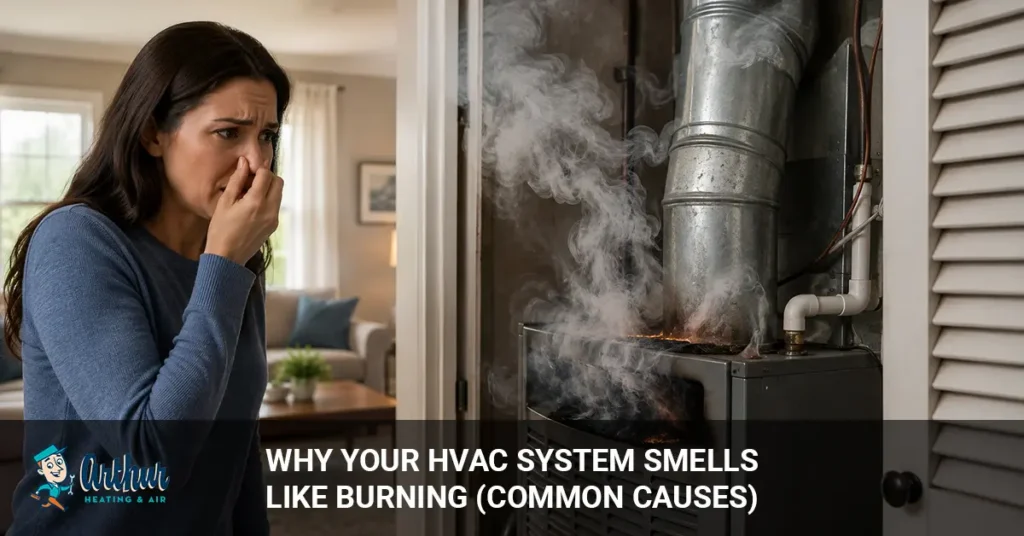
A burning smell coming from your HVAC system can be harmless, or it can signal a serious problem that needs fast attention. In many homes, the smell happens when the heater runs for the first time after sitting unused for months. Dust burns off the internal parts and creates a temporary odor that usually goes away within a few hours.
But not every burning smell is normal. If your HVAC system smells like burning plastic, hot wires, or smoke, the problem could be electrical overheating, a failing motor, restricted airflow, or damaged components inside the system.
Many homeowners also notice other warning signs at the same time. Weak airflow, strange noises, tripped breakers, or smoke from vents often point to a larger HVAC issue that should not be ignored.
This guide explains the most common reasons your HVAC system smells like burning, what smells are dangerous, and when you should call an HVAC professional before the problem gets worse.
Is a Burning Smell From an HVAC System Dangerous?
Yes, a burning smell from your HVAC system can be dangerous depending on the cause and how long the smell lasts. Some odors are harmless and temporary, while others may signal overheating electrical parts, damaged wiring, or failing HVAC components.
Sometimes the Smell Is Harmless
A light burning dust smell is common when you turn on the heat for the first time after months of not using it. Dust collects on heating components during warmer seasons. When the furnace or heat pump starts running again, the dust burns off and creates a temporary odor.
This type of smell is usually mild and disappears within a few hours. Homeowners experiencing seasonal heater odors can also read this guide about why a heater smells like burning and when the smell may signal a larger heating problem. Opening windows and replacing the air filter can help clear the smell faster.
Sometimes It Signals a Serious HVAC Problem
A strong burning smell that smells like burnt plastic, hot metal, or electrical wiring is more serious. This often points to overheating motors, damaged electrical parts, failing capacitors, or melting wire insulation inside the HVAC system.
Electrical problems should never be ignored because they can damage the system and may even create a fire risk if the overheating continues.
Warning Signs You Should Never Ignore
Call an HVAC technician right away if you notice:
- Smoke coming from vents or the HVAC unit
- A strong electrical burning smell
- Burning plastic or melting odors
- Breakers tripping repeatedly
- HVAC system shutting off unexpectedly
- Sparks near the equipment
- Buzzing, popping, or crackling sounds
These warning signs often mean there is overheating or an electrical failure inside the HVAC system that needs immediate repair.
Dust Burning Off the Furnace or Heating System
Dust buildup is one of the most common and harmless reasons an HVAC system smells like burning. This usually happens when you turn on the heat for the first time after months of not using it.
Why This Happens
Dust naturally collects inside your heating system during spring and summer. It settles on the furnace heat exchanger, burners, heating elements, and inside the ductwork. When the heater starts running again, the dust burns off and creates a temporary burning smell.
This is very common during the first cold days of the year when homeowners switch their heating system back on.
What the Smell Usually Resembles
Dust burning off the HVAC system usually smells like:
- Dry burning dust
- A light smoky odor
- A mild burning smell near vents
The smell is normally light and does not smell strongly electrical, chemical-like, or like melting plastic.
How Long the Smell Should Last
In most homes, the smell disappears within a few hours. If the system has a lot of dust buildup, it may last a little longer during the first heating cycle.
You can help remove the smell faster by:
- Opening windows for ventilation
- Replacing dirty air filters
- Cleaning vents and registers
When It Becomes a Problem
A burning smell may point to a larger HVAC issue if:
- The smell lasts longer than 24 hours
- Smoke becomes visible
- The odor gets stronger over time
- Airflow becomes weak
- The heating system struggles to warm the home
Persistent burning smells usually mean the problem is more serious than simple dust buildup and should be inspected by an HVAC technician.
Dirty Air Filters Can Cause Overheating
A dirty HVAC air filter can cause overheating by restricting airflow inside the system. When airflow becomes blocked, the furnace and blower motor have to work harder, which can create a burning smell.
How Clogged Filters Restrict Airflow
Your HVAC system needs steady airflow to heat and cool your home properly. Over time, the air filter collects dust, dirt, pet hair, and other debris. Once the filter becomes clogged, air can no longer move through the system easily.
This added strain forces the blower motor and heating components to run hotter than normal. As internal temperatures rise, you may start noticing a burning smell coming from the vents or furnace area.
Restricted airflow can also shorten the lifespan of HVAC components if the problem is ignored for too long. Dirty filters can also affect furnace performance, airflow, and heating efficiency. Learn how dirty air filters affect your heater and why regular replacement matters.
Signs Your Air Filter May Be the Problem
A clogged HVAC filter often causes noticeable warning signs, including:
- Weak airflow from vents
- Rooms feeling hot or stuffy
- Higher energy bills
- Furnace overheating
- Burning smells near vents
- HVAC system running longer than normal
In many homes, poor airflow problems start with a filter that has not been replaced regularly.
How Often HVAC Filters Should Be Replaced
Most HVAC air filters should be replaced every 1 to 3 months. Homes with pets, allergies, or heavy HVAC use may need more frequent filter changes.
How often you replace the filter depends on:
- Number of pets in the home
- Indoor air quality
- Allergy concerns
- HVAC usage
- Type of air filter installed
Replacing the filter regularly improves airflow, helps the system run more efficiently, and reduces the risk of overheating problems. This guide explains how often to replace HVAC air filters based on pets, allergies, indoor air quality, and HVAC usage.
Electrical Problems Inside the HVAC System
Electrical problems are one of the most serious reasons an HVAC system smells like burning. These issues can damage major components and may even create a fire hazard if the system keeps running.
Burning Electrical Smells Are Serious
A strong electrical burning smell usually means something inside the HVAC system is overheating. Many homeowners describe the odor as:
- Burning plastic
- Hot wires
- Melting rubber
- Burnt electronics
These smells often happen when electrical parts get too hot or wire insulation starts melting inside the unit.
Unlike normal dust smells, electrical odors are usually stronger, sharper, and do not go away quickly.
Common Electrical HVAC Problems
Several HVAC electrical problems can create burning odors, including:
- Loose wiring connections
- Failing capacitors
- Short circuits
- Damaged contactors
- Overheated control boards
- Worn or melted wire insulation
As these parts overheat, nearby materials may begin burning or melting, which makes the smell even stronger.
Signs of Electrical Overheating
Electrical HVAC problems often come with other warning signs, such as:
- Buzzing or humming noises
- Flickering lights
- Breakers tripping repeatedly
- System shutting off unexpectedly
- Burning smells that continue getting worse
These symptoms usually mean the HVAC system needs immediate attention before more damage happens. Buzzing, humming, or clicking sounds often happen alongside electrical overheating problems. This AC clicking, buzzing, and humming guide explains what those noises may mean.
What Homeowners Should Do Immediately
If you think the burning smell is electrical, turn off the HVAC system right away. Continuing to run the system can damage expensive components and increase the risk of fire.
You should:
- Turn off the HVAC system immediately
- Shut off power at the breaker if necessary
- Avoid restarting the system
- Call an HVAC technician for inspection and repair
Fast action can help prevent larger electrical problems and keep your home safer.
A Blower Motor May Be Overheating
An overheating blower motor can cause a strong burning smell coming from your HVAC system. When the motor works too hard or starts wearing out, it creates excess heat that may produce a burning odor near vents or inside the furnace.
What the Blower Motor Does
The blower motor moves heated or cooled air through your ductwork and into your home. Without it, your HVAC system cannot circulate air properly.
Every time your heating or cooling system turns on, the blower motor pushes air through the vents to keep rooms comfortable.
Why Blower Motors Overheat
Blower motors usually overheat because airflow becomes restricted or internal parts start wearing down. Common causes include:
- Dirt and dust buildup
- Lack of lubrication
- Clogged air filters
- Restricted airflow
- Aging motor components
- Worn bearings
When the motor cannot run efficiently, it works harder and generates too much heat during operation.
Signs of a Failing Blower Motor
A failing blower motor often gives warning signs before it stops working completely. Common symptoms include:
- Burning smells from vents
- Squealing or grinding noises
- Weak airflow
- HVAC system running constantly
- Humming sounds from the unit
- Uneven heating or cooling
If ignored, the blower motor may eventually fail and prevent the HVAC system from moving air through the home.
Burning Plastic Smell From Vents
A burning plastic smell coming from your HVAC vents is usually a sign of an overheating electrical or mechanical problem. Unlike normal dust smells, this odor is stronger, sharper, and should never be ignored.
Possible Causes of Melting Plastic Odors
Burning plastic smells often happen when electrical parts or nearby materials become too hot inside the HVAC system. Common causes include:
- Melting wire insulation
- Overheated electrical components
- Plastic parts touching hot surfaces
- Failing blower motors
- Shorted or damaged wiring
These smells usually have a sharp, chemical-like odor and may become stronger while the system is running.
Why This Smell Should Not Be Ignored
A burning plastic smell can point to serious HVAC problems that may become dangerous if the system keeps running. Overheating components can lead to:
- Electrical fires
- Damage to HVAC parts
- Complete system failure
- Smoke or harmful fumes inside the home
In many cases, the smell becomes stronger as the overheating continues.
What to Do Next
If you smell burning plastic from your vents, turn off the HVAC system immediately. Running the system longer may damage expensive components or create a fire risk.
You should:
- Shut off the HVAC system
- Avoid restarting the unit
- Check for smoke or unusual noises
- Contact an HVAC technician right away
Quick repairs can often prevent larger HVAC damage and improve safety inside the home.
Furnace Problems That Cause Burning Smells
Both gas and electric furnaces can create burning smells when internal parts overheat or start failing. Some furnace odors are minor, but others may signal serious safety problems that need immediate repair.
Cracked Heat Exchanger
A cracked heat exchanger can cause unusual furnace smells and create dangerous safety risks. In gas furnaces, cracks may allow harmful gases, including carbon monoxide, to leak into the home.
This problem is serious and should always be inspected by a licensed HVAC professional. Heat exchanger damage can worsen over time and may eventually require furnace replacement.
Overheated Furnace Components
Several furnace parts can overheat and produce burning odors, including:
- Burners
- Belts
- Blower motors
- Electrical wiring
- Control boards
Older furnaces are more likely to develop overheating problems because components naturally wear out over time.
Restricted airflow, dirty filters, and lack of maintenance can also increase furnace temperatures and put extra stress on internal parts.
Gas Furnace Warning Signs
Some furnace warning signs should never be ignored. Call for HVAC service immediately if your gas furnace produces:
- Strong burning smells
- Yellow or flickering burner flames
- Loud banging or popping noises
- Frequent system shutdowns
- Smoke near the furnace
These symptoms may indicate unsafe furnace operation or failing components inside the system.
When Furnace Repairs Become Urgent
Emergency furnace repair may be necessary when safety risks are involved. Turn off the system and call a professional right away if:
- Smoke appears from the furnace or vents
- Burning smells become stronger
- The furnace repeatedly shuts off
- Carbon monoxide alarms activate
- You notice electrical burning odors
Fast repairs can help prevent furnace damage, protect indoor air quality, and reduce safety risks inside the home.
Can an Air Conditioner Cause a Burning Smell?
Yes, an air conditioner can cause a burning smell when electrical parts overheat or mechanical components start failing. While many people associate burning odors with furnaces, AC systems can also produce strong burnt or electrical smells during operation.
AC Electrical Issues
Electrical problems are one of the most common reasons an air conditioner smells like burning. Common AC electrical issues include:
- Overheated compressors
- Failed capacitors
- Damaged wiring
- Burned contactors
These problems often create a strong electrical smell that may resemble burning plastic, hot wires, or burnt electronics.
If the odor becomes stronger while the AC is running, the system should be turned off and inspected by an HVAC technician. Air conditioners with electrical overheating problems may also struggle to start properly. This AC not turning on troubleshooting guide covers several related HVAC issues.
Frozen Evaporator Coils Causing Strain
Frozen evaporator coils can also lead to burning smells. When coils freeze, airflow becomes restricted and the HVAC system has to work harder to cool the home.
This extra strain can overheat motors, electrical parts, and other internal components. Homeowners may notice:
- Weak airflow
- Warm air from vents
- Ice buildup near the indoor unit
- Burning or overheating smells
Dirty filters and blocked airflow are common causes of frozen coils.
Outdoor Unit Problems
Problems with the outdoor condenser unit can also create burning odors. Debris such as leaves, dirt, and grass can block airflow around the unit and trap heat inside the system.
In some cases, damaged outdoor electrical components may overheat and produce a burnt smell during operation.
Signs of outdoor AC problems may include:
- Buzzing noises
- Reduced cooling performance
- Burning smells near the condenser
- System shutting off unexpectedly
Regular HVAC maintenance helps prevent overheating and keeps the air conditioning system running safely.
What You Should Do If Your HVAC Smells Like Burning
If your HVAC system smells like burning, taking quick action can help prevent bigger repairs and reduce safety risks. Some smells are harmless, but strong or persistent burning odors should never be ignored.
Step 1: Turn Off the HVAC System
Turn off the HVAC system immediately if the burning smell is strong, smells electrical, or keeps getting worse. Shutting the system down can help prevent overheating and protect internal components from further damage.
If you notice smoke, sparks, or burning plastic odors, avoid using the system again until it has been inspected.
Step 2: Check the Air Filter
Inspect the HVAC air filter to see if it looks dirty or clogged. A blocked filter can restrict airflow and cause the furnace or blower motor to overheat.
If the filter looks dusty or dark, replace it with a clean one. Many HVAC airflow problems start with neglected filters.
Step 3: Inspect Vents and Airflow
Make sure vents and registers throughout the home are fully open and not blocked by furniture, rugs, or dust buildup.
Poor airflow forces the HVAC system to work harder and may contribute to overheating smells.
Step 4: Look for Visible Smoke or Sparks
Check the HVAC unit and nearby vents for:
- Smoke
- Sparks
- Burn marks
- Melted wires
- Burning plastic smells
These warning signs may indicate an electrical problem that requires immediate professional repair.
Step 5: Call an HVAC Professional
Persistent burning smells almost always need professional diagnosis and repair. An HVAC technician can safely inspect the system, identify the source of overheating, and prevent further damage.
Delaying repairs may lead to larger HVAC problems, system failure, or electrical safety risks.
When to Call an Emergency HVAC Technician
You should call an emergency HVAC technician right away if the burning smell becomes stronger or shows signs of an electrical or safety problem. Some HVAC issues can quickly turn into serious system damage or fire hazards if the unit keeps running.
Contact an HVAC professional immediately if:
- The burning smell gets worse over time
- Smoke comes from vents or the HVAC unit
- Circuit breakers trip repeatedly
- The heating or cooling system stops working
- You smell burning plastic or electrical wiring
- Buzzing, popping, or crackling noises occur
- The system shuts off unexpectedly
These warning signs often point to overheating electrical parts, damaged wiring, failing motors, or other serious HVAC problems.
If you notice any of these symptoms, turn off the HVAC system and avoid restarting it until a technician inspects the equipment.
Fast repairs can reduce safety risks, prevent larger HVAC damage, and help avoid more expensive repairs later. Homeowners dealing with urgent HVAC problems can also review typical emergency HVAC repair costs before scheduling immediate service.
How to Prevent Burning Smells in Your HVAC System
Regular HVAC maintenance is the best way to prevent burning smells and overheating problems. Following a full HVAC maintenance checklist can help homeowners reduce airflow problems, overheating issues, and unexpected system breakdowns.
Keeping the system clean and fixing small issues early can help your heating and cooling equipment run safely and efficiently.
Change Air Filters Regularly
Replacing the air filter regularly helps maintain proper airflow and reduces stress on HVAC components. Dirty filters force the system to work harder, which can lead to overheating and burning odors.
Most HVAC filters should be replaced every 1 to 3 months, depending on system use, pets, and indoor air quality.
Schedule Annual HVAC Maintenance
Professional HVAC maintenance helps catch problems before they become serious. During a tune-up, technicians inspect electrical parts, motors, airflow, and other components that may overheat over time.
Annual maintenance can help prevent:
- Electrical failures
- Airflow restrictions
- Overheating motors
- Furnace and AC breakdowns
Regular inspections also help improve energy efficiency and extend system lifespan.
Keep Vents and Registers Clean
Clean vents allow air to move freely through the HVAC system. Blocked or dirty vents can reduce airflow and force the furnace or air conditioner to work harder than necessary.
Make sure vents are:
- Open and unobstructed
- Free from dust buildup
- Not blocked by furniture or rugs
Good airflow helps reduce excess heat inside the system.
Monitor Unusual Noises and Smells Early
Strange smells and noises are often early warning signs of HVAC problems. Burning odors, buzzing sounds, or weak airflow should never be ignored.
Fixing small HVAC issues early can help prevent larger and more expensive repairs later.
Keep Outdoor Units Free From Debris
Leaves, grass, dirt, and debris around the outdoor condenser unit can block airflow and trap heat inside the system.
Keep the area around the outdoor unit clean and allow enough space for proper airflow. This helps the air conditioner run cooler and reduces strain on electrical components.
Final Thoughts
A burning smell from your HVAC system is not something you should ignore. In some cases, the smell is harmless and comes from dust burning off after the heater starts for the first time in months. But stronger odors can signal serious HVAC problems that need immediate attention.
Burning plastic smells, electrical odors, smoke, repeated breaker trips, or strange noises often point to overheating parts, damaged wiring, restricted airflow, or failing furnace components. These problems can become dangerous if the system continues running.
If the smell does not go away quickly or becomes stronger over time, turn off the HVAC system and contact an HVAC professional as soon as possible.
Regular HVAC maintenance, clean air filters, and early repairs can help prevent overheating problems, improve system performance, and keep your heating and cooling system running safely throughout the year.