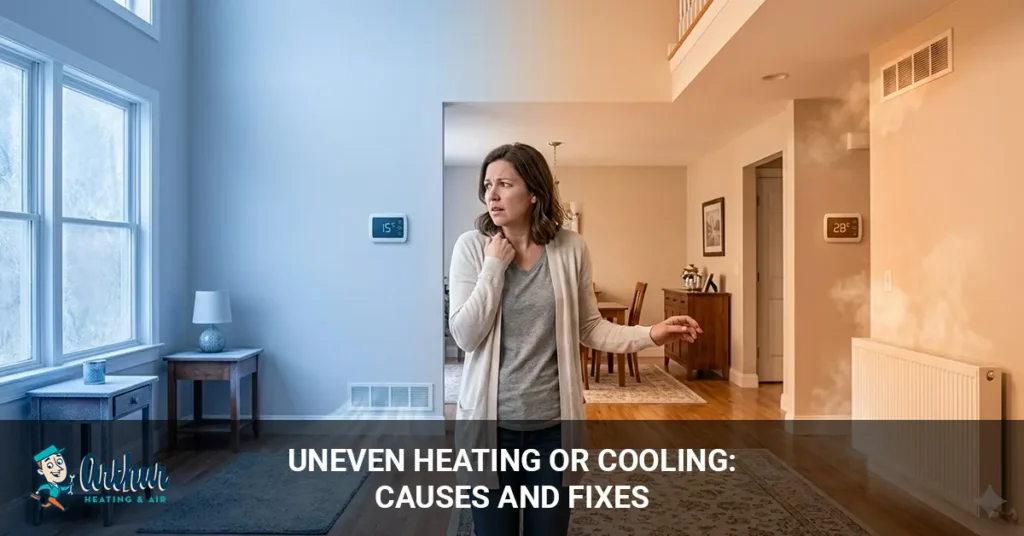
Uneven heating or cooling usually happens when your HVAC system cannot distribute air evenly throughout the home. Some rooms may feel too hot, while others stay cold or uncomfortable even when the system runs constantly.
This is one of the most common HVAC problems homeowners deal with. In many homes, upstairs rooms become hotter during summer, while certain rooms stay colder during winter. Weak airflow, blocked vents, dirty filters, duct leaks, insulation problems, or an improperly sized HVAC system are often the reasons.
At first, uneven temperatures may seem like a small comfort problem. But over time, poor airflow and HVAC imbalance can increase energy bills, reduce system efficiency, and put extra stress on heating and cooling equipment.
The good news is that many uneven heating and cooling problems can be improved with proper airflow, maintenance, and HVAC adjustments.
This guide explains the most common causes of uneven temperatures in a home, simple fixes you can try, and when it is best to call an HVAC professional.
Why Is My House Heating or Cooling Unevenly?
A house usually heats or cools unevenly because air is not flowing properly through the HVAC system. When airflow becomes restricted or unbalanced, some rooms receive more heated or cooled air than others.
Uneven Temperatures Usually Mean Airflow or HVAC Balance Problems
Most uneven heating and cooling problems happen because of:
- Restricted airflow
- Leaky ductwork
- Poor insulation
- Incorrect HVAC system sizing
- Thermostat placement problems
These issues make it harder for conditioned air to reach every room evenly. In many homes, the problem builds slowly over time as airflow becomes weaker or parts of the system wear down.
Common Signs of Uneven Heating or Cooling
Homeowners often notice:
- Hot and cold spots throughout the house
- Weak airflow from certain vents
- Upstairs rooms hotter than downstairs
- Rooms taking longer to heat or cool
- HVAC systems running constantly
Sometimes the problem affects only one room. In other homes, temperature differences happen throughout the entire house.
Why Uneven Temperatures Should Not Be Ignored
Uneven temperatures do more than reduce comfort. They can also put extra stress on the HVAC system and increase energy usage.
Over time, the problem may lead to:
- Higher energy bills
- More HVAC wear and tear
- Reduced system efficiency
- Constant thermostat adjustments
- Shorter HVAC lifespan
Fixing airflow and temperature balance problems early can help improve comfort and prevent larger HVAC repairs later.
Dirty Air Filters Restrict Airflow
Dirty air filters are one of the most common reasons a home heats or cools unevenly. When the filter becomes clogged, airflow slows down and the HVAC system cannot distribute air evenly throughout the house.
How Clogged Filters Affect Airflow
Your HVAC system needs steady airflow to move heated or cooled air into every room. Over time, the air filter collects dust, dirt, pet hair, and other debris.
As the filter becomes blocked, airflow becomes restricted. This makes it harder for the HVAC system to push enough air through the ductwork and vents.
Some rooms may receive very little airflow, while others stay comfortable. Dust buildup inside HVAC components can also reduce airflow and system efficiency over time.
The HVAC system also has to work harder, which can reduce efficiency and increase wear on system components.
Signs Your Air Filter May Be Causing Uneven Temperatures
A dirty HVAC filter often causes symptoms like:
- Weak airflow from vents
- Dust buildup around registers
- Rooms heating or cooling unevenly
- HVAC system running longer than normal
- Higher energy bills
In many homes, airflow problems improve quickly after replacing the filter.
How Often Air Filters Should Be Replaced
Most HVAC air filters should be replaced every 1 to 3 months. Homes with pets, allergies, or heavy HVAC use may need more frequent filter changes.
How often you replace the filter depends on:
- Pets in the home
- Indoor air quality
- HVAC usage
- Allergy concerns
- Type of filter installed
Regular filter replacement improves airflow, helps maintain even temperatures, and reduces stress on the HVAC system.
This guide explains how often to replace HVAC air filters based on pets, allergies, indoor air quality, and HVAC usage.
Blocked or Closed Air Vents
Blocked or closed air vents are a common reason some rooms feel hotter or colder than others. When airflow cannot move freely through the vents, the HVAC system struggles to distribute air evenly throughout the home.
Why Blocked Vents Create Hot and Cold Spots
Blocked vents reduce the amount of heated or cooled air reaching certain rooms. This creates uneven temperatures and noticeable hot or cold spots around the house.
Rooms with poor airflow may feel:
- Too hot during summer
- Too cold during winter
- Stuffy or uncomfortable
Even one blocked vent can affect airflow balance in nearby rooms.
Common Causes of Blocked Vents
Air vents are often blocked by everyday household items or dust buildup. Common causes include:
- Furniture placed over vents
- Curtains covering registers
- Rugs blocking airflow
- Dust and debris inside vents
Closed vents can also reduce airflow throughout the HVAC system and make temperature problems worse.
Why Closing Vents Can Make HVAC Problems Worse
Many homeowners close vents in unused rooms, hoping to save energy, but this can actually create more airflow problems.
Closing vents increases pressure inside the duct system, which may:
- Reduce HVAC efficiency
- Create uneven room temperatures
- Increase strain on HVAC components
- Restrict airflow to other rooms
In most homes, keeping vents open helps the HVAC system maintain better airflow balance and more even temperatures throughout the house.
Leaky or Damaged Ductwork
Leaky or damaged ductwork can cause uneven heating and cooling by allowing air to escape before it reaches different rooms. When conditioned air leaks out of the ducts, some parts of the home receive less airflow than others.
How Duct Leaks Affect Room Temperatures
Your ductwork carries heated or cooled air from the HVAC system into each room. If the ducts have gaps, cracks, or loose connections, air escapes before it reaches the vents.
This reduces airflow and creates uneven temperatures throughout the house.
Duct leaks commonly happen in:
- Attics
- Crawl spaces
- Basements
- Behind walls
In some homes, large duct leaks can waste a noticeable amount of heated or cooled air.
Signs of Ductwork Problems
Leaky or damaged ducts often cause symptoms like:
- Weak airflow from vents
- Dusty rooms
- Hot and cold spots
- Higher energy bills
- HVAC system running constantly
Some rooms may feel comfortable while others stay too warm or too cold because they are not receiving enough airflow.
Older Homes and Duct Leakage
Older homes are more likely to have ductwork problems because duct connections naturally loosen over time.
Poor duct insulation can also allow heated or cooled air to lose temperature before it reaches different rooms. This problem is especially common in attics and crawl spaces where temperatures are more extreme.
Sealing duct leaks and improving duct insulation can help improve airflow, increase HVAC efficiency, and make room temperatures more consistent throughout the home.
Proper duct sealing can improve airflow balance, reduce energy waste, and help eliminate hot and cold spots throughout the house.
Poor Insulation Can Cause Uneven Temperatures
Poor insulation can make some rooms feel much hotter or colder than others because heat moves through certain parts of the home too easily. When insulation is weak or missing, your HVAC system has a harder time maintaining even temperatures.
Why Insulation Matters
Insulation helps keep indoor temperatures stable by slowing down heat transfer. In summer, it helps keep heat outside. In winter, it helps keep warm air inside the home.
Without enough insulation, some rooms may heat up or cool down much faster than others. This problem becomes more noticeable during very hot summers or cold winters when the HVAC system has to work harder.
Poor insulation can also force the HVAC system to run longer, increasing energy bills and reducing efficiency. This guide explains how insulation affects HVAC performance and why insulation problems often lead to uneven indoor temperatures.
Areas Where Insulation Problems Happen Most
Uneven temperatures often happen because insulation is weak or damaged around:
- Attics
- Walls
- Crawl spaces
- Windows
- Doors
Air leaks around windows and doors can also let outside air enter the home, making certain rooms harder to heat or cool properly.
Air leaks around the home can reduce HVAC efficiency and create uneven room temperatures throughout the house.
Upstairs Rooms Getting Hotter or Colder
Upstairs rooms often feel hotter because heat naturally rises through the home. During summer, poor attic insulation and weak attic ventilation can trap extra heat upstairs and make upper floors uncomfortable.
In winter, poorly insulated upper rooms may also lose heat faster, especially near windows or exterior walls.
Improving attic insulation and sealing air leaks can help create more even temperatures throughout the home and reduce strain on the HVAC system.
Thermostat Placement Problems
Thermostat placement can affect how evenly your HVAC system heats and cools your home. If the thermostat reads the wrong temperature, the system may turn on or off at the wrong time and create uneven temperatures in different rooms.
Why Thermostat Location Matters
Your thermostat controls the HVAC system based on the temperature around it. If that area is warmer or cooler than the rest of the house, the thermostat may not accurately reflect the temperature in other rooms.
This can cause the HVAC system to:
- Shut off too early
- Run longer than necessary
- Overheat or overcool certain rooms
- Create hot and cold spots throughout the home
Even a properly working HVAC system can struggle to maintain comfort if the thermostat is in a poor location.
Bad Thermostat Locations
Thermostats may give inaccurate readings when installed:
- Near windows
- Close to air vents
- In direct sunlight
- Near kitchens or appliances
- In unusually warm or cold areas
These locations can trick the thermostat into thinking the home is hotter or colder than it really is, which causes uneven heating and cooling.
Smart Thermostats and Zoning Improvements
Smart thermostats and HVAC zoning systems can help improve temperature balance throughout the home.
Smart thermostats adjust heating and cooling more accurately based on indoor conditions, while zoning systems control airflow separately in different areas of the house.
Homes with multiple floors often benefit from zoning because upstairs and downstairs temperatures can be controlled independently for better comfort.
HVAC System Size May Be Wrong
An HVAC system that is too large or too small can cause uneven heating and cooling throughout the home. When the system size does not match the home’s needs, airflow and temperature control become inconsistent.
Oversized HVAC Systems
An oversized HVAC system heats or cools the home too quickly and shuts off before air has enough time to circulate evenly.
This problem is called short cycling, and it often causes:
- Hot and cold spots
- Uneven airflow
- Poor humidity control
- Frequent system cycling
In many homes, oversized systems make certain rooms comfortable while others never reach the right temperature.
Undersized HVAC Systems
An undersized HVAC system struggles to keep up with heating or cooling demands, especially during very hot or cold weather.
These systems often:
- Run constantly
- Struggle to maintain thermostat settings
- Produce weak airflow
- Leave some rooms uncomfortable
Certain areas of the home may never fully heat or cool because the system cannot distribute enough conditioned air.
Why Professional Load Calculations Matter
Proper HVAC sizing requires professional load calculations. HVAC technicians evaluate several factors before recommending the correct system size, including:
- Home size
- Insulation levels
- Window placement
- Local climate
- Airflow requirements
Incorrect HVAC sizing can lead to long-term comfort problems, higher energy bills, and extra strain on heating and cooling equipment.
Why Upstairs Rooms Are Hotter Than Downstairs
Upstairs rooms are usually hotter than downstairs because heat naturally rises and collects on upper floors. Poor airflow, attic heat buildup, and HVAC balance problems can make the temperature difference even worse.
Heat Rises Naturally
Warm air naturally moves upward through the home. During summer, heat from lower floors rises and gathers upstairs, making upper rooms feel warmer than the rest of the house.
This is one of the main reasons second floors often stay uncomfortable even when the air conditioner runs constantly.
Poor Attic Ventilation
Poor attic ventilation can trap large amounts of heat above the living space. When hot air cannot escape the attic properly, the heat transfers into upstairs rooms and raises indoor temperatures.
Poor attic insulation can make the problem even worse by allowing more heat to enter the upper floor during hot weather.
Inadequate Airflow to Upper Floors
Some homes do not send enough airflow to upstairs vents because of:
- Duct design problems
- Airflow imbalance
- Leaky ductwork
- Weak blower performance
When less cooled air reaches the second floor, upstairs rooms may stay warmer than downstairs even while the HVAC system runs normally.
Zoning Systems May Help
HVAC zoning systems help improve temperature control by allowing different floors or rooms to have separate thermostat settings.
This gives homeowners better control over upstairs and downstairs temperatures and helps reduce hot and cold spots throughout the home.
Zoning systems are especially helpful in larger homes or homes with multiple floors.
Weak Airflow From Certain Vents
Weak airflow from certain vents usually means air is not moving properly through the HVAC system. This problem can make some rooms feel too hot, too cold, or uncomfortable compared to the rest of the house.
Dirty Ducts or Blocked Vents
Dirty ducts and blocked vents are common causes of weak airflow. Dust buildup, furniture, rugs, or other obstructions can reduce the amount of air reaching certain rooms.
When airflow becomes restricted, some vents may blow very little heated or cooled air while others work normally.
Blower Motor Problems
The blower motor pushes air through the ductwork and vents. If the motor becomes weak or starts failing, it may struggle to circulate air evenly throughout the home.
Blower motor problems may also cause:
- Weak airflow throughout the house
- Uneven room temperatures
- Strange HVAC noises
- HVAC systems running longer than normal
Damaged Duct Connections
Loose, damaged, or disconnected ducts can prevent airflow from reaching certain vents.
In some homes, air may leak into attics, crawl spaces, or behind walls before it reaches the room. This reduces airflow and makes temperature problems worse.
Air Balancing Issues
Air balancing problems happen when some vents receive too much airflow while others receive very little.
This imbalance may happen because of:
- Incorrect damper settings
- Poor duct design
- Blocked airflow
- HVAC sizing issues
Professional airflow balancing can help distribute air more evenly throughout the home and improve comfort in every room.
What You Can Do to Fix Uneven Heating or Cooling
Several simple HVAC maintenance steps can improve airflow and help balance temperatures throughout your home. Some uneven heating and cooling problems are easy to fix, while others may need professional HVAC service.
Step 1: Replace the Air Filter
Replacing the air filter is one of the easiest ways to improve airflow. Dirty filters restrict air movement and make it harder for the HVAC system to distribute heated or cooled air evenly.
If the filter looks dusty or clogged, replace it with a clean one. In many homes, this improves airflow almost immediately.
Step 2: Open and Clean Vents
Make sure all vents and registers are fully open and not blocked by:
- Furniture
- Rugs
- Curtains
- Dust buildup
Cleaning vents regularly helps air move more freely through the HVAC system.
Step 3: Check for Blocked Airflow
Inspect airflow throughout the home and look for anything restricting circulation.
Check:
- Return vents
- Duct openings
- Furniture placement
- Airflow near vents
Blocked airflow can create hot and cold spots in different rooms.
Step 4: Adjust Thermostat Settings
Programmable and smart thermostats can help improve temperature balance between rooms and floors.
In some homes, adjusting fan settings or temperature schedules may improve overall comfort and reduce uneven temperatures.
Step 5: Schedule HVAC Inspection
If uneven heating or cooling continues, the HVAC system may need professional inspection and airflow testing.
An HVAC technician can check for:
- Duct leaks
- Air balancing issues
- Blower motor problems
- Insulation issues
- Incorrect HVAC sizing
Professional diagnosis is often the fastest way to solve long-term airflow and temperature problems.
When to Call an HVAC Professional
Some uneven heating and cooling problems cannot be fixed with basic maintenance alone. If airflow problems continue, the HVAC system may need professional inspection and repair.
Call an HVAC technician if you notice:
- Persistent hot and cold spots
- Weak airflow throughout the home
- Rising energy bills
- HVAC system is running constantly
- Suspected duct leaks
- Insulation problems
- Rooms that never reach the right temperature
These issues often point to hidden airflow, ductwork, insulation, or HVAC sizing problems that are difficult to diagnose without professional equipment.
An HVAC technician can inspect the system for:
- Airflow restrictions
- Leaky ducts
- Blower motor problems
- Improper airflow balancing
- Thermostat issues
- Insulation gaps
Professional inspections can help identify the root cause of uneven temperatures and prevent larger HVAC problems later.
How to Prevent Uneven Heating and Cooling
Regular HVAC maintenance is one of the best ways to prevent uneven temperatures and airflow problems. Ongoing HVAC maintenance plans can help identify airflow problems early and keep heating and cooling systems running more efficiently year-round.
Keeping the system clean and fixing small issues early helps your home stay more comfortable year-round.
Replace HVAC Filters Regularly
Clean air filters improve airflow and help the HVAC system distribute air evenly throughout the home.
Dirty filters restrict airflow and force the system to work harder, which can create hot and cold spots in different rooms.
Most HVAC filters should be replaced every 1 to 3 months, depending on:
- Pets in the home
- Indoor air quality
- HVAC usage
- Filter type
Schedule Annual HVAC Maintenance
Professional HVAC maintenance helps catch airflow and performance problems before they become larger repairs.
During a tune-up, technicians inspect:
- Airflow performance
- Blower motors
- Duct connections
- Thermostat operation
- HVAC efficiency
Regular maintenance helps the system run more evenly and efficiently. Following a full HVAC maintenance checklist can help homeowners improve airflow, reduce HVAC strain, and prevent uneven room temperatures.
Seal Duct Leaks Early
Leaky ducts allow heated or cooled air to escape before it reaches certain rooms.
Proper duct sealing improves:
- Airflow balance
- HVAC efficiency
- Room temperature consistency
- Energy savings
Fixing duct leaks early can help prevent long-term airflow problems.
Improve Attic Insulation
Good attic insulation helps maintain more stable indoor temperatures, especially on upper floors.
Proper insulation reduces heat gain during summer and heat loss during winter, which helps the HVAC system maintain even temperatures throughout the home.
Keep Vents Unobstructed
Open vents allow air to circulate properly through every room.
Make sure vents are not blocked by:
- Furniture
- Rugs
- Curtains
- Dust buildup
Good airflow helps reduce hot and cold spots and improves overall HVAC performance.
Final Thoughts
Uneven heating or cooling usually means something is affecting airflow, ductwork, insulation, or overall HVAC balance in the home. While some problems are simple to fix, others may require professional repairs or system adjustments to fully restore comfort.
Ignoring uneven temperatures can increase energy bills, reduce HVAC efficiency, and put extra strain on heating and cooling equipment over time.
The good news is that many airflow problems can be improved with regular maintenance, clean filters, open vents, and proper ductwork inspection.
If hot and cold spots continue even after basic troubleshooting, scheduling a professional HVAC inspection is often the best way to find the cause and restore balanced airflow throughout the home.