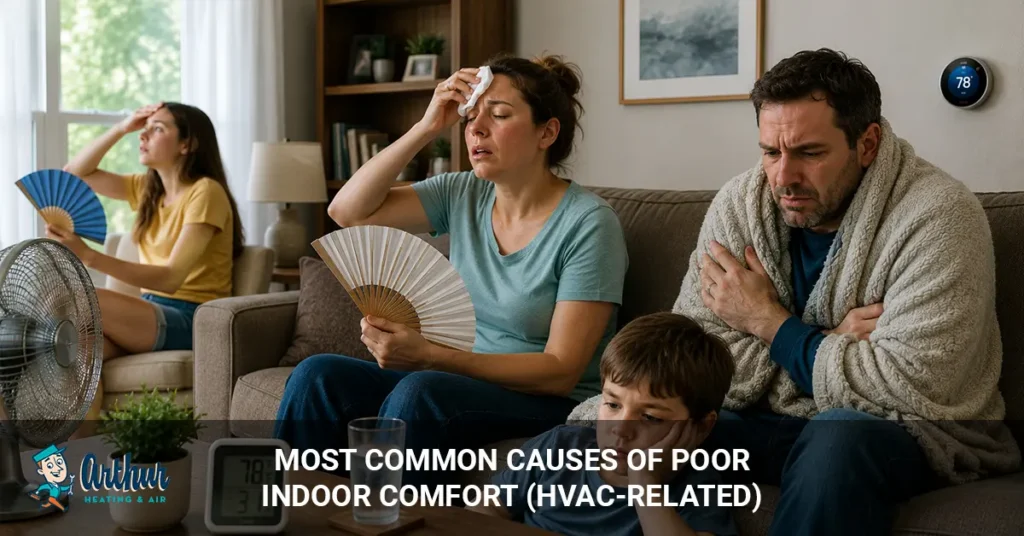
Poor indoor comfort usually happens when your HVAC system cannot control temperature, airflow, humidity, or indoor air quality properly. Even if the system is running, your home may still feel too hot, too cold, humid, stuffy, or uneven from room to room.
Many homeowners notice comfort problems long before the HVAC system completely fails. Weak airflow, uneven temperatures, high humidity, and poor air circulation are often early signs that something inside the system needs attention.
Indoor comfort problems can affect sleep, energy bills, daily comfort, and overall air quality inside the home. The good news is that many HVAC-related comfort issues can be fixed before they become expensive repairs.
Below are the most common HVAC problems that cause poor indoor comfort and what homeowners should know about them.
What Is Poor Indoor Comfort?
Poor indoor comfort means your home does not feel consistently comfortable throughout the day. Your house may feel too hot, too cold, humid, dry, stuffy, or uneven from one room to another.
In many homes, comfort problems start when the HVAC system cannot control airflow, temperature, humidity, or ventilation properly. Even if the heating or cooling system is running, the indoor environment may still feel uncomfortable.
Common signs of poor indoor comfort include:
- Hot and cold spots between rooms
- Weak airflow from vents
- Sticky or humid indoor air
- Dry air during winter
- Rooms that never reach the thermostat setting
- Excess dust or stale odors indoors
Your HVAC system plays a major role in indoor comfort because it controls:
- Heating
- Cooling
- Air circulation
- Ventilation
- Indoor humidity levels
When one part of the HVAC system stops working properly, overall comfort inside the home usually declines.
Dirty HVAC Air Filters
Dirty HVAC air filters are one of the most common causes of poor indoor comfort. When the filter becomes clogged with dust and debris, airflow becomes restricted and the HVAC system cannot circulate air properly throughout the home.
Air filters are designed to trap dust, pollen, pet dander, and other airborne particles before they move through the system. Over time, the buildup blocks airflow and forces the heating and cooling system to work harder than normal.
Common signs of a dirty HVAC filter include:
- Weak airflow from vents
- Uneven heating or cooling
- Dust buildup around the home
- Higher energy bills
- HVAC system running longer than usual
Restricted airflow often affects rooms farther from the HVAC system first. These rooms may feel warmer in summer or colder in winter because conditioned air cannot reach them efficiently.
A clogged filter can also reduce indoor air quality and increase strain on HVAC components over time.
Most HVAC filters should be checked every month and replaced every 1 to 3 months. Homes with pets, allergies, or heavy HVAC usage may need more frequent filter changes to maintain proper airflow and indoor comfort.
Following recommendations for how often to replace HVAC air filters can help maintain airflow, improve indoor comfort, and reduce strain on HVAC equipment.
Incorrect Thermostat Settings or Malfunctions
Incorrect thermostat settings or thermostat malfunctions can cause major indoor comfort problems even when the HVAC system itself is working properly. If the thermostat reads temperatures incorrectly or sends the wrong signals, your heating and cooling system may not maintain a consistent indoor temperature.
The thermostat controls when the HVAC system turns on and off. When something goes wrong, some rooms may feel too hot while others stay too cold.
Common thermostat problems include:
- Incorrect temperature calibration
- Dead batteries
- Faulty temperature sensors
- Poor thermostat placement
- Software or programming errors
Thermostat location also matters. A thermostat installed near windows, direct sunlight, kitchens, or heat-producing appliances may detect inaccurate temperatures. This can cause the HVAC system to shut off too early or run longer than necessary.
Smart thermostats can also create comfort issues when schedules, temperature settings, or automation features are programmed incorrectly.
Signs of thermostat problems often include:
- Uneven heating or cooling
- HVAC system is constantly running
- Rooms not reaching the set temperature
- Frequent temperature changes indoors
In many cases, recalibrating, relocating, reprogramming, or replacing the thermostat can quickly improve indoor comfort and HVAC performance.
Poor Airflow Throughout the Home
Poor airflow is one of the most common reasons a home feels uncomfortable. Even when the HVAC system is producing enough heating or cooling, airflow problems can prevent conditioned air from reaching every room evenly.
When airflow becomes restricted, some rooms may feel too hot while others stay too cold. The HVAC system may also run longer and use more energy trying to maintain the thermostat setting.
Several HVAC issues can reduce airflow throughout the home.
Blocked or Closed Vents
Blocked vents are a common cause of weak airflow. Furniture, rugs, curtains, or closed supply vents can stop air from moving properly through the room.
This creates pressure imbalances inside the HVAC system and reduces overall comfort.
Leaky Air Ducts
Leaky ductwork allows heated or cooled air to escape before it reaches the living areas. In some homes, large amounts of conditioned air are lost through gaps, cracks, or disconnected ducts.
This often causes uneven temperatures and weak airflow in certain rooms.
Dirty Blower Components
The blower motor and blower fan help move air through the HVAC system. Dust and debris buildup inside these components can reduce air circulation and lower system performance.
Dirty blower parts may also cause weak airflow from vents.
Undersized Ductwork
Some homes have duct systems that are too small to distribute air properly. Undersized ductwork can limit airflow and make it difficult to keep all rooms comfortable.
This problem is more common in older homes or improperly designed HVAC systems.
Poor airflow usually leads to uneven temperatures, longer HVAC run times, higher energy bills, and reduced indoor comfort. If some areas of your home receive significantly less airflow than others, learn more about the common causes of weak airflow in certain rooms.
Regular HVAC maintenance and duct inspections can help identify airflow problems before they become more serious.
Uneven Heating and Cooling Between Rooms
Uneven heating and cooling usually happen when air cannot circulate evenly throughout the home. Some rooms may feel comfortable while others stay too hot or too cold, even when the HVAC system is running normally.
This problem is common in both older and newer homes and is often linked to airflow, insulation, or ductwork issues.
Several factors can cause uneven indoor temperatures.
Poor Airflow
Weak airflow can prevent heated or cooled air from reaching certain rooms properly. Blocked vents, dirty filters, or duct restrictions are common causes.
Improper Duct Design
Poorly designed duct systems may send too much air to some rooms and not enough to others. Long duct runs and sharp bends can also reduce airflow efficiency.
Insulation Problems
Rooms with poor insulation lose heat during winter and gain heat during summer more quickly than other parts of the home.
Sun Exposure Through Windows
Large windows with direct sunlight can significantly increase indoor temperatures, especially during summer afternoons.
Multi-Story Airflow Imbalance
Second-floor rooms often feel warmer because heat naturally rises. Without proper airflow balancing, upper floors may become uncomfortable during hot weather.
HVAC Zoning Problems
Homes without zoning systems may struggle to maintain different temperatures in separate areas. One thermostat cannot always control every room evenly.
Common signs of uneven heating and cooling include:
- Hot and cold spots between rooms
- Upstairs rooms feel warmer
- Rooms far from the HVAC system feel uncomfortable
- Constant thermostat adjustments
Fixing airflow restrictions, improving insulation, sealing duct leaks, or installing zoning controls can often improve temperature balance and overall indoor comfort.
Homeowners dealing with persistent hot and cold spots may benefit from these uneven heating and cooling fixes.
HVAC System Short Cycling
HVAC short cycling happens when the heating or cooling system turns on and off too frequently without completing a full cycle. This prevents the system from maintaining stable indoor temperatures and proper humidity control.
A properly working HVAC system should run long enough to evenly heat or cool the home. When short cycling occurs, comfort levels often decline and the system experiences extra strain.
Several HVAC problems can cause short cycling.
Oversized HVAC Systems
An oversized HVAC system can cool or heat the home too quickly. The system shuts off before air circulates properly throughout the house.
This often leads to uneven temperatures and poor humidity control.
Dirty Air Filters
Clogged air filters restrict airflow and can cause the system to overheat or operate inefficiently, triggering frequent shutdowns.
Refrigerant Problems
Low refrigerant levels or refrigerant leaks can affect cooling performance and cause the system to cycle improperly.
Thermostat Malfunctions
Faulty thermostats may send incorrect signals to the HVAC system, causing it to turn on and off more often than necessary.
Frozen Evaporator Coils
Frozen coils reduce airflow and cooling efficiency. This can interrupt normal HVAC operation and lead to repeated cycling.
Common signs of HVAC short cycling include:
- Uneven room temperatures
- High indoor humidity
- Rising energy bills
- Constant system starting and stopping
- Reduced indoor comfort
Short cycling also increases wear on HVAC components because the system repeatedly starts and stops throughout the day. Understanding the causes of HVAC short cycling can help homeowners improve comfort and prevent unnecessary system wear.
In many homes, oversized HVAC systems are one of the biggest causes of short cycling. While the home may cool quickly, the system often shuts off before removing enough moisture from the air, leaving the house feeling humid and uncomfortable.
High Indoor Humidity Problems
High indoor humidity can make a home feel uncomfortable even when the temperature looks normal on the thermostat. Excess moisture in the air often makes rooms feel sticky, warm, heavy, and harder to cool.
Your HVAC system plays a major role in controlling indoor humidity. When the system cannot remove moisture properly, indoor comfort quickly declines.
Common signs of high indoor humidity include:
- Condensation on windows
- Musty odors indoors
- Sticky or damp air
- Mold or mildew growth
- Poor cooling comfort
Several HVAC problems can cause high humidity levels inside the home.
Oversized Air Conditioners
An oversized air conditioner may cool the house too quickly and shut off before removing enough moisture from the air.
Dirty Evaporator Coils
Dirty coils reduce the system’s ability to absorb heat and remove humidity efficiently.
Low Refrigerant Levels
Low refrigerant can weaken cooling performance and reduce moisture removal during operation.
Poor Ventilation
Homes with limited ventilation can trap humid air indoors, especially in bathrooms, kitchens, and laundry areas.
HVAC Short Cycling
Short cycling prevents the air conditioner from running long enough to properly dehumidify the home.
Air conditioners do more than cool the air. They also remove moisture during the cooling process. When humidity stays too high, the home may still feel uncomfortable even if the temperature is set correctly.
In most homes, ideal indoor humidity levels stay between 30% and 50%. Understanding how humidity affects indoor comfort can help homeowners identify moisture-related comfort problems more quickly.
Keeping humidity within this range helps improve comfort, indoor air quality, and overall HVAC performance.
Low Indoor Humidity During Heating Season
Low indoor humidity is common during winter because heating systems naturally dry out the air inside the home. As indoor humidity drops, the air can start to feel dry, uncomfortable, and irritating.
Cold outdoor air already contains less moisture, and when the HVAC system heats that air, humidity levels often fall even further.
Common symptoms of dry indoor air include:
- Dry skin and chapped lips
- Nose and throat irritation
- Static electricity
- Cracked wood furniture or flooring
- Poor sleep comfort
Low humidity can also make the home feel cooler than it actually is, causing some homeowners to raise the thermostat more often during winter.
Furnaces and other heating systems do not add moisture back into the air unless a humidifier is installed. In many homes, especially in colder climates, indoor humidity can drop below comfortable levels during the heating season.
Whole-home humidifiers connected directly to the HVAC system can help restore proper moisture levels throughout the house. These systems work with the heating system to improve indoor comfort, reduce dryness, and create a healthier indoor environment during winter months.
Refrigerant Problems Affecting Cooling Performance
Refrigerant problems can reduce cooling performance and make your home feel warm and uncomfortable. Air conditioners and heat pumps rely on refrigerant to remove heat from indoor air and keep temperatures stable.
When refrigerant levels become low, the HVAC system cannot cool the home efficiently. The system may run longer, struggle to reach the thermostat setting, and create uneven indoor temperatures.
Common signs of refrigerant problems include:
- Warm air coming from vents
- Frozen evaporator coils
- Long cooling cycles
- Weak cooling performance
- Hissing or bubbling sounds near refrigerant lines
In most cases, low refrigerant levels are caused by leaks somewhere in the system. Refrigerant does not get used up under normal conditions, so low levels usually indicate a problem that needs repair.
When refrigerant levels drop too low, the evaporator coil may freeze because the system cannot absorb heat properly. This often reduces airflow and makes indoor comfort even worse.
Ignoring refrigerant problems can place extra strain on the compressor, which is one of the most expensive HVAC components to replace. Early repairs can help restore cooling performance and prevent larger system damage over time.
Dirty or Damaged HVAC Coils
Dirty or damaged HVAC coils can reduce airflow, lower cooling performance, and make indoor temperatures less comfortable. HVAC systems use evaporator coils and condenser coils to transfer heat during heating and cooling cycles.
When these coils become covered with dirt, dust, or debris, the system cannot move heat efficiently. This forces the HVAC system to work harder and often leads to higher energy use and uneven indoor comfort.
Dirty Evaporator Coil Problems
The evaporator coil absorbs heat from indoor air during the cooling process. When the coil becomes dirty, it cannot remove heat properly.
Common evaporator coil problems include:
- Reduced cooling performance
- Frozen coils
- Weak airflow
- Indoor humidity problems
Dirty evaporator coils can also restrict airflow and cause the system to run longer than normal.
Dirty Condenser Coil Problems
The condenser coil releases heat outdoors. If the outdoor coil becomes dirty or blocked, heat cannot escape efficiently.
Common condenser coil problems include:
- Poor heat transfer
- Higher energy bills
- Overheating HVAC systems
- Reduced cooling efficiency
Outdoor condenser units often collect dirt, leaves, grass, and debris over time, especially during heavy cooling seasons.
Routine HVAC maintenance and professional coil cleaning help keep airflow strong, improve system efficiency, and maintain consistent indoor comfort throughout the home.
Aging or Improperly Sized HVAC Systems
An aging or improperly sized HVAC system can make it difficult to maintain consistent indoor comfort. Older systems often lose efficiency over time, while systems that are too small or too large may never heat or cool the home properly.
As HVAC equipment ages, important components begin to wear down. Airflow may weaken, cooling performance may decline, and the system may struggle to keep up during extreme weather.
Signs an HVAC System May Be Too Small
A system that is too small for the home may run constantly without reaching the desired temperature.
Common signs include:
- Constant HVAC operation
- Difficulty reaching thermostat settings
- Weak airflow
- Uneven room temperatures
Small systems often become overworked during very hot or cold weather.
Signs an HVAC System May Be Too Large
An oversized HVAC system can create comfort problems even if it cools or heats the home quickly.
Common signs include:
- Short cycling
- High indoor humidity
- Uneven temperatures
- Frequent system starting and stopping
Oversized systems usually shut off before air circulates evenly throughout the home or before enough moisture is removed from the air.
Improper HVAC sizing is one of the most common causes of long-term indoor comfort problems. A professional HVAC load calculation helps determine the correct system size based on the home’s square footage, insulation, windows, airflow needs, and climate conditions.
Properly sized HVAC systems usually provide better airflow, more stable temperatures, improved humidity control, and higher energy efficiency.
Poor Indoor Air Quality
Poor indoor air quality can make a home feel stuffy, dusty, and uncomfortable even when the temperature feels normal. Indoor comfort is not only about heating and cooling. The quality of the air inside the home also affects how comfortable the space feels every day.
When pollutants build up indoors, homeowners may notice stale odors, excess dust, allergy symptoms, or poor airflow.
Common indoor air pollutants include:
- Dust
- Pet dander
- Mold spores
- Smoke particles
- VOCs from household products
HVAC systems help filter and circulate indoor air. When the system is not working properly, indoor air quality often declines.
HVAC Issues That Affect Indoor Air Quality
Several HVAC problems can reduce air quality inside the home.
Dirty Filters
Clogged air filters allow dust and airborne particles to circulate throughout the house.
Poor Ventilation
Homes with poor ventilation can trap pollutants, moisture, and stale air indoors.
Contaminated Ductwork
Dust, debris, mold, and allergens can build up inside duct systems over time and spread through the home.
Excess Humidity
High indoor humidity creates conditions that allow mold and mildew growth, which can worsen indoor air quality.
Poor indoor air quality may also increase allergy symptoms, headaches, respiratory irritation, and overall discomfort.
Air purification systems, better air filtration, humidity control, and ventilation upgrades can help improve indoor air quality and create a healthier, more comfortable indoor environment.
Following an indoor air quality checklist can help homeowners identify common air quality issues affecting comfort.
Lack of HVAC Maintenance
Lack of HVAC maintenance is one of the biggest reasons indoor comfort problems develop over time. When heating and cooling systems are not serviced regularly, airflow, efficiency, and overall performance usually begin to decline.
Many HVAC issues start small and become worse gradually. Without regular maintenance, homeowners may not notice problems until the system struggles to heat or cool the home properly.
Routine HVAC maintenance helps identify worn components, airflow restrictions, and performance issues before they lead to larger repairs or comfort problems.
Important HVAC maintenance tasks include:
- Replacing air filters
- Cleaning evaporator and condenser coils
- Checking refrigerant levels
- Inspecting ductwork for leaks
- Testing thermostat performance
- Cleaning drain lines
When these maintenance tasks are ignored, the HVAC system may develop:
- Weak airflow
- Uneven temperatures
- Higher energy bills
- Humidity problems
- Poor indoor air quality
Seasonal HVAC tune-ups help keep the system running efficiently throughout the year. Regular maintenance can improve airflow, stabilize indoor temperatures, reduce energy usage, and extend the life of HVAC equipment.
In many homes, simple maintenance alone can significantly improve indoor comfort and prevent future HVAC breakdowns. A comprehensive HVAC maintenance checklist can help homeowners stay ahead of common comfort and performance problems.
Electrical or Mechanical HVAC Failures
Electrical and mechanical HVAC problems can quickly reduce indoor comfort and affect system performance. When important components fail, the HVAC system may struggle to heat, cool, or circulate air properly throughout the home.
Some HVAC failures develop gradually, while others cause sudden system shutdowns or major airflow problems.
Common HVAC component failures include:
- Blower motor problems
- Capacitor failures
- Faulty sensors
- Control board issues
Blower Motor Problems
The blower motor moves air through the duct system. If the motor becomes weak or stops working, airflow from vents may decrease significantly.
Capacitor Failures
Capacitors help HVAC motors start and run properly. A failing capacitor can prevent the system from operating efficiently or starting at all.
Faulty Sensors
Temperature and safety sensors help regulate HVAC operation. When sensors malfunction, the system may cycle incorrectly or fail to maintain stable temperatures.
Control Board Problems
The control board manages communication between HVAC components. Electrical failures inside the board can interrupt heating, cooling, or airflow functions.
These HVAC problems often cause:
- Weak airflow
- Inconsistent room temperatures
- Unexpected HVAC shutdowns
- Strange noises during operation
- Reduced heating or cooling performance
Because electrical HVAC systems involve wiring, voltage, and sensitive components, professional diagnostics are usually needed to identify and repair these problems safely. Early repairs can help prevent larger system damage and restore indoor comfort more quickly.
Poor Home Insulation and Air Leaks
Poor insulation and air leaks can make a home uncomfortable even when the HVAC system is working properly. When conditioned air escapes and outdoor air enters the home, indoor temperatures become harder to control.
These problems force the HVAC system to work longer and harder to maintain comfort levels.
Many homes lose heated or cooled air through small gaps and poorly insulated areas.
Common areas for air leaks include:
- Windows
- Doors
- Attics
- Crawl spaces
- Around duct penetrations
During summer, hot outdoor air can enter the home and increase indoor temperatures. During winter, warm indoor air can escape through gaps and poorly insulated spaces.
Poor insulation also allows heat transfer through walls, ceilings, and floors, making some rooms feel hotter or colder than others.
Common signs of insulation and air leak problems include:
- Drafts near windows and doors
- Uneven room temperatures
- High energy bills
- HVAC systems running constantly
- Rooms that never feel comfortable
Air leaks increase HVAC workload and reduce overall system efficiency. Over time, this can lead to higher utility costs and added strain on heating and cooling equipment.
Sealing air leaks and improving home insulation can significantly improve indoor comfort, stabilize temperatures, and reduce energy usage throughout the year.
Understanding how home air leaks impact HVAC efficiency can help homeowners prioritize energy-saving improvements.
How to Improve Indoor Comfort Quickly
Many indoor comfort problems can improve quickly by fixing a few common HVAC and airflow issues. Small changes often make a noticeable difference in temperature balance, airflow, humidity control, and overall comfort throughout the home.
Homeowners can start with simple HVAC maintenance and airflow improvements before larger problems develop.
Replace Dirty Air Filters
Dirty air filters restrict airflow and reduce HVAC performance. Replacing clogged filters can quickly improve airflow, indoor air quality, and temperature consistency.
Keep Vents Open and Unblocked
Blocked vents reduce air circulation and create uneven temperatures between rooms. Make sure furniture, rugs, and curtains are not covering supply or return vents.
Schedule HVAC Maintenance
Professional HVAC maintenance helps identify airflow problems, worn components, refrigerant issues, and dirty coils before they affect comfort.
Seal Air Leaks Around Windows and Doors
Small gaps around windows and doors allow conditioned air to escape and outdoor air to enter the home. Sealing these leaks helps stabilize indoor temperatures.
Upgrade Outdated Thermostats
Older thermostats may struggle to maintain accurate temperatures. Upgrading to a newer programmable or smart thermostat can improve HVAC performance and comfort control.
Improve Humidity Control
Balanced humidity levels help homes feel more comfortable year-round. Humidifiers and dehumidifiers can help control dry air during winter and excess moisture during summer.
Clean Ductwork if Necessary
Dust, debris, and buildup inside duct systems can reduce airflow and affect indoor air quality. In some homes, professional duct cleaning may improve airflow and comfort.
Even small HVAC improvements can help reduce hot and cold spots, improve airflow, lower energy usage, and create a more comfortable indoor environment.
When to Call an HVAC Professional
Some indoor comfort problems require professional HVAC inspection and repair. If basic maintenance and simple fixes do not improve comfort, the system may have deeper airflow, electrical, refrigerant, or equipment problems.
Homeowners should contact an HVAC professional when comfort issues continue getting worse or the system struggles to maintain normal performance.
You should call an HVAC technician if:
- Rooms remain unevenly heated or cooled
- The HVAC system short-cycles frequently
- Energy bills continue to rise
- Airflow stays weak
- Indoor humidity problems persist
- The system struggles to maintain thermostat settings
These problems often point to issues such as:
- Airflow restrictions
- Leaky ductwork
- Refrigerant leaks
- Dirty coils
- Thermostat malfunctions
- Aging HVAC equipment
Professional HVAC inspections can identify hidden problems that are difficult to detect without proper tools and testing equipment.
Early repairs can improve indoor comfort, reduce energy costs, prevent larger breakdowns, and help the HVAC system operate more efficiently throughout the year.
Final Thoughts
Poor indoor comfort is usually caused by HVAC problems that affect airflow, temperature control, humidity, or indoor air quality. Dirty filters, weak airflow, refrigerant issues, humidity imbalance, aging equipment, and lack of maintenance are some of the most common reasons homes feel uncomfortable.
Ignoring these problems can lead to higher energy bills, uneven temperatures, poor air quality, and extra strain on the HVAC system over time.
The good news is that many indoor comfort issues can be improved with regular HVAC maintenance, better airflow, proper humidity control, and timely repairs. Small improvements often make a noticeable difference in overall comfort and system performance.
When heating and cooling systems operate properly, homes usually feel more comfortable, energy-efficient, and healthier throughout the year.